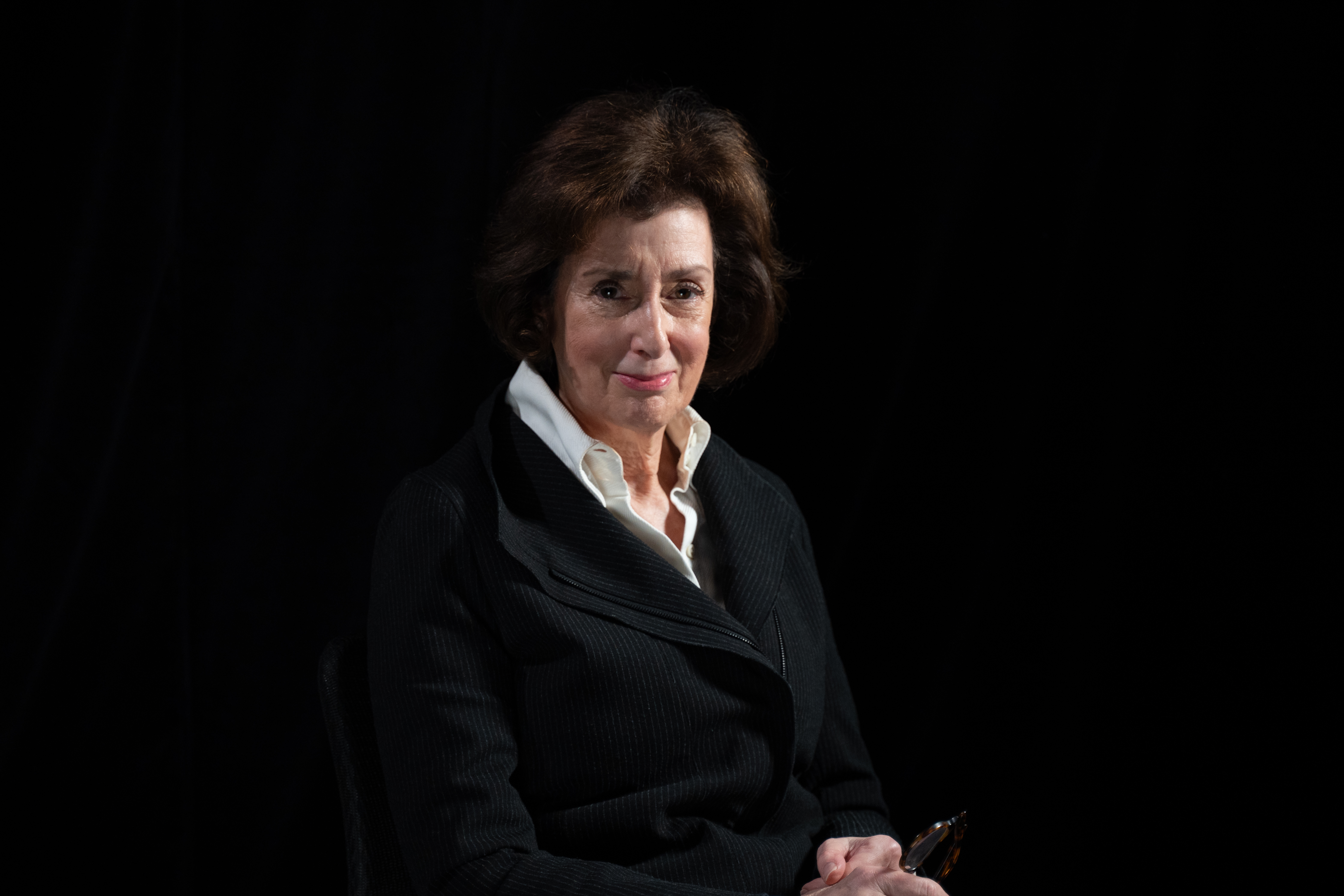
Agness Mandel

* 1953

  • "In 1942, the situation got really bad in Slovakia; there was an order that from every family, one child had to report to the city hall; they had to be 19-25 and single, around 1500 girls and 1500 boys from the region of Zlate Moravce was gathered there. The young people were separated; I don't know what happened to the young women, and the men were sent to the Novaky concentration camp. My father's family discussed who was to go, and they decided to send him because he was physically strong, and they promised to get him out if anything happened. In Novaky, they were beaten and robbed; it was clear they were to be killed; the father said he had never seen such brutality; the whole night, someone was coming with whips; it was a night of terror. In the morning, strangers were in the town; normally, the locals were eager to do the beating, but this time, it was leadership from elsewhere. In the morning, a policeman came and said I had to call a thief from the crowd and that I needed him to be brought to me for investigation, and they called my father. It was a fabrication; the policeman was a good childhood friend of my father. It was arranged so my father didn't get on that transport, and after several months and bribes, he was taken from Novaky. He was the only one from the 1500 men who survived; after that, he had to go underground; it would be impossible to explain his survival. He went to Hungary to find Klara, using aliases that made it impossible for him to marry her when they met. Eventually, he met some partisans and helped them, witnessing some atrocities, helping to hide people, and providing them with food. I don't think he was directly involved in fighting fascists, but he might have blown up something."

  • 00:34:19 - 00:39:16 “When the Russians arrived at the place, a few people, there were about a dozen people, who came out of hiding; my mother and Lily found some clothes, underwear, and everything, and managed to take a bath and dress. In the evening, the Russians were drinking, and it got out of hand; one of them wanted to take [sexually assault] Lily, but another Russian Jewish soldier with a higher rank grabbed her and my mother, locked them in a room with him, saying:” these are mine” and protected them. After that, they tried to return to Komarno and met some people who were going to Israel. One man tried to persuade my mother to go with him, but she said she had to go back and see whether her fiancé was alive. It took them weeks; they had to stay in some displacement camps and be repeatedly examined by Russians on their way, but they managed to arrive in Komarno. As they entered the city, they saw a man leaning on a car- it was Laszlo. He was organizing things at the house, helping people to get food; because he spoke Slovak, he oversaw communication with relief workers; survivors were gathered there, and he was just about to leave for Bratislava and had almost missed them. When he recalled this moment, he couldn’t speak at all; 18 seconds of silence were on the tape [from an interview with Agness’s parents]. My parents were married within 8 days of that meeting; they went to his brother and father who survived and somehow put together food [and celebration] for 12 people.”

  • 01:05:10 – 01:10:50 “At eight o’clock, they give Irena one of the bicycles, leave the other one in the woods, and walk towards the gate, which is floodlit; anyone approaching it would be under floodlights. Mom is carrying Ivan; Dad is carrying a little bag and two suitcases. There’s no one there; they push open the gate, which is unlocked; the guard is supposed to be hiding; they don’t know which boat it is from hundreds of boats parked at the port. Finally, someone emerges from the dark and talks to them, and together they walk towards the right boat, enter it, wait for about 15 minutes as they are being watched, and then they are instructed to go into the hold. They will go to an island and wait for a signal that an inspection is happening. After that, they will sail to Vienna. It was a flat boat with a very shallow hold; it wasn’t tall enough to sit on; they received a blanket, a pail of water, a pail for hygiene, and the door was nailed shut. Mother was terrified; they didn’t know whether they’d see the light of the day again. They heard a scream and a heavy crank of the anchor, and they were transported to the island, where they awaited the inspection; after two days, they received the signal (three knocks on the deck) and gave baby Ivan the sleeping pill. When the inspector came, Ivan was not yet asleep; my mother had to hold him very close; the inspection went well, and they again heard the endless terrible noise of the anchor being pulled; they were so elated that they kissed. To their horror, they lit a candle and saw that Ivan was not sleeping but motionless with his eyes and mouth open. Mother was terrified; she thought they’d killed him; they tried everything to revive him, gave him water, etc., and luckily, after half an hour, he started to show signs of life. However, this wrecked my mother, she said; it was emotionally worse than going through the camp; together, they spent five days on the boat, two of them waiting, three traveling.”

  • Celé nahrávky
  • 1

    New York, 05.12.2023

    (audio)
    délka: 01:44:20
    nahrávka pořízena v rámci projektu Príbehy 20. storočia
Celé nahrávky jsou k dispozici pouze pro přihlášené uživatele.

„She has always tried to make the most of her life, to live it to the fullest and to appreciate the preciousness of life.“
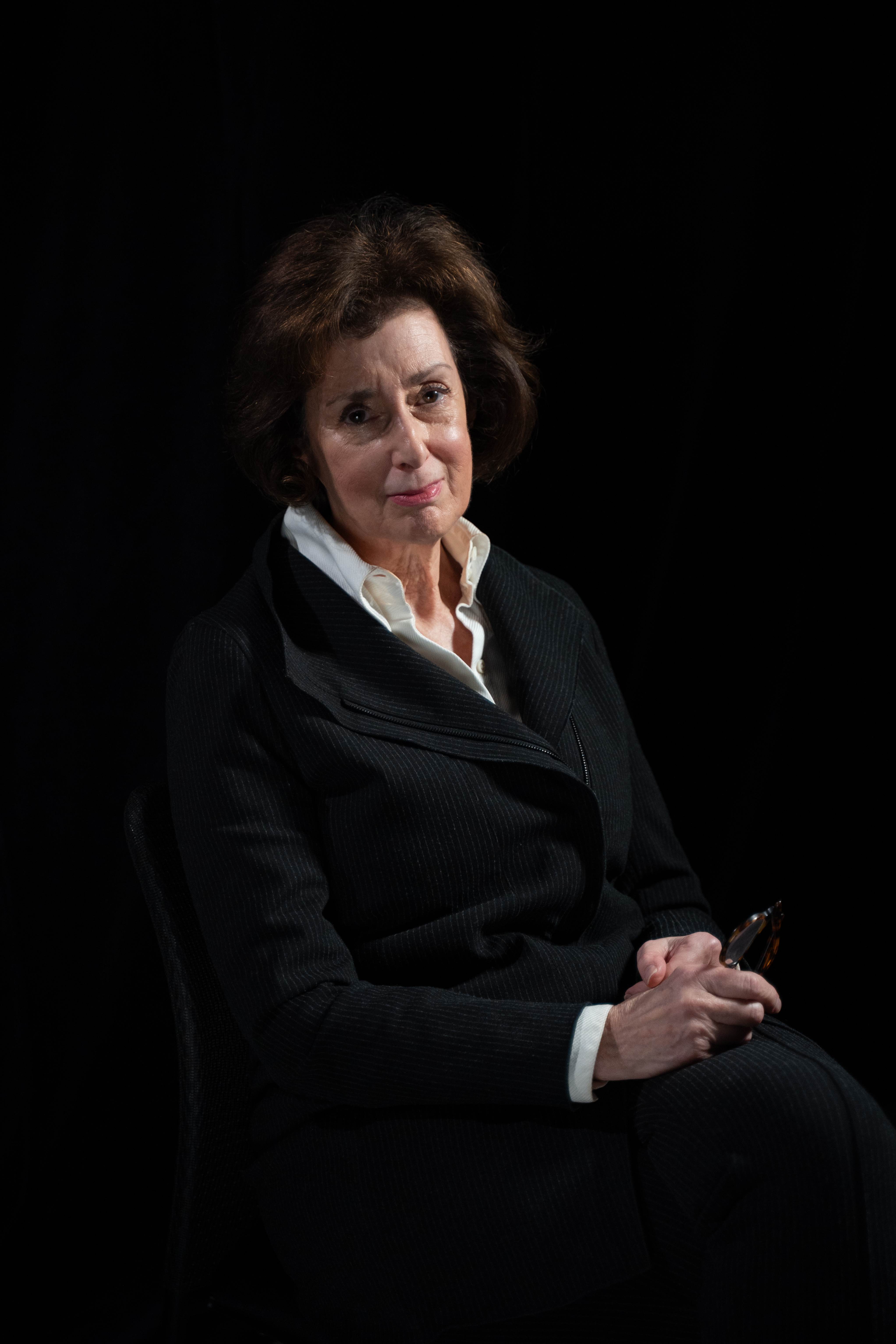
Agness Mandell during recording in 2023
zdroj: Photo by Dominik Janovský

Agness Mandel Reitman was born in 1953 in Toronto, the daughter of Leslie (László) Reitman and Clara (Klára) Raab Reitman, who emigrated to Canada from Czechoslovakia in 1951 and 1952. Both came from observant Jewish families; Clara‘s family-owned textile businesses in Komárno, while László‘s family was involved in the wholesale of seeds. Most of Klara‘s family, except for two sisters, Lily and Edith, died during the Holocaust; László‘s family was survived by his father, Gustáv, and two brothers. László owned a vinegar factory for a while, and due to the exclusion from the Communist Party and the imprisonment of some family members, he and Klara decided to emigrate in 1951. They emigrated first to France and later to Canada, where the couple first owned a dry cleaning and repair service; later, they worked with real estate and owned a car wash. Agness has two siblings. The elder Ivan was a well-known director and author of films such as Ghostbusters and Ghostbusters II, and her twin Susan worked as a music teacher and in a choir for children and later adults. Agness majored in food science but worked all her life on various boards in the Jewish community. Her husband is Jack Mandel, a physician, with whom they have two children.