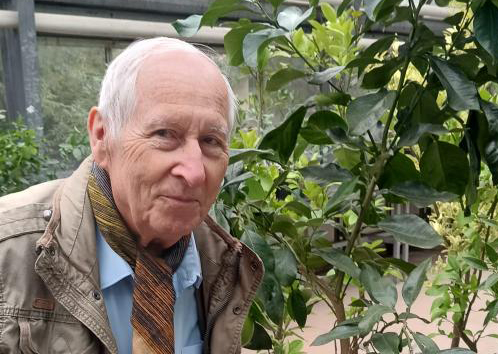
Ing. Karel Böhm

* 1941

  • "I can't understand it myself. My son is still amazed that I was able to go through socialism like that. I was just really... I was pulled to join the party at a certain time. And they pulled me in by... for example, some of the inspection days of the big buildings were at the ministry. Or at these institutions that under socialism were called 'state committee for construction' and so on, or 'federal investment enterprise'. And there were good jobs, but there was a condition [of joining] the party. And they wanted me to join there, too, but there was a condition of the party membership. But I said to them, and they were surprised, 'Look... how much can you give me?' And, 'I appreciate... if I join the party, you are actually devaluing me by doing that.' And so I [said] an amount that they couldn't meet. And they said, 'And you think they'll give it to you somewhere?' I said, 'I have almost that much at my current employer.'"

  • "For example, I used to build radio receivers, I even made a different transmitter, which was a problem because it could be picked up, I even listened to planes flying over, because there was always a corridor over Kladno. And so I listened to them talking, and that was kind of my hobby. And that hobby eventually resulted in the fact that when I was younger than you, in those sort of years of that eighth, seventh, ninth grade, I started a radio repair business, which was a great advantage, because people were used to waiting a month, two months to get their radios fixed from the official reapir shops, and I got it done in a Saturday, Sunday. And so I was actually making quite a bit of money, and I could buy stuff again."

  • "I did not experience the war in Prague, although I was really a child, because my father was stationed in Kladno. And we lived in a little house at my grandmother's house on the outskirts of Kladno, and I don't actually remember anything about the war. I just know that it was an ordeal, because whoever was totally deployed there had problems and was always being watched, because it was actually under the Germans. And the raids on Kladno were, I know that we always ran into this kind of a tunnel, well, and there my parents rather protected us with their bodies, it was no fun. And then what was the problem was earning our living. Because Kladno was not an agricultural area, that is, food was much more expensive there than everywhere else and hard to get. Again, there was coal, so we could heat, we had heat."

  • "Actually, the way we designed it, there was no one to implement it properly, there was not even a proper company to do it, and several construction companies in Czechoslovakia would have had to withdraw to do it, but they did not know how to cooperate. That's interesting, but they couldn't do that. So, again, somebody invented on the board of the Czechoslovak Socialist Republic, we've always been cunning, I would say, basically crafty. So it was found out what debts the Poles had to the Soviet Union and what debts the Soviet Union had to us, because even that was calculated, very few people know that, even in socialism. And the Czechoslovak leaders found out that the whole glassworks would be built more or less for free by the Poles with the money of the Soviet Union, to whom they owed it."

  • Celé nahrávky
  • 1

    Úvaly, 09.04.2019

    (audio)
    délka: 01:28:23
    nahrávka pořízena v rámci projektu The Stories of Our Neigbours
  • 2

    Úvaly, 01.07.2025

    (audio)
    délka: 02:59:59
    nahrávka pořízena v rámci projektu Stories of 20th Century
Celé nahrávky jsou k dispozici pouze pro přihlášené uživatele.

Communism was unreformable
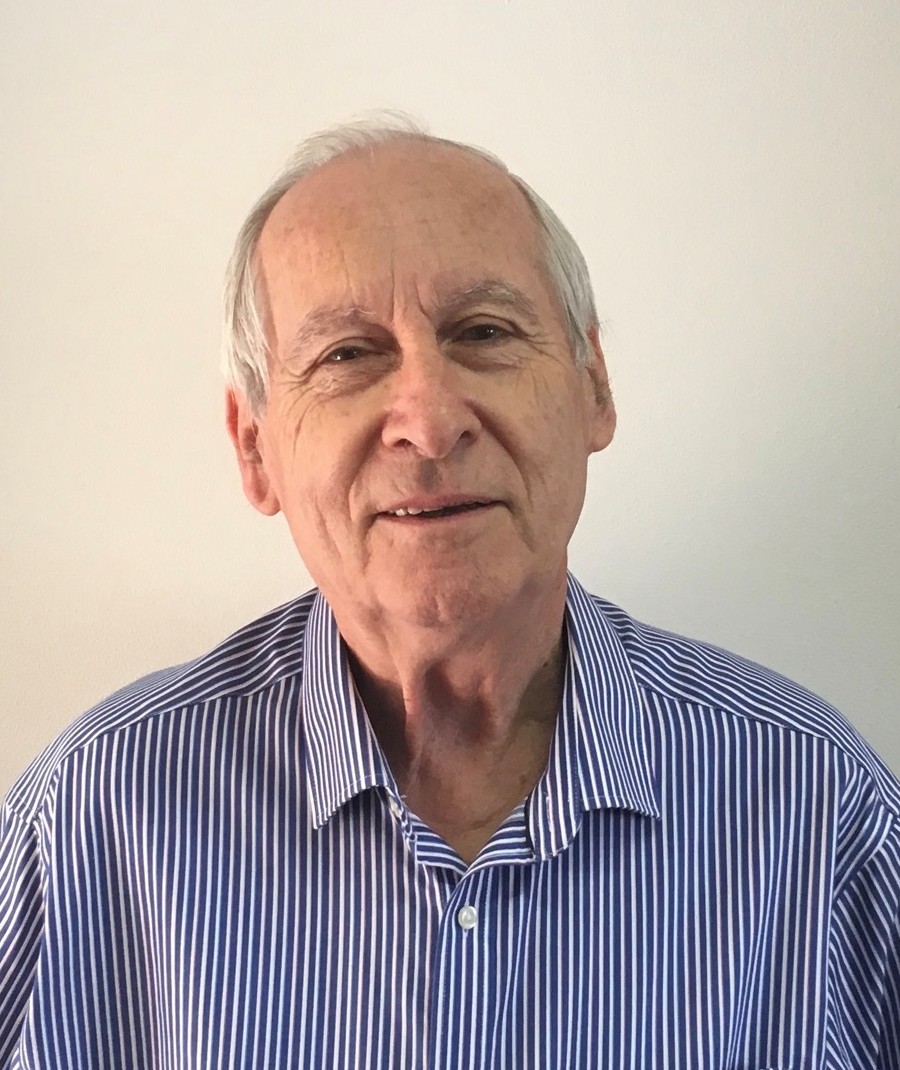
Karel Böhm, 2019
Karel Böhm, 2019
zdroj: Stories of Our Neighbours

Ing. Karel Böhm was born on 5 April 1941 in Prague into the family of Karel Böhm and Irena Böhmová. His father was a builder, his mother a teacher. He had a younger sister. Father worked at the municipality, during the war he was totally deployed to Poldi Kladno, where the family moved to his grandparents. After the war they returned to Prague. He started school in 1947. His grandfather, Václav Frank, an executi´ve director at Poldovka, lost his job after February 1948 as a result of political purges. His father was transferred to a forestry and agricultural construction company and later to a design institute. Karel Böhm was interested in radio engineering from childhood and listened to foreign radio. He graduated in 1958 from the grammar school in Hellichova Street. Due to a bad political opinion, he was not admitted to the Transport Faculty of Electrical Engineering at the Czech Technical University, but eventually graduated from the Faculty of Mechanical Engineering, which he completed in 1965. Later he supplemented his education with civil engineering. He worked at Skloproject (Uniproject), which designed glassworks with foreign licenses. He travelled on business to Germany and Italy. His father-in-law Miroslav Truc signed Charter 77 and was persecuted, his uncle and cousin emigrated to Switzerland. In the 1980s, he became the chief designer, refusing to join the Communist Party. He was followed by State Security - he was kept as a person under investigation. He was denounced at his workplace by co-workers. After the Velvet Revolution, he founded the company Inglas, where he took several colleagues from the former Uniproject. Later he sold the company and went to the construction office in Úvaly. Karel Böhm was widowed and in 2025, at the time of recording, he lived in Úvaly.