Anna Krčmárová

* 1934

  • “And so, when Dukla was so close to you… do you remember that wounded soldiers came to you? There was heavy fighting… did anyone know what was going on there? It probably wasn’t with us, because no one could get to us in Malý Bukovec, because there was a lot of water and the footbridge was cut off, so you couldn’t get there… I don’t know. Maybe my father and brothers knew more about the front, but… I just remember that when my mother baked bread, they always took one loaf of bread from each… that every week they baked, they took it to the partisans. It was agreed on where they would wait for them and they took it there. And who knows… it was difficult to get to your village… that you had some kind of mined bridge there… We didn’t have any… but Veľký Bukovec was mined… one farmer went to sow grain or hemp… I don’t know what… so the horses stepped on a mine… so the horses were killed and the farmer tore off a leg. I remember that. And then there was also talk that a lady went to the well and there was a mine there too, but I don't know that... and that it killed her too. Did you talk to your siblings about the war afterwards? Did they have any memories of it... too? No, never. We didn't even want to mention it, because it was a very difficult time. And you also mentioned an uncle... that you stayed with them for a while? ... that you mention an uncle here, that you stayed with them for a while. Yes... they were evacuated... uncle. But when we found out that the evacuees were coming back home, we had to go to our house, even though it was all sorts of things. Oh... so... when mom came back from the hospital, they went around the village asking for straw so we could cover our house. And then... then we moved into our house. And your mother… when did she come back from that hospital… after the war? I don’t know… if she was there for a week or something… I don’t remember anymore.”

  • “And what was it like in those… in those Potóčky… what did you… or did you actually experience there during the war? I guess… I don’t know… we were there for one, two days and the Germans came to take the pigs. And we… my sister and I went there through the forest, with those two pigs. Well and… each housewife stood by her own pigpen… A German shot into the air and the grandmother fainted and fell to the ground. And the commander heard that there was shooting in the village, so he ran over… when he saw that the grandmother was on the ground, he thought she was dead… so he called off those Germans. Well, that’s how we saved our livelihood. Well… and then you actually had to run somewhere further… from those Potóčky? Yes. Then we had to run away… When the partisans came, they told us that they were coming to burn the village down, that we should leave there. So we went to the forest… For fourteen days, we were in the forest… in February. Cows, chickens too… and mom… she… had a chest and there were chickens… and she opened the chest and the rooster flew up on the lid and crowded. And mom says to him: “Well, just be quiet… a fox will come and take you.” And how did you manage in that forest… when it was so cold there? Well… I don’t know. I can’t even imagine it today… how I endured it there. I just remember that we had grain in a sack… in a sack… and that was the end of our legs, because they made such a hut there. Dad, with his brothers… for the cattle, but also for us. Well, and the grain was pressing on me, so I had to keep my legs bent all the time… I remember that. So you only had some kind of shelter there and you had to survive. Yes. But how we survived… I can’t even imagine it. And from that forest… where did you go then? We came back to Bukovac, because it was close to the village, when we were in that forest. But we came to my uncle’s house… but there was typhus. The Russians had a hospital there… and we all got sick. First, Janko… my brother got sick… but he got over it somehow. But my father… he had a fever for fourteen days, he wasn’t in need, so he left. He must have… probably got poisoned from it, well… died. And then actually… did you go back to your own house, or did you go somewhere else in the village? Yes. First we went to our own house… but… first, mom got sick too, but mom was pregnant, so they had a miscarriage and went to Humenné, to the hospital… well, one day the news came that mom had died. And it was true that… It wasn’t true, but… … that, it was hard. And you were left alone with your siblings… How? … that you were left alone with your siblings. Yes. And where were you during that time? One time my mom put me in Stropkov, in an orphanage… just me. But I cried the whole time there.”

  • “And then… when the SNP came… you mentioned that Russian soldiers came there, to Dukla… do you remember that, the heavy fighting? No… I don’t remember at all, because we were there in Potočky… But… partisans went there, so they informed us how the front was going, where, how far… but I wasn’t interested in that at all. Did you also help the partisans in your village? Yes. When we came to Potočky, partisans came to see us once… Well… they came very… more often, but once the commander came, saying that they needed a live animal… that they were moving somewhere else, and that there was no refrigerator, so that a live animal… We had five cows, so my father gave them one and got a piece of paper… a receipt for it. And why did you actually have to leave your house? What happened? Because the Russians, they set fire to our house. But that… first we were waiting for the threshing machine, that the grain there… there was a lot of grain on the hill. Yes… but everything burned down, so then we went to Potočky. And did they set fire to any other houses? That… Yes. On Mali Bukovec, four and on Veľké… two houses were set on fire. But… there were a lot of us and the well was close, so we put it out right away… but the plane came back and we were again… And my father didn’t have time to hide, because the gate was… and the pillars… so he told my mother: “If I stick my finger out, I think it will cut me off with that machine gun, it cut me off terribly.” Well, but then it was no longer possible to live there, because the house burned down… so we had to leave. And were there German soldiers there before that? I think they were… but for that… the Russians set fire to it because they thought we had Germans there… But there weren’t any of us there… At least I don’t remember there being any Germans there.”

  • Celé nahrávky
  • 1

    Bratislava, 10.04.2025

    (audio)
    délka: 55:48
    nahrávka pořízena v rámci projektu Príbehy 20. storočia
Celé nahrávky jsou k dispozici pouze pro přihlášené uživatele.

“A German fired into the air and the grandmother fainted and fell to the ground… the commander heard in the village that there was shooting, so he ran over… and when he saw the grandmother on the ground, he thought she was dead… so he called off the Germans… well, that’s how we saved our livelihood.”
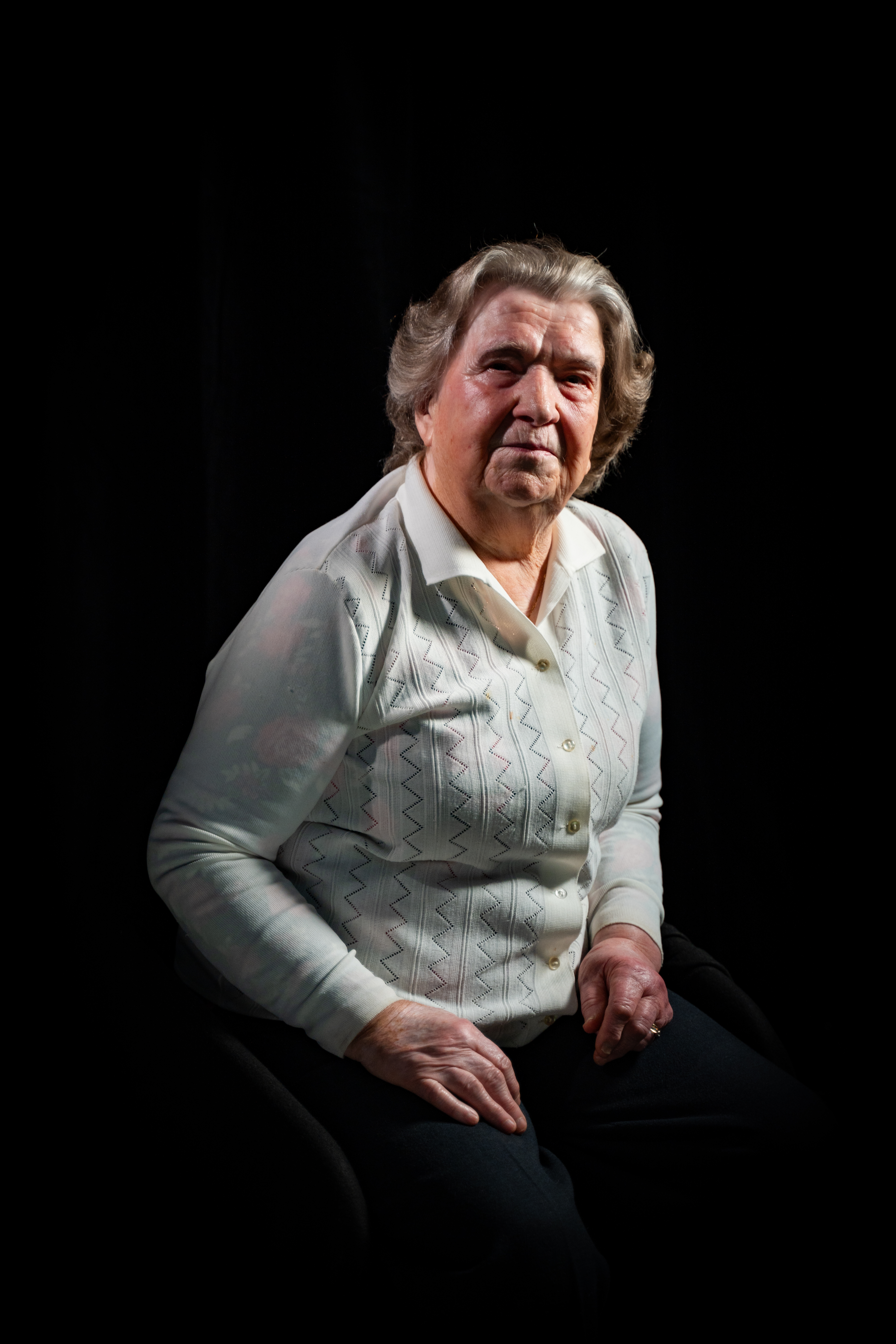
Anna Krčmárová počas natáčania v roku 2025
zdroj: Dominik Janovský

Anna Krčmárová, née Petríková, was born in 1934 in eastern Slovakia, in Bukovec. She came from a Greek Catholic family of six children, and she herself was the fourth in line. Her paternal grandfather was originally from Poland and came to Slovak territory as an orphan looking for work. He later married here and decided to set up home here. Her mother‘s parents came from Potôček, not far from Anna‘s birthplace. Anička attended the local elementary school in Bukovec, which, however, was not one of the Slovak schools. It was a Russian school, where Slovak was taught only twice a week. Teaching was more or less simpler, as they often weeded in the garden or even the students had to look after the teacher‘s children. At the outbreak of World War II, Anna was already attending a middle-class school. She also had to interrupt school for a while because of the war, but she did not continue her studies later and finished her education by finishing primary school. During World War II, their house was largely burned down during a Russian air raid, so they had to move to the nearby village of Potôčky. Both Anička‘s family came into contact with German soldiers and partisans, whom they regularly helped. In return, they gave them information that the Germans were planning to burn the village and they were able to escape to the forest in time, saving their lives. The end of the war was marked by the insidious disease typhus, which probably affected everyone, but it was fatal for Anička‘s father, who succumbed to it. Since her mother was unable to take care of six children alone, Anna ended up in an orphanage for a year. Later, she went to help out as a nanny and housekeeper, in the family of a nurse in Stropkov. Since Anička‘s mother remarried and had two more children, she had to go to her sister‘s house in Michal nad Žitavou when she was growing up, where she helped her with the household again. From there, she later started working in the gramophone factory in Vrábľy. In 1953, Anička married Jerolín Krčmár from the aforementioned village. At that time, with a soldier, and later with a bricklayer, Anna began to live in his mother-in-law‘s house. Since their first son died when he was six months old, they decided in 1955 to move to Bratislava, where they both started working in Dimitrovka. In 1956, a healthy daughter, Daniela, was born to them, and later two more children, Jaroslav and Vierka. After maternity leave, Anna returned to Dimitrovka, where she had already joined the factory guard. She worked there for 25 years, and thus served with a weapon in hand. Anna officially retired at the age of 58, but she continued to earn extra money in addition to her pension until 1992. Since her mother-in-law became ill and needed to be taken care of, Anna and her husband took care of her. Later, she devoted herself mainly to gardening, embroidery, and occasionally helping with the grandchildren.