Werner Zimmermann

* 1935

  • But it was not nice. In hindsight, when I think back about it. Above all for my mother, as children or boys we really do not fight it so intensely. This time was nice. And because you can see today there are similar things, more or less. "Because people sometimes do not even know what was before and what is now." "Yes, and above all, these nationalistic hunters who stir up hatred should not exist, we never need such things."

  • “He was still inside the barn. The Russians came again looking for something. He thought they were looking for him. But I only know that from those who have been observing. Back then we were somewhere inside the house. I was only eleven years, not even eleven. In any case, there was my father. After that they said they did nothing to the man. They had seen he was not in the army, neither was a functionary, he was in the Czech army, so he had a military passport. We had no reprisals. Yes, there was my mother with four children. And then the Czech commissioners have come, mayor as one has said. And the militia especially, which was often a bit hard. You had to deliver everything: radios, whatever, jewellery. You had to deliver al that. The militia has always come from Freudenthal. There was a camp. There were then those, who had to do with the party, which came here. Obviously back then I do not know what was going on there. It was the word of mouth, what I heard. Stuff I did not experience myself."

  • “She did not know now yet – will anyone do anything? Until someone actually agreed to work as a grave digger. Jump on. We drove him to the cemetery with the truck. Wrapped in a carpet or whatever. There were three or two more killed by the Russians during the invasion. They were buried together. It was simple, just throw him in and more ground on top." "Were they all together in one grave?" "Yes, indeed. Just next to each other. These are just the experiences, which, as you get older, are really imprinted. They come back again. This has not been very easy for my mother. Well, just the kind of things. Nevertheless, I was up there now in the cemetery, but can never find exactly, where the place is now, because now it is all covered with grass.

  • We children were lying on top of the things that had been arranged there. There were forty people squeezed up together. Indeed up there. I did not know at all where we went. Via Prague... and then, just that. Just before the border, they threw the white N off the train. "" Yes? "" They all did. And the Americans practically organized it all, as Bavaria was already an American zone. There we were gotten rid of lice. That was the first thing the Americans did; to cover us with a powder all over. They first thought that loud and lousy people were coming, or something. Indeed the Americans had no idea, what kind of people were coming there. So what I often read now: the Czechs, this leadership. When I tell the Czechs, then I do not want to say it all, but the leadership, which of course has said how many there are, and of course everything has a bit trivialised."

  • Celé nahrávky
  • 1

    Neumarkt in der Oberpfalz, 16.03.2017

    (audio)
    délka: 01:18:35
    nahrávka pořízena v rámci projektu Vzpomínky pro budoucnost
Celé nahrávky jsou k dispozici pouze pro přihlášené uživatele.

Válka je vždy špatná pro obě strany
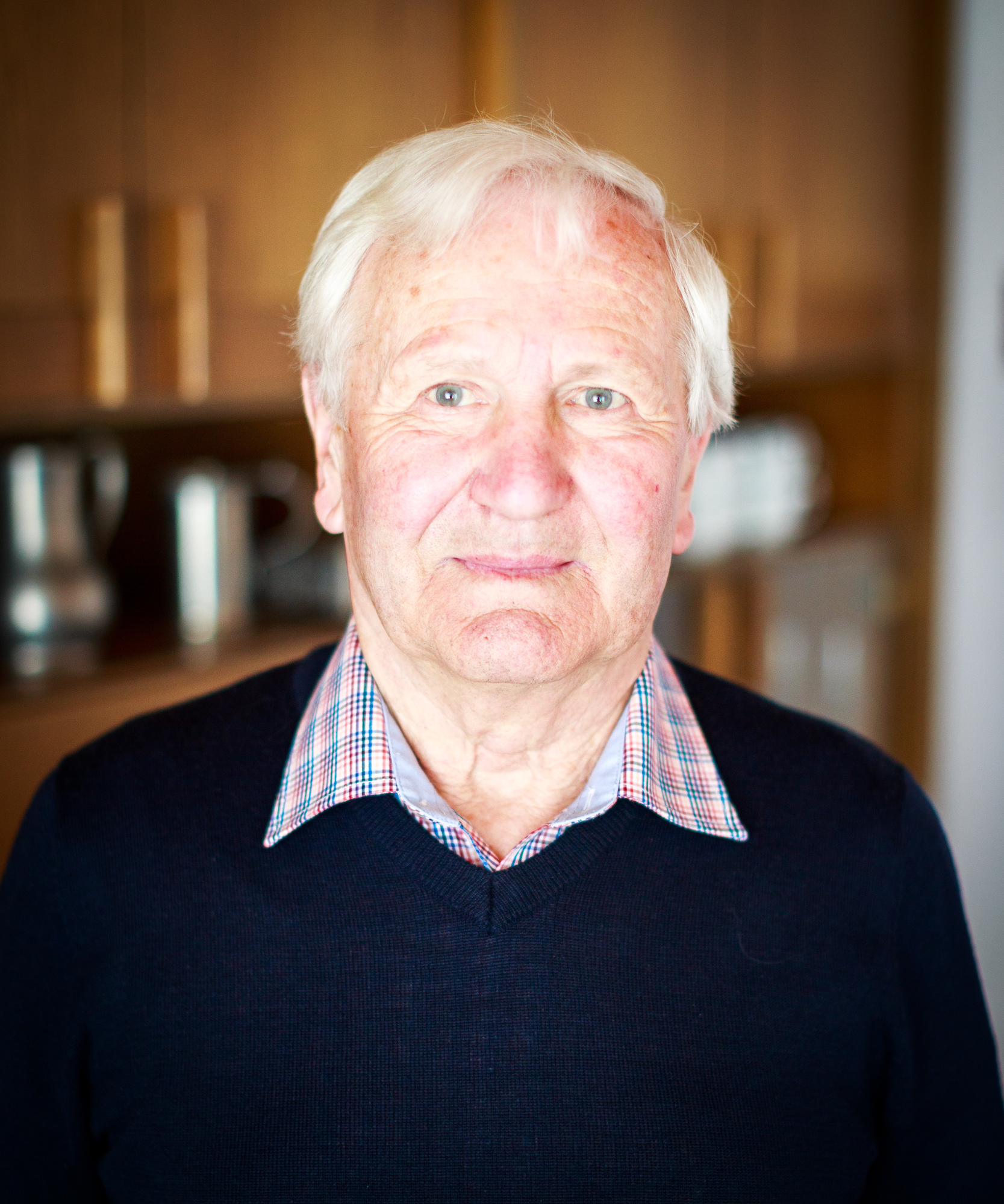
Werner Zimmermann
Werner Zimmermann
zdroj: Dominik Michálek, 2017

Werner se narodil 27. září 1935 v nemocnici v Troppau (Opava). Jeho otec byl učitel, takže se rodina kvůli jeho práci často stěhovala. Na konci války žila rodina ve Wildgrubu (Václavov u Bruntálu) v areálu školy. Měl tři mladší bratry. V zimě 1944 zažil úkryt ubohých ruských zajatců, kteří procházeli vesnicí. Jeho život se 5. května 1945 výrazně změnil, protože jeho otec byl zastřelen ruskými vojáky, kteří procházeli vesnicí. Otec nechtěl vstoupit do milice; nechtěl nosit pistoli a střílet na lidi. „To neudělám,“ řekl a toho dne před vojáky utekl. Matka, která zůstala sama s dětmi, musela spolu s domácí služkou zařídit pohřeb. Otec byl pohřben ve společném hrobě spolu s dalšími dvěma nebo třemi lidmi, které Rusové zabili ve Freudenthalu (Bruntál). Werner také zažil zuřivost Rusů, kteří chtěli unést dívky a ženy z vesnice a znásilnit je. V září 1946 byla rodina odvezena na nádraží ve Freudenthalu (Bruntál) a odtud transportována do Neumarktu v Oberpfalzu. „Těsně před hranicí vyhodili z vlaku bílé N ... všichni to udělali.“ Studovat v Německu nebylo tak snadné. Už doma si zajistil místo na gymnáziu. Ve své nové vlasti se nejprve vyučil strojním konstruktérem. Později, v roce 1968, se kvůli zdravotním problémům stal bankovním úředníkem. V roce 1959 se oženil s Theresou. O rok později se jim narodil syn. Ačkoli rodina o této době příliš nemluvila, Werner říká: „Tyto zážitky se vám vryjí do paměti a když zestárnete, vrátí se vám.“