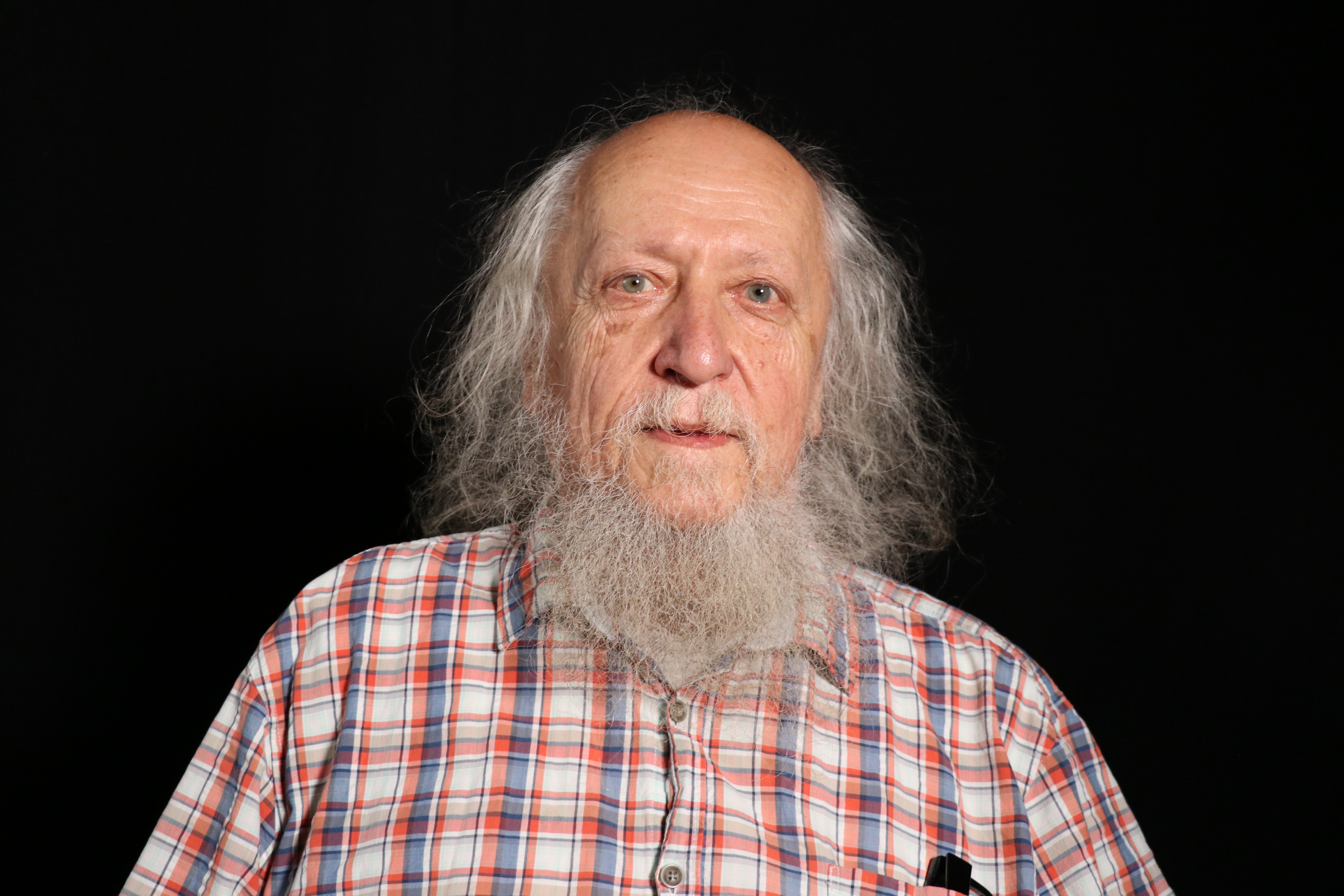
Vavřinec Korčiš

* 1948

  • "[I told the foreman printer] that I was doing it because when someone writes a book and it goes to a publisher, I said it works better if they put the manuscript bound. So at first he believed me, he took my bait, and then State Security men explained to him that it wasn't like that, that I wasn't doing it as a manuscript and that it was... [samizdat]. So, for example, The Plague Column by Seifert, I bound about two hundred copies of that. Vaculík - Book of Dreams... I think it was hundreds of books that I did. [Jiří] Gruntorád has the best overview of that. He knows my bindings because I was so atypical."

  • "I was still staying with Petruška [Šustrová] and one day, I think it was a Saturday, we were sleeping and someone rang the bell. And Petruška went to answer the door. She came back and said that there were two strange men at the door and that they must be my friends from the prison. I went and opened the door, and there was [Ludvík] Vaculík and [Ivan] Klíma, who came to ask - they heard that I could bind books, so if I wanted to do [the edition of] Petlice, so I arranged with them. There was always someone who did the transcription and someone who bound the books. So they put me in touch with Karol Sidon, who did the transcription, and I did the binding. And because I was working at the state printing plant at the time and I had...I was making rubber molds on the press there, out of rubber, so I used that press to do the gilding. So I also had gilt lettering on the book bindings. Downstairs, the guys at the cutting machine, they used to crop the paper that came off the reels and make sheets out of it, so they cropped my books. They all knew what was going on, and they helped me."

  • "Then I received a letter from Petruška [Šustrová], which was handed to me by a doorman there. And [she wrote] that they told her that if I turned myself in [to the police] they would let her go so she could take care of Ivánek. I didn't believe it anyway, but I went to knock on the gates of Ruzyně. And I knocked and the guy who was guarding the gate, some security guard, opened the door. And I said, 'Captain Horák wants to see me.' I think his name was Horák. And he said, 'Do you have his phone number?' I said I didn't. And he said, 'Well, what do you want him to do?' I said [Captain Horák] wants to talk to me. I had to talk him into getting him, this Horák, so he made a phone call. And a little while later a guy in plain clothes came around the corner. I could see him hurrying, and when he saw me there, he slowed down, walked normally. He came up to me, introduced himself. And I could still hear the cop who was looking for him saying, 'No, young man.' He asked him if he was my old man. The old Korčiš, or the young one, he confirmed that I was the young one. So after a while he ran out from upstairs and then came towards me. So he introduced himself at the gate, and I introduced myself. He led me in, we walked around the corner, there was a gatehouse. And the porter says, 'Shall I sign him in, will the gentleman stay here?' And the Horák says, 'Yes, the gentleman will stay here.'"

  • Celé nahrávky
  • 1

    Praha , 26.10.2025

    (audio)
    délka: 02:20:32
    nahrávka pořízena v rámci projektu Stories of the 20th Century TV
Celé nahrávky jsou k dispozici pouze pro přihlášené uživatele.

I used to bind samizdat books at the state printing plant
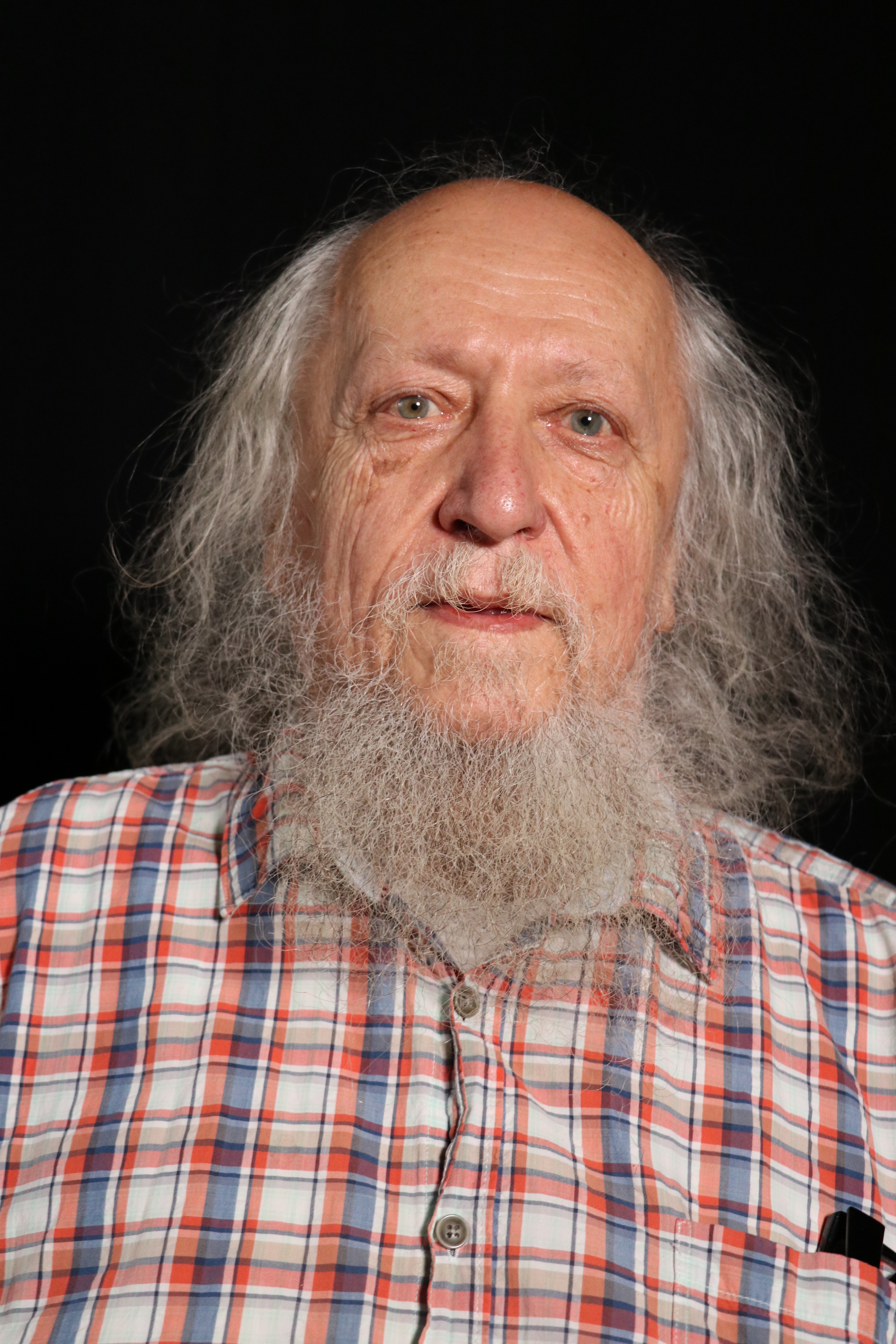
Vavřinec Korčiš, 2025
zdroj: Post Bellum

Vavřinec Korčiš was born on 7 February 1948 in Rumburk into the family of Vavřinec Korčiš and Věra Korčišová, née Šilhánová. He grew up in Horní Poustevna in the Šluknov region. His father, born in 1925 in Mariková, Slovakia, was a partisan during the Second World War, a communist after the war, and later a Chartist and dissident. Vavřinec Korčiš Jr. studied in Litvínov and in 1966 joined the Faculty of Mathematics and Physics at Charles University. He did not finish his studies and in 1968 he transferred to the Faculty of Arts of Charles University. In the environment of Prague students, he was politically profiled on the radical left and belonged to the circle from which the Revolutionary Youth Movement (HRM) emerged. After the invasion of the Warsaw Pact troops, he became involved in the illegal activities of the HRM, especially in the printing and distribution of leaflets. At the turn of 1969-1970, the group was exposed by State Security. His partner, Petruška Šustrová, was arrested and sentenced to two years in prison. He managed to hide until he turned himself in to State Secirity. He spent 15 months in pre-trial detention. In 1971 he was punished with the length of detention already served and released. After returning from prison, he started a family with Petruska Šustrová. He worked as a worker in a printing plant and in Metrostav. In 1977 he signed the Charter 77 and during the normalisation period he was one of the less visible but important figures of dissent; he participated, among other things, in the production and binding of samizdat for the Petlice edition. After November 1989, he worked in the presidential office of Václav Havel and then at the Ministry of the Interior, where he participated in the transformation of the post-Soviet security apparatus. He was certified as a participant of the resistance and resistance against communism. At the time of recording (2025) he lived in Lovosice.