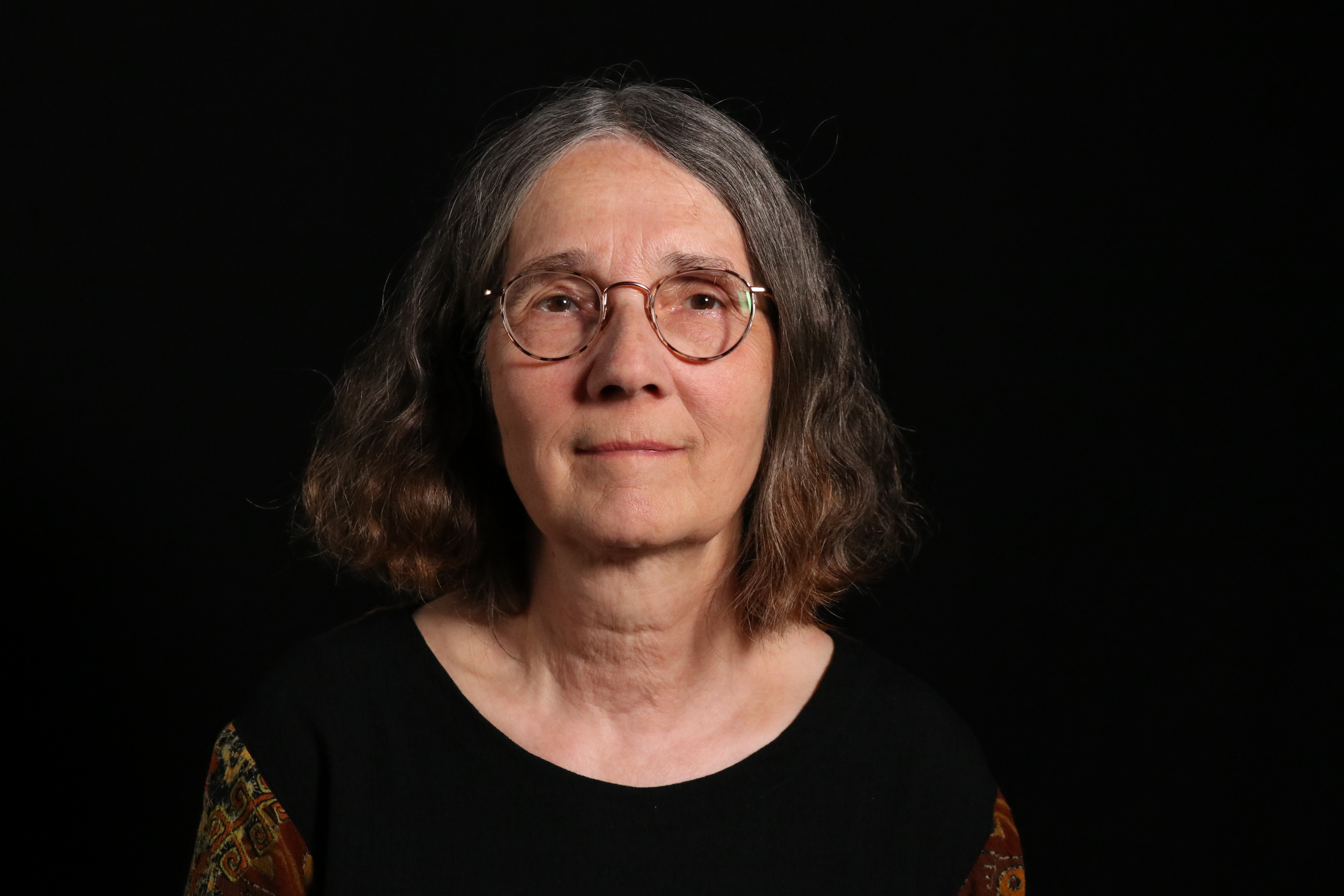
Caritas Führer

* 1957

  • "In September it was already evident that something was happening in Leipzig and that changes were taking place. In 1984 we attended a youth service at St. Nicholas Church. I was in the advanced stages of pregnancy with my first child. And as we were coming out of the service, it was said during the service, 'Everybody go individually, even if it takes two hours. You must not go out in groups or you will be arrested. Outside, disperse immediately. No one takes candles. Nobody show purple scarves or anything like that.' Those were the signs at that time. So we were already given instructions in the church on how to leave the church. And that's where I got scared about the pregnancy and thought, 'Who knows what's going on outside.' We left about ten minutes early. When we came out, we saw that there were police cars with platforms everywhere, and people who had been arrested had to get on them. And there were cars with water cannons. My husband took my hand tightly and we quickly went to the nearest side street."

  • "Once, when I was still in first grade, I experienced that all the children who went to religion had to get up. There were six of us in the class that were involved. We all stood up. I was curious because I thought the teacher wanted to know what we were doing [in religion class]. I would like to tell her. But something completely different happened. She said to the other children, `Look well at these children - they are retarded. They still go to church with their parents. They still believe in God. But the young pioneers know that none of that exists. It's all nonsense. That's why you can laugh at them now.' Then our classmates, maybe not all of them, but they laughed and mocked us. And that affected me deeply."

  • "I was in school at the time. I walked into the classroom and the seventh grade had a notice board set up. I stopped by the board because there was a newspaper article that said - I don't remember exactly, but it basically said that in the German Democratic Republic every student can learn and develop according to his or her abilities and talents. I read that and I thought it was a lie. My sister can't. And then I shouted out loud: 'What it says here is a lie!' And then I tore the article down. I didn't think about it beforehand, it was an impulse. I was so outraged at the injustice... And then other students came and tore down other articles. I had nothing to do with it anymore, but it was taken out on me. An avalanche started in the school. It was discovered and our class was asked who was it, who did it. I reported myself and thought I could explain it all. I did it for my sister. I was ten, I was a kid. But the teacher saw it differently. She said that I had encouraged the others to do it, that we had destroyed the political creed of the seventh grade. That's how she exaggerated it. And then I was taken to the principal's office for questioning, a real questioning, as we know it from literature. Two people from the Stasi sat there too, two men. My class teacher, the two principals and me. And then they cross-examined me. They asked me from different sides: "Who put you up to this? What newspaper do your parents read? Do they have a church newspaper? Do tehy read Neues Deutschland?´ From all sides, as is the custom with such tactics. They did it until I cried and stopped answering."

  • Celé nahrávky
  • 1

    Praha, 06.06.2025

    (audio)
    délka: 02:57:34
    nahrávka pořízena v rámci projektu Stories of 20th Century
Celé nahrávky jsou k dispozici pouze pro přihlášené uživatele.

She experienced fear and humiliation in socialist school, today she writes about it
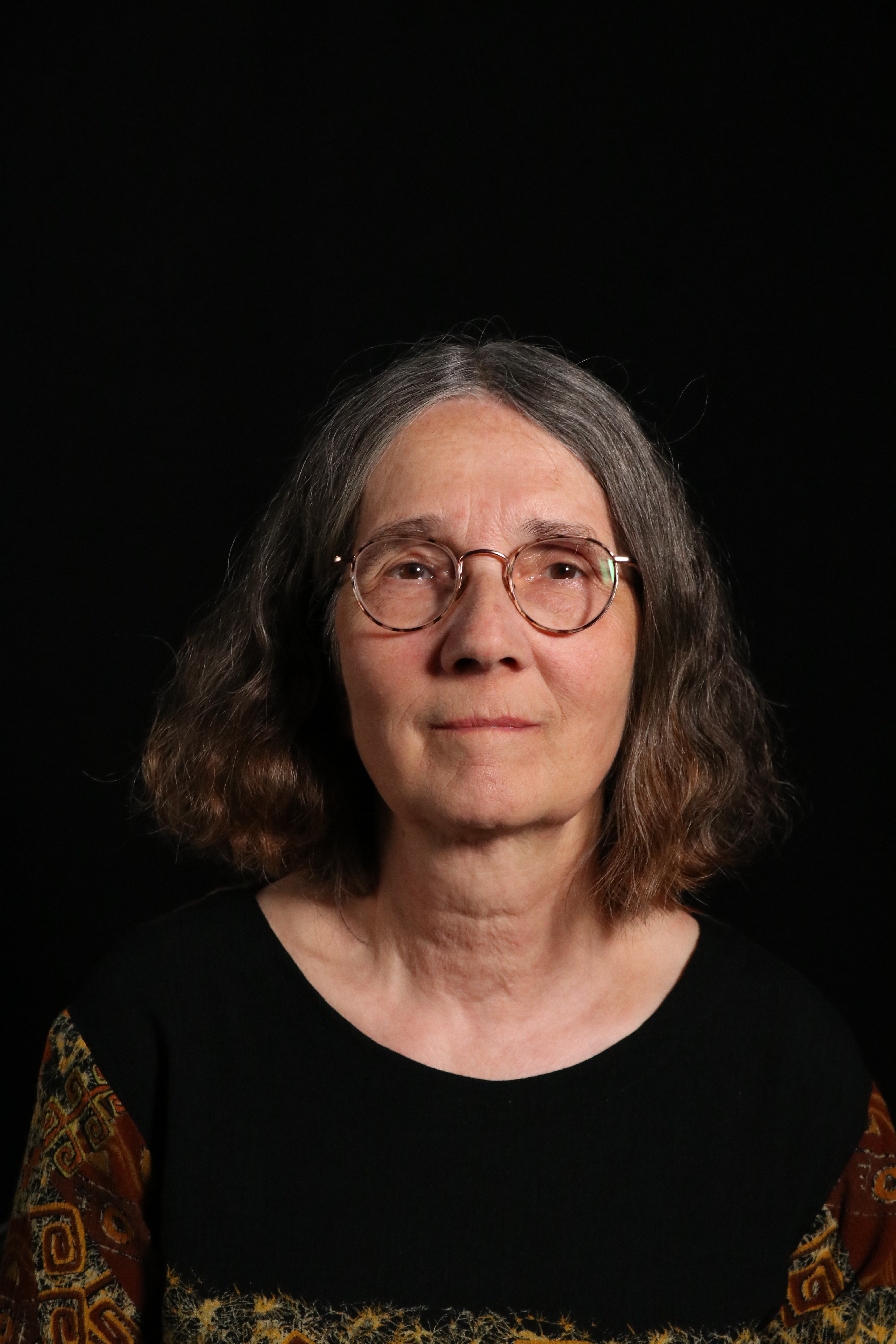
Caritas Führer in 2025
zdroj: Memory of a Nations

Caritas Führer, née Böttrich, was born on 25 March 1957 in Chemnitz (then Karl-Marx-Stadt) in the German Democratic Republic to Albert Böttrich, a pastor of the Evangelical Lutheran Church, and his wife Annelies Böttrich. She had four older and one younger sibling. As a non-member of the Pioneer and FDJ (Free German Youth) organizations, she could not pass her high school diploma or study. She took a four-year course at the school of the State Porcelain Manufactory in Meissen and trained as a porcelain designer and modeller. She worked at the company until 1980, then spent a year doing social work with children in Zwickau, where she met her future husband, Dr. Michael Führer, then a theology student. At the porcelain factory she was a member of the so-called writing circle of the workers. Through the church community she also had contacts with believers from the Federal Republic of Germany, her eldest sister emigrated to Sweden. In Leipzig she remotely studied at the Johannes R. Becher Literary Institute. St. Nicholas Church, where her husband‘s relative Christian Führer served as pastor, became a center of opposition activities in the 1980s. She had two sons and therefore stayed away from protest actions. In September 1989 they moved to Zschopau in the Erzgebirge, where her husband was a parish priest. They experienced the demonstrations and the regime change there. After the revolution they travelled, organised humanitarian aid for Romania and adopted a third son. She began to publish her writings, and in 1998 her first book „Montagsangst“ was published, where she elaborated her experiences of socialist education. Since 2000 she has been a full-time writer. She was living in Dresden at the time of filming in 2025.