“We got our passports from the Gestapo, we got them in Střešovice I suppose. Then we were at the Masaryk train station and the SS men came and brought a large basket with the passports. There were about eight hundred people, the whole train. They let the basket there and we were standing at the platform. One of the officers shook the basket and said: ‘Drei vor bleibt hier – Three of you will stay here.’ The people got scared. They also took a small child to stay. A young boy wanted to stay instead, voluntarily. They didn’t let them. From Vienna we on the Melk ship.
“There were from 1800 to 2000 passengers onboard. The ship looked as if it was brand new but it was only newly painted. It was an old rusty ship. The British started the engines for us to leave the port before the answer comes from England; we were asking for a pardon [a notice for an appeal? – author’s notes]. Israeli Hagana decided to damage the steam engines so that the ship couldn’t leave. They made a bomb, later on I met a man who was a pyrotechnic at Hagana and constructed the bomb. They smuggled the bomb inside together with coal and on 25th November 1940 at ten to nine the bomb exploded and made a hole of 12 square meters on one side of the ship because it was only rust covered in paint. 268 people died. That was horrible. I managed to escape the ship and then I returned. I hurt my fingers as I was trying to get out of the ship. At the moment of explosion I was in the under deck but I managed to get out. My mum was in a worse situation, she was locked in the cabin. She was thin so she climbed through the porthole and got out. The English did not help, they did not sail a single rescue boat, so a lot of people died. Only the Australians came on boats, as I found out later. I found my mum later in the evening. She was in the warehouse where the Red Cross treated the injured. She lied there stark naked with bruises at her hips as they were trying to pull her out. One of the Australians put off his sweater, they had nice green sweaters, and gave it to her. She wore that sweater for ten months in Atlit. It was the only dress she had.
“I took cigarettes and chocolates and put them in a marine sack. I took everything we [the western soldiers] had and they [the eastern soldiers] didn’t. I came there, the officers were sitting on the ground, mostly from Ostrava, the generation of my father, I knew some of them from my father. They were sitting in a circle and smoking a Machorka, it smelled really bad. I emptied the sack on the ground, they jumped at it, lit a cigarette, took a chocolate and they were looking at me. One of them says: ‘Look at him. Like a model…’ And I am standing there and they are laughing. My father laughs with them. ‘You know, he got the first medal by mistake and the others because he got the first one.’ They were laughing at me and I was silent. My father got up and said: ‘You are a corporal, if you were with us you would be either an officer or you would be dead.’ I said: ‘Sorry to be still alive.’ I turned my back at them and went away.”
“Mother arranged that through the Jewish community in Prague. On September 2nd at half past five in the morning there were about one thousand of people leaving. It was one of the last transports, we had passports from the Germans with visas somewhere to Ecuador. They said: ‘Ecuador, oh yes, the capital – Jerusalem. We will come to visit – wir kommen nach…‘ We went down the river Danube on an Austrian steamboat called Melk.
“People in the village knew I was Jewish. I had to leave. I went to a village near Klatovy. That was a real crook. This Czech farmer was a fascist. His son told me that he wanted to inform the Gestapo. After the war when I was in Nepomuk I went there. His daughters were on their knees begging me to save him. He was arrested, kept in the Black tower and eventually hanged. He was a swine and a crook, he also had an inn and during the war he informed on the other innkeeper. I spit on the ground before them and I was glad that they hanged that swine.”
“They told me to report at commander Klapálek the next morning. The next morning at Beit Shanu I reported: ‘Sir commander allow me to report, I was lying!’ – ‘What about?’ – ‘I said I was 21 years old and I am only 17.’ ‘Why would you do that?’ ‘Because I wanted to serve in the army.’ He laughed and said: ‘A soldier does not lie, but you lied when you were a fucking civilian, so, now go to the office and sort it out.’ – That was all. Since then, anytime he met me, he called me a ‘baby’. I liked him, he was a great man, but then he completely changed. Some boys went to see him in Prague and he said: ‘Sirs, I don’t know who you are.’”
“The other day, I was driving the bus at Karlovy Vary, two men got in. At an instant I knew that they came to see me. I knew that there is a war [in Israel] but I didn’t care very much. I felt like a Czech citizen and I wanted to live here. I didn’t know at the time what they were going to do with Czech veterans. I wasn’t in the party but they could have done an excellent communist out of me. I knew how to drive a bus but that was all I knew. They came to me and told me with a broken Czech/Slovak that they wanted to speak with me. I already knew who they were. I told them where I lived and at what time my shift ended. ‘Come I will be at home.’ When I came they were already sitting in the kitchen with Jiřina and they told me: ‘Do you know that there is a war in Israel?’ – ‘Yes I do.’ – ‘And you are not interested in that?’ – ‘No.’ – ‘And would you go there for money?’ – ‘It depends on the amount.’ – ‘How much do you earn here?’ – ‘3000 crowns a month.’ – ‘Nine thousand for you and the same for your wife.’ I only wanted that it was approved by the Czech authorities, the Czech Army. So the Czech Army sent me there as an instructor for heavy machine-guns. I went to return my tools. The man at the warehouse said: ‘Erich, keep it you are going to be back soon.’ I left everything at home. I wanted my wife and my daughter to go with me… I wanted to show them to my mother. We had nothing. I left everything in Karlovy Vary. I was wearing an uniform, I had a potty in my hand and a dummy flask for my daughter in the other.”
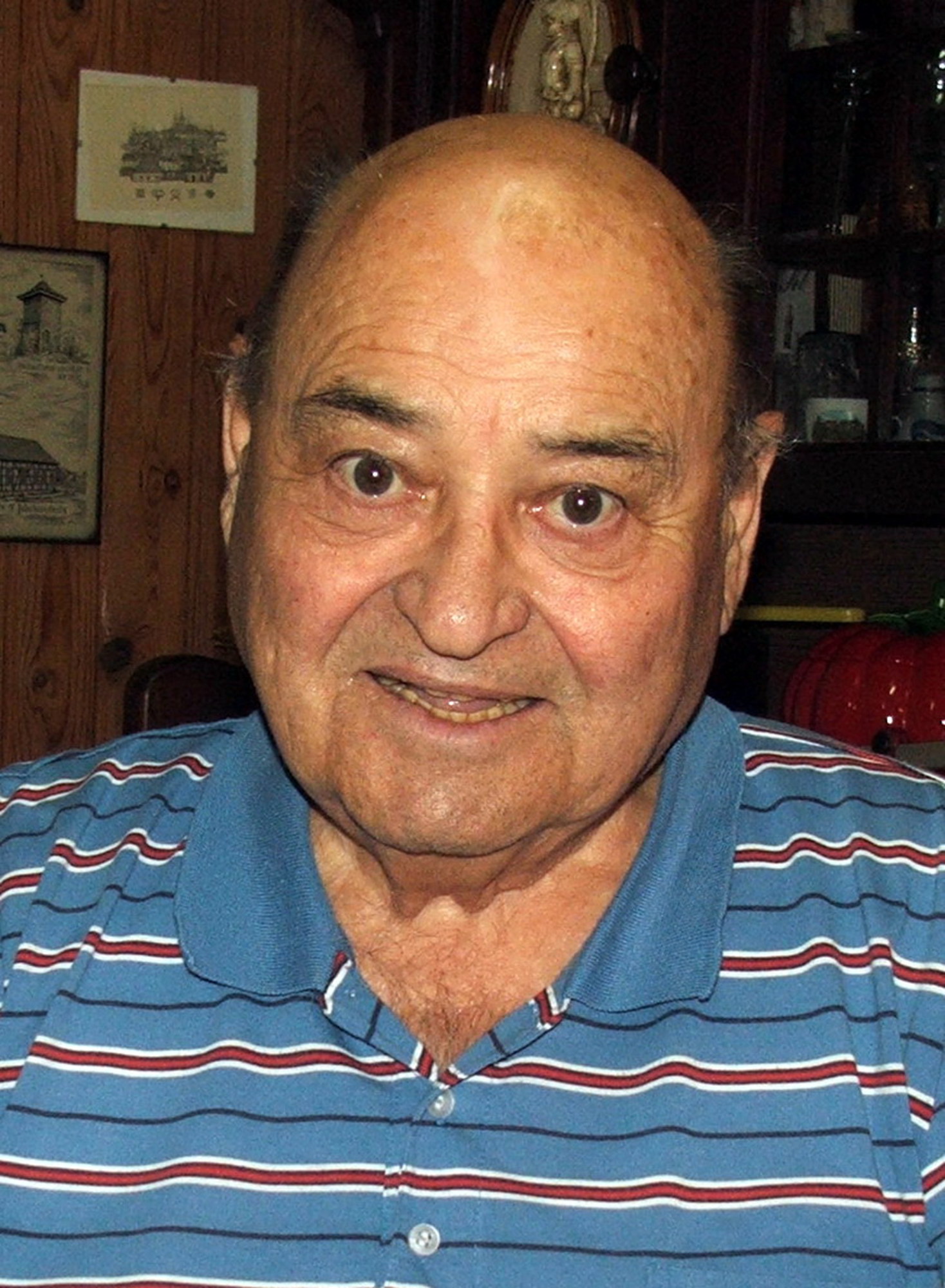
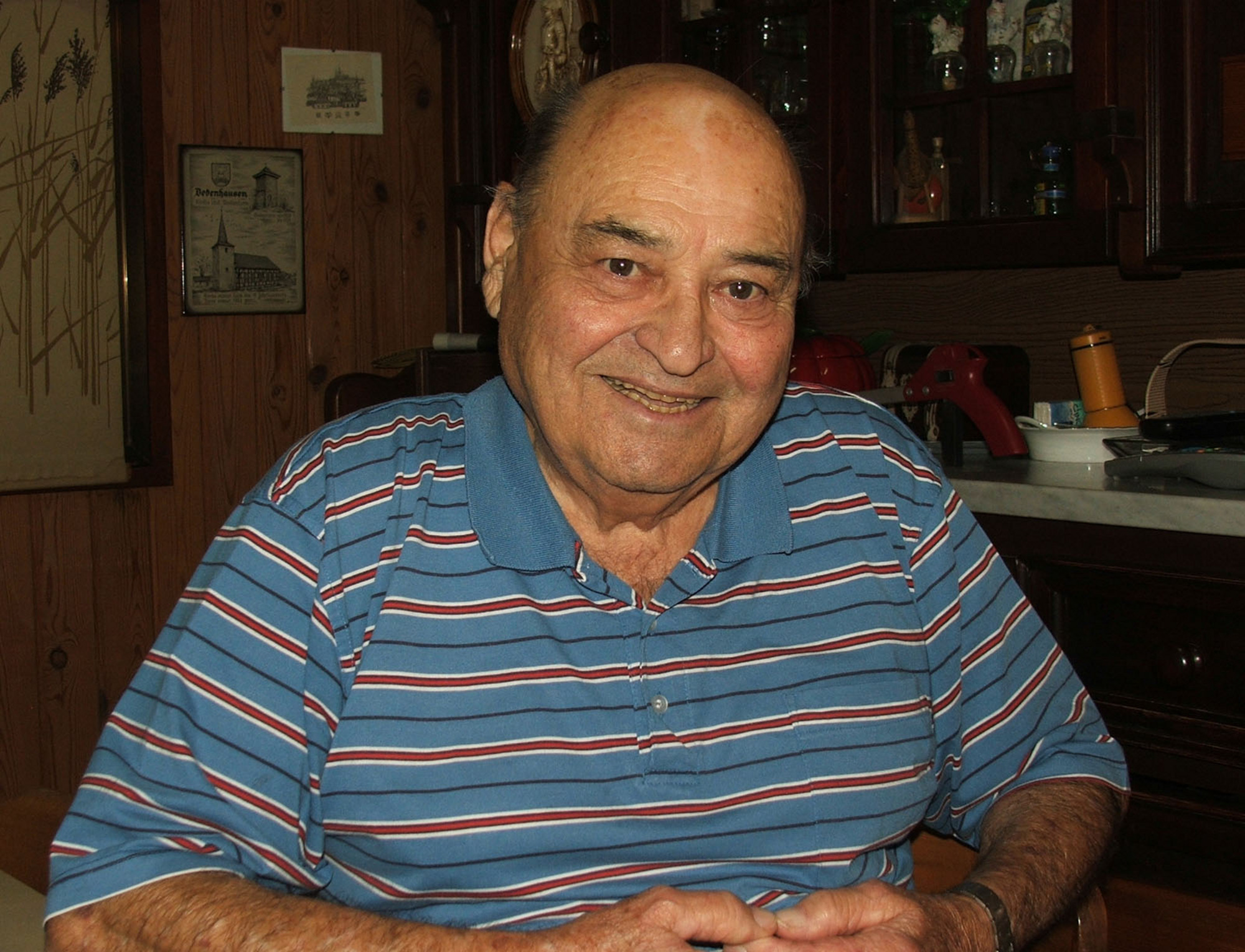
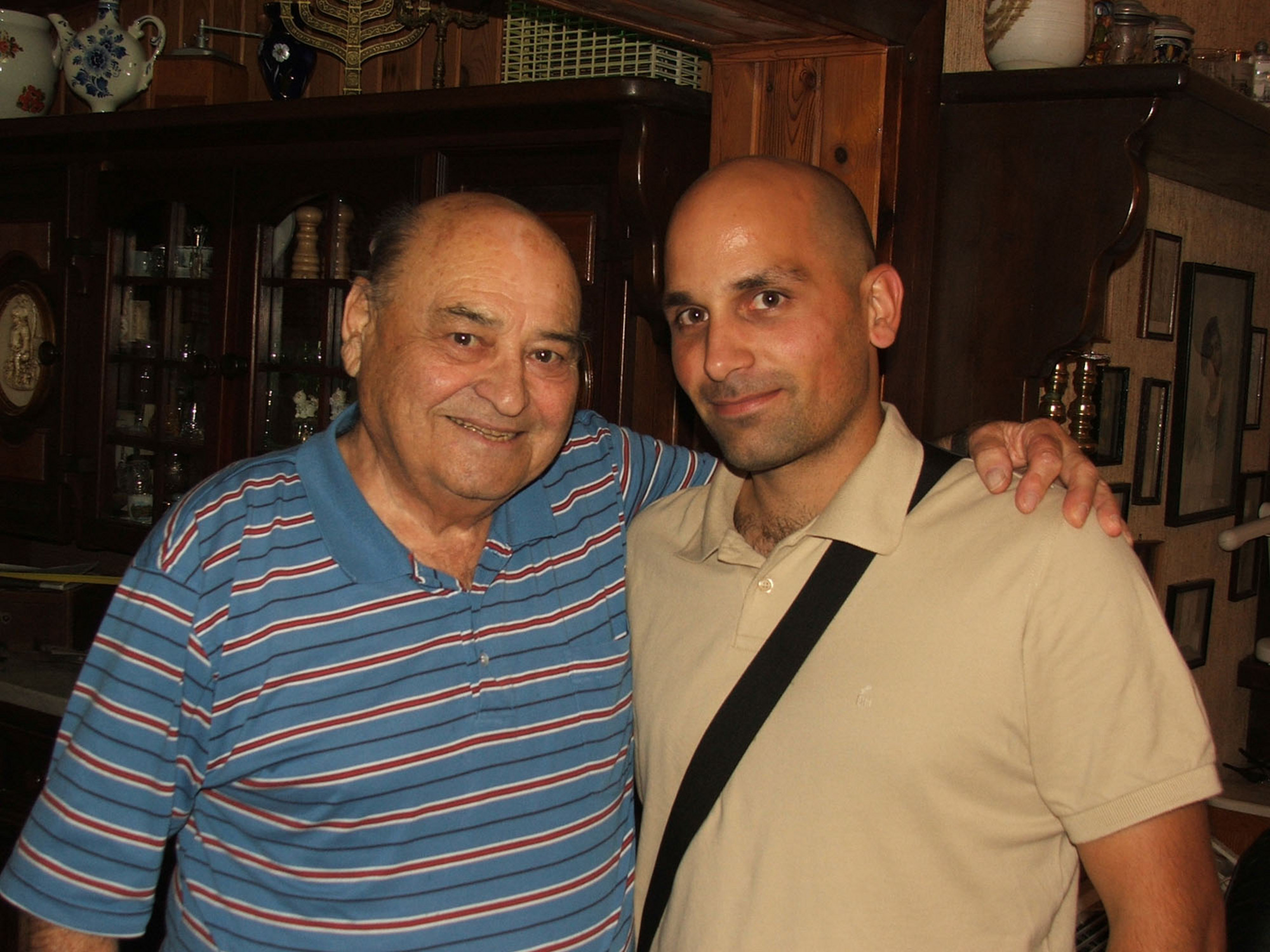
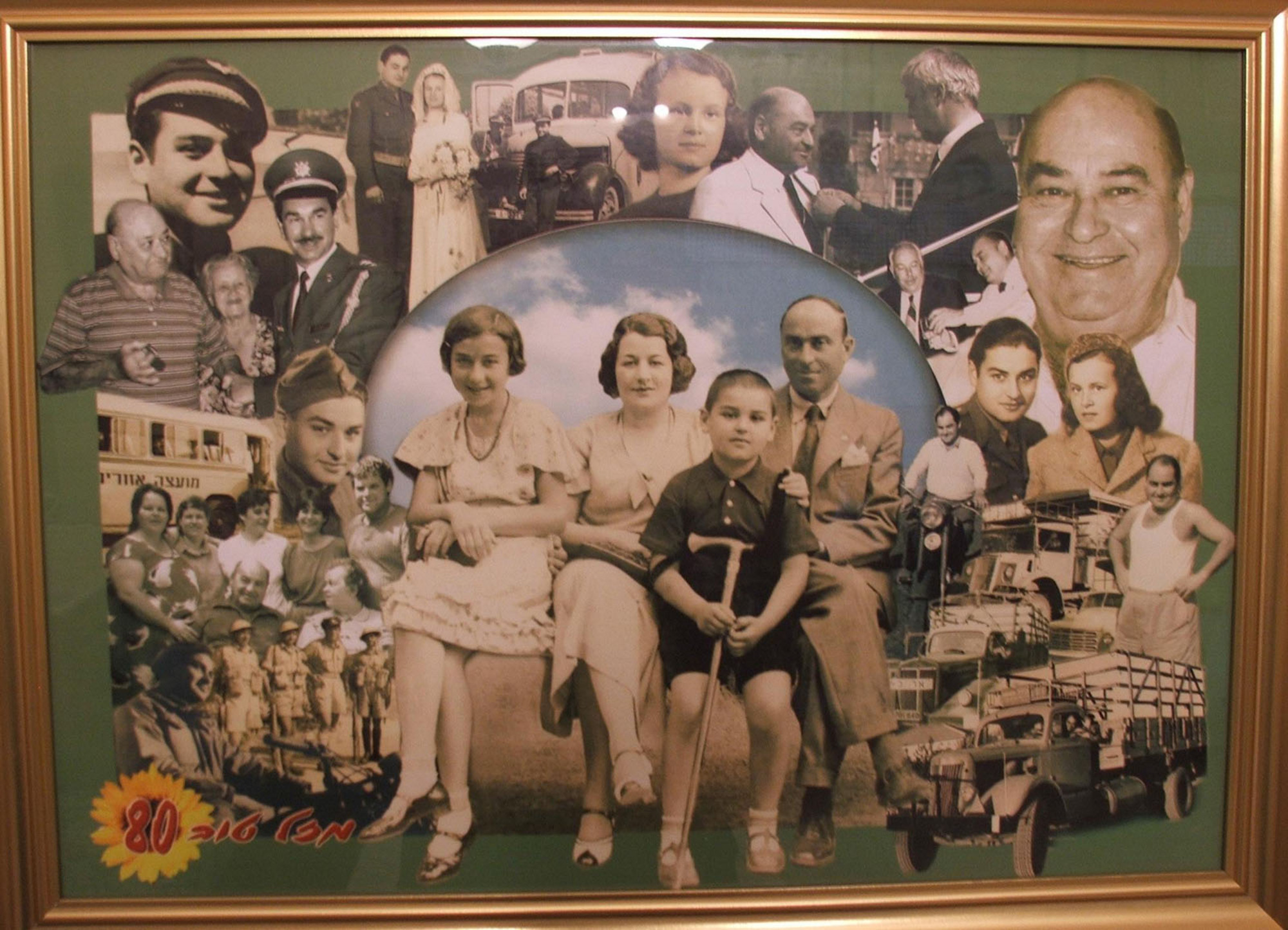
Eliahu Brodavka was born on 16 October 1925 in Moravská Ostrava as Erich Brodavka into a mixed Czech-German Jewish family. His mother Gisela was Austrian, his father Karel was from Bohemia. Erich Brodavka was fluent in both languages and attended Czech schools in Ostrava until 1936. His parents had a very liberal attitude towards Judaism, young Eliahu also. In September 1940, together with his mother, he travelled by the Melk steamer on one of the last official transports organized by the Germans to what was then Palestine. In Romania he transferred to the naval ship Milos, and near Haifa the British transferred the refugees to the ship Patria. Eliahu Brodavka witnessed first-hand the sinking of the Patria by the Israeli Haganah, in which over 260 people died. In 1942, in Jerusalem, he joined a Czechoslovak military unit and served as a driver at Tobruk, in England and at Dunkirk. After the war he worked as a bus driver in the Karlovy Vary region. In 1948, he was contacted by secret service agents, as a result of which he enlisted in the Czechoslovak military contingent sent to help the state of Israel. He managed to leave with his wife Jiřina and daughter Hana. From 1949 he lived in Israel, from the 1950s in the village of Arbel near the town of Tiberias. In Israel he worked as a bus driver and a mechanic in a local agricultural cooperative. Eliahu Brodavka died on 5 May 2011.
Hrdinové 20. století odcházejí. Nesmíme zapomenout. Dokumentujeme a vyprávíme jejich příběhy. Záleží vám na odkazu minulých generací, na občanských postojích, demokracii a vzdělávání? Pomozte nám!