Олекса Різників Oleksa Riznykiv

* 1937

  • We were sitting in class. Our homeroom teacher, Nataliya Serhiyivna, burst into the classroom, crying, in tears, something black flowing, “Children, the great leader Stalin has died! He's dead! My God!” The girls started wailing, and we boys clenched our fists, “How? How can this be? Stalin is dead? How? We thought he was eternal. How could he die?” And what happens? She starts preparing a wall newspaper, and I start writing a poem. And I write, “We swear to you, dear comrade Stalin, that we will continue your cause. We will double and triple our efforts, and we will bring communism closer.” She comes up to me, ”You are writing, aren't you?” I say, “Yes, I am.” “Let me put it in the wall newspaper.” I wrote three verses, she put them in the wall newspaper, and circled them in black. Then they let us go home. I come home, thinking my mother doesn't know yet that he died. And she sees me, “Oh, my son! Oh, my son! Thank God! The Antichrist croaked! Oh, thank God! Oh, how good it is!” It turns out that she was [born in] 1905 and had lived through everything: from [19]17 to 1953, she had lived through everything, she knew everything that was going on. And the war, my God... I was always surprised, all my professors, all my teachers, everyone around me was saying that Stalin was a genius, Stalin was a great scientist, but my mother whispered... And women from her native village in the Kirovohrad region, nearby, would come to visit her and say that Stalin was the antichrist and Lenin was the antichrist, so calmly. “Just watch, Oleksa, don't say a word to anyone about this, because they'll put us in jail.” So I knew everything. I said, "Mom, I wrote this poem." She said, "Well, so what? You're in school, that's right! But you know he's the antichrist." ”Yeah, now I know, I really do.”

  • After Khrushchev’s decree [Decree of the Presidium of the Supreme Soviet of the USSR “On Amnesty” dated September 17, 1955], 25 years were reduced to 15, and all these people had 25 years. So, how could they hold them for 25 when it was now 15? They got a new trial. They were tried again right there in the camp. The club where we watched films in the evening turned into a courtroom in the morning. Once, I didn’t go to work, got sick, or something. I thought, well, I’ll go see this trial, what kind of court it is. Thirty people, thirty people were released every day. The camp administration submitted them to the court, saying that the man had embarked on “the path of reform,” and he was no longer a Ukrainian nationalist. He had this and that. In short, they wrote something. And in front of me, I sat there for about an hour, in an hour, around ten men were released. The judge would just ask, “So, you... There was a battle near such-and-such village, right?” — “Yes, yes, I fought there.” But that didn’t count. If there had been a battle, that wasn’t considered a sin, you understand? They treated that as something normal. Well, he did fight. But if someone had killed someone, liquidated someone — now that was a terrible sin — those people did not get released. Because we had this guy, Moroz, a foreman, he once said, “Oh, that's it, today I’m going to trial.” We went to work without him. We came back, thought he was gone. And he meets us, says, “They didn’t release me.” So, he had that kind of sin — he didn’t admit it, but they knew he had killed someone. <…> So, as I have told you, they had settled us on the third tier [of bunks]. About a week later, we moved to the second tier — they dismantled the third, threw it out. Imagine that! Another month goes by, and by September, October, we were already on the first tier. Can you imagine? Thirty men were leaving every day. In the morning, they were already leaving us their books, “Oleksa, take these, here, look, these books: Shevchenko, Bohdan Lepky here, Hrushevsky.” These were such books, sometimes rare ones, banned books, but they had them under different covers — they’d leave them to us.

  • We learned Christmas carols in four voices, in four voices! And when we went caroling in [19]66, [19]67, [19]68, [19]70, we sang all of them, and our choir performed. A hundred men attended [unintelligible]. At first, we rode the trams, but then we saw that it was taking a very long time. And then, sometime around [19]67, [196]8, we started taking the bus. There were 60 or 70 of us standing there in embroidered shirts. The bus took us back and forth more quickly. We visited writers and our teachers. They were waiting for us. For example, [poet] Valentyn Moroz came to me specifically and said, “Oleksa, look, come to my place first.” He lived on Sevastopolska Street with his [wife] Iryn,a at the time. We would arrive at their place, about 20 of us would burst into the room, and Moroz and Iryna would stand there and listen to us, “Good evening, dear host! Rejoice…” We would sing! They would sing along, open a bottle, and pour us 100 grams each. We would drink to give us courage to sing, and then we would go all over Odesa singing. Then... We had a kind of [sack]. The artists at our art school decorated it for us. They wrote things like, “Give us some sausage or we'll tear the house down!” Something playful like that. The bag carrier carries the bag, we hold it up, open it, and people throw in bottles, sausage, money. I remember how we... There was this guy, Tyahnybok, a very good Ukrainian theater actor, short in stature. He stands there, poor guy, crying, saying, “Good people, I haven't heard these carols since [19]33... God, I'm not ready, I don't know what to give you.” He takes out money, gives us a lot of money. We take it, no problem. And he stands there crying, “I haven't heard this since [19]33.” <...> It was a unique thing.

  • In [19]73, my father and sister came to visit me. Well, since I behaved well in the camp, didn’t cause trouble, they gave me not just one day, but two days. If I’d behaved even better, they might have given me three, but I had two days. Fine, whatever. It could’ve been three, two, or one, you see? So my father walks in, and this was in Perm region, Perm region! My God... He comes in, his eyes filled with tears, says, “Son, what is going on, son?” I say, “Well, that’s life, that’s the party... that’s my fate!” I say. And he says, “I’m not talking about that…” — “Then about what?” He tells me, “Son, do you understand, I’ve been through this very land where you are now.” — “When?” — “[19]29, [19]30, [19]31.” Well, here I am at a loss for words, as they say. I go, “What do you mean?!” — “We were dekulakized. The village of Riznykivka in the Donbas. My father, me, Semen was my brother, Oksana, Polina. We were dekulakized. And I was the youngest among them.” I never did find out whether Oksana was there — she was the oldest — or if Polina was. But he says, “We ended up right here, in Lysva, I know all these villages.” He names them: Chusovaya, Lysva, the Chusovaya River. “All this,” he says, “I lived through it. I was here for three, four, five years.” I say, “Dad, I’m 36 years old and this is the first time I’m hearing this. Why didn’t you tell me earlier?” — “We didn’t want to tell you because you already hated this government. You already wrote the leaflet. And if you had known about this too?”

  • I met Arye Vudka abroad. He took those poems out when his sentence ended. And he passed them on <…> to the Suchasnist journal, and a separate book came out where my poems were printed. My God… And I’m listening to Voice of America, it’s being jammed, this was after I had been released [from the camp], I’m listening to Radio Liberty and Voice of America, they’re being jammed, and suddenly I hear: “Oleksa Riznykov wrote this poem, about looking out the window, how in the morning there were no leaves on the tree, and by the afternoon the green leaves had already covered the branches, ‘I wonder, will this barbed wire running along the wall also turn green?’” My God, I fainted! Can you imagine? It was the first time I realized the poems had made it abroad, that Arye Vudka had taken them. And when that book got to me, someone brought it to me, I looked — not a single mistake! What a phenomenal memory he had! He didn’t just smuggle out my poems, he smuggled out poems from a few other people as well. What an amazing memory Arye had! I met up with him in Israel, we embraced. He gave me his book, called Moskovshchyna — from every line, from every letter, blood flows, blood just flows. A unique, terrifying book. And everything we know about Muscovy, about its crimes against Ukraine, Arye Vudka knew it all and he wrote it all down.

  • Celé nahrávky
  • 1

    Odesa, 26.06.2023

    (audio)
    délka: 04:08:38
    nahrávka pořízena v rámci projektu Hlasy z Ukrajiny
Celé nahrávky jsou k dispozici pouze pro přihlášené uživatele.

You judge me only because I am Ukrainian
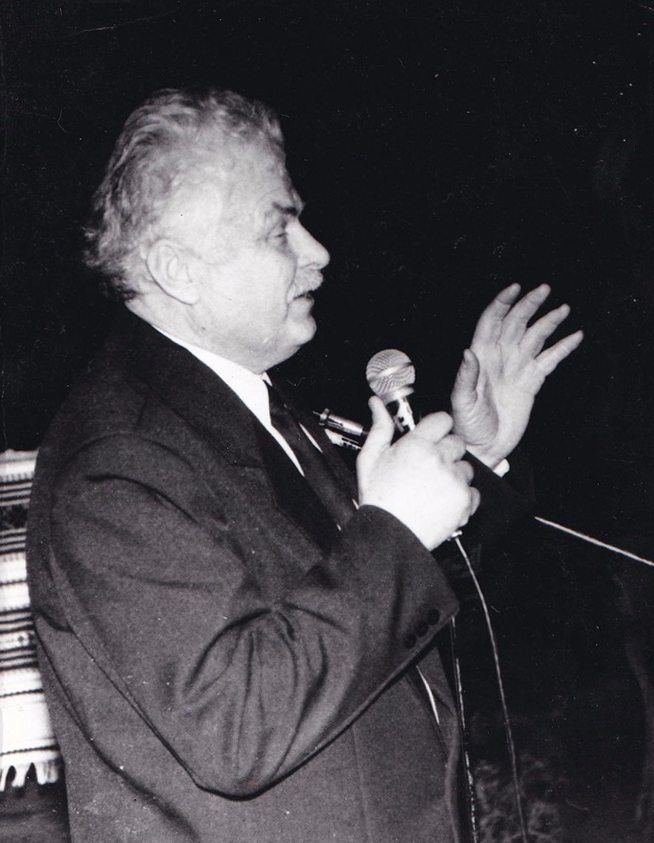
Oleksa Riznykiv reciting a poem
zdroj: Personal archive of Oleksa Riznykiv

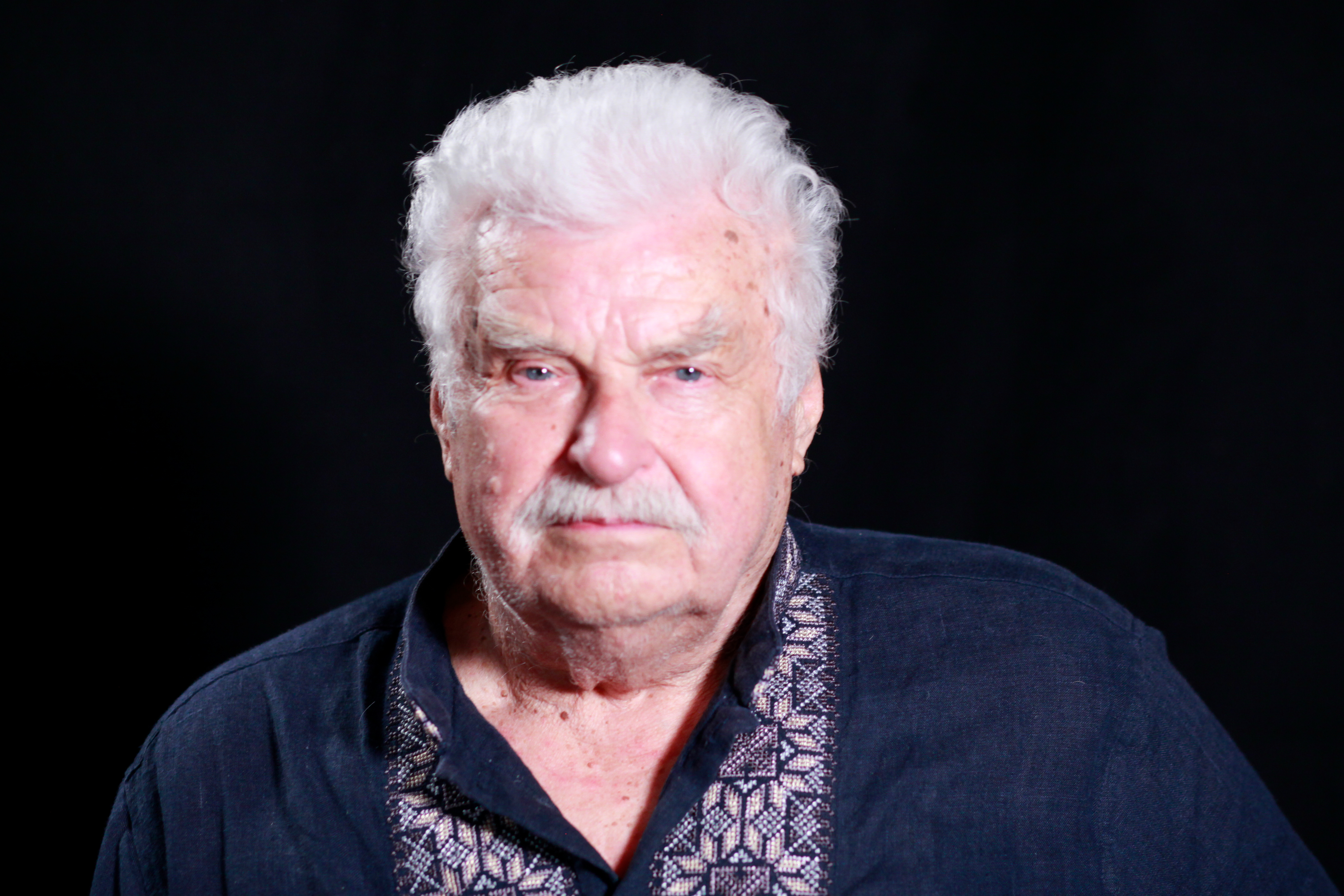
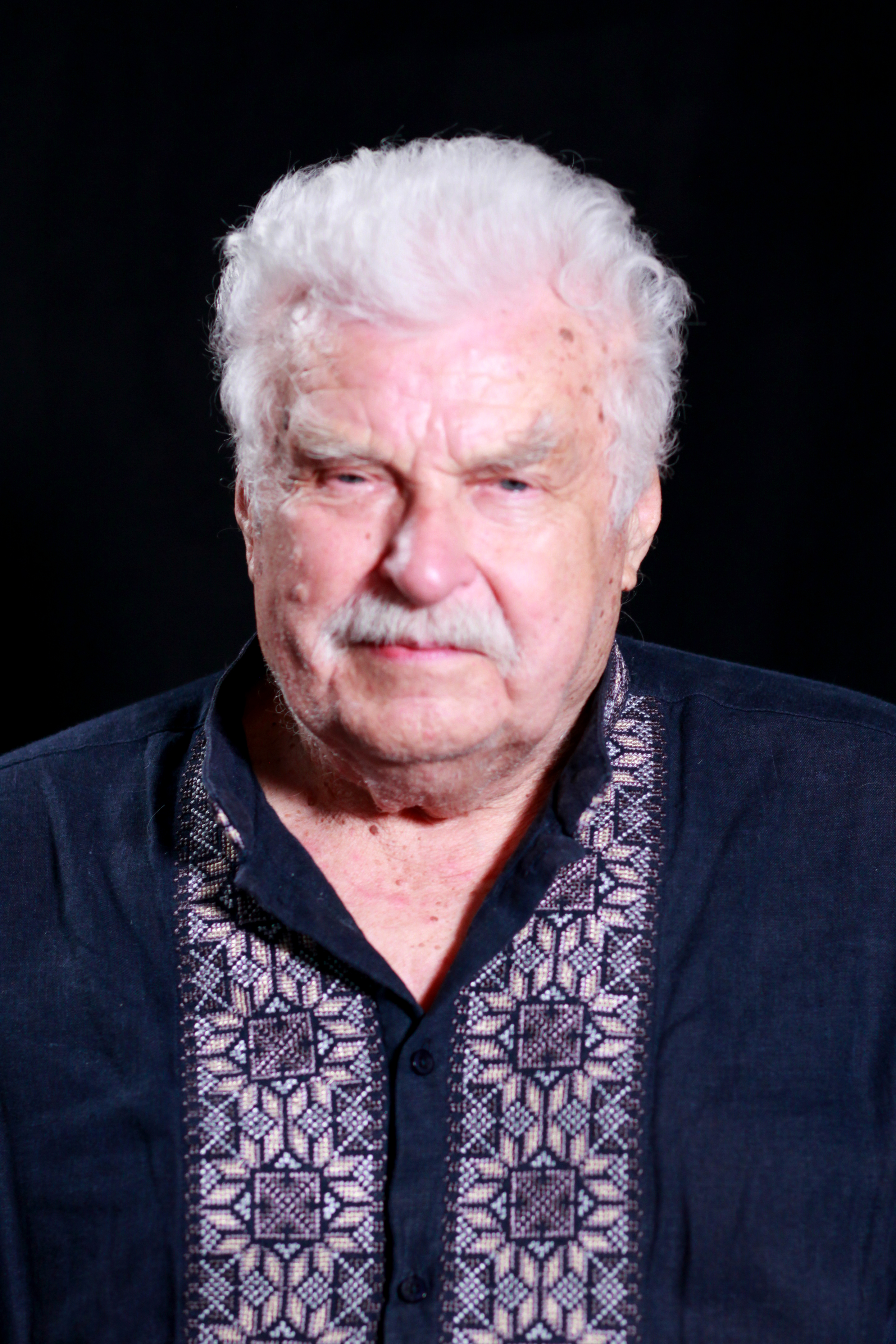
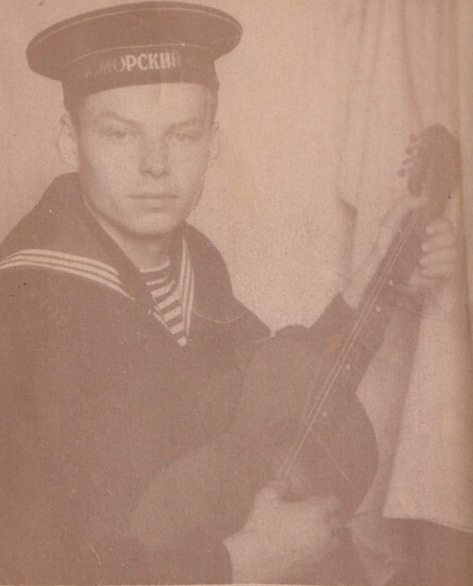
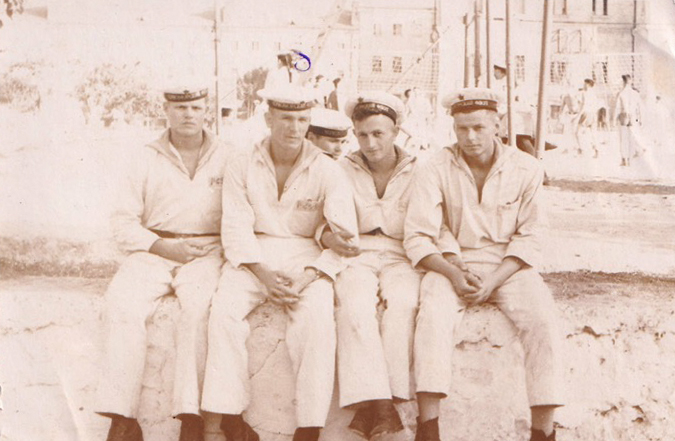
Oleksa Riznykiv was born on February 24, 1937, in the city of Yenakiieve, Donetsk region. After obtaining a qualification as a theater lighting technician, he worked in the theater in Kirovohrad (now Kropyvnytskyi). On November 7–8, 1958, together with his friend, the poet Volodymyr Barsukivskyi, they distributed anti-Soviet leaflets in Kirovohrad and Odesa. He was arrested on October 1, 1959, during his military service. He spent a year and a half in a camp for political prisoners in Mordovia. In 1962, he became a student at the Department of Philology of Odesa University. He worked for the newspaper Odeskyi Politekhnik and at the editorial office of the city TV studio, from which he was dismissed at the behest of the KGB. On October 11, 1971, he was imprisoned a second time. He spent five and a half years in the Perm-36 labor camp alongside other Ukrainian dissidents — Levko Lukyanenko, Yevhen Sverstyuk, Taras Melnychuk, and Dmytro Hrynkiv. After his release in 1977, he was forced to return to Pervomaisk due to pressure from the KGB. He worked as an electrician in a maternity hospital, then as an educator in a special-needs school for children with intellectual disabilities. His first poetry collection, Ozon, was published only in 1990, the same year Oleksa Riznykiv was accepted into the Union of Writers of Ukraine. In 1992, during a visit of former political prisoners to Israel, Oleksa met with dissident Arye Vudka, who had transported Riznykiv‘s poems abroad during his imprisonment in the 1970s. He is currently the editor of Zona, the journal of the All-Ukrainian Association of Political Prisoners, and is compiling a dictionary of syllables of the Ukrainian language.