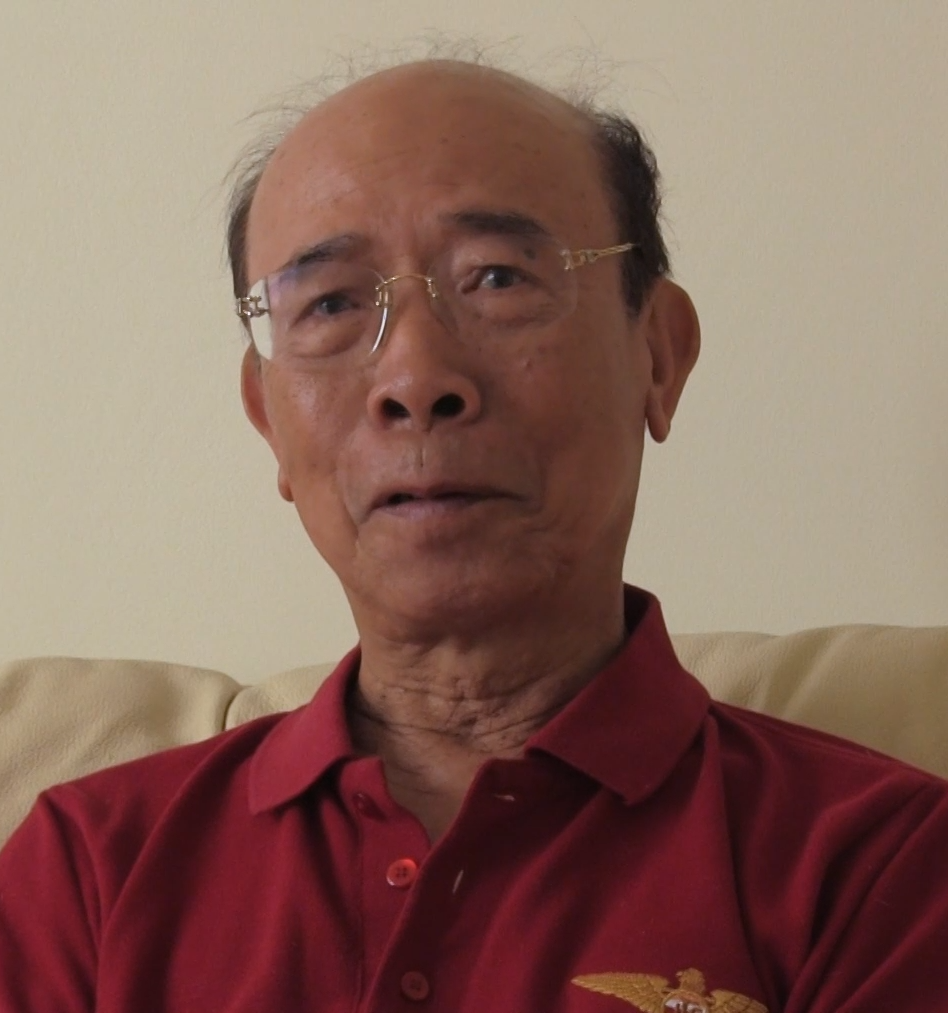
"After the Paris Peace Accords 1973, we urgerd each other to return to Vietnam, even though the situation in the South seemed hopeless. The Paris Peace Accords essentially marked the moment the United States abandoned the Republic of Vietnam. Yet, thinking back, I actually feel joy. We were so idealistic that over 100 of us were eager to return, to contribute to the defense of the regime in its time of despair.
[...]
There were too many issues, and every issue was difficult in a regime that was at its final stage, living in its last days. On average, a workday was 11 or 12 hours, which was very exhausting. After April 30, 1975, we, the ones who were left behind, lived under a constant threat. Let’s not forget that just two weeks before April 30, 1975, the communist forces had won in Cambodia. The first thing they did when they entered was massacre the intellectuals, those from the old regime who were left behind, even those who were guilty only of knowing how to read and write. So, we lived in confusion, not knowing whether our fate would be the same as the intellectuals in Cambodia. But after they entered, I felt strangely relieved. Before that, I had no time to sleep, had to work exhaustively, but in those days, I suddenly felt healthier. Whatever fate may be, I thought, let it be. Later, like everyone else, I was sent to prison for three and a half years, and then they brought me out and assigned me as a specialist for the communist regime.
[...]
Although the military front collapsed, we tried to ensure that the economic front did not collapse as people had expected. What was the result? At that time, I was the head of the Price Control and Tax Assessment Department, meaning I was the one in charge of pricing within the Ministry of Economics. My team and I continued working calmly until April 30. The result was that although the Republic of Vietnam collapsed, the Vietnamese dong still retained its value. The Communist regime, I think, was also surprised. They had to keep the old currency for another six months before they introduced a new one. Later, I realized that perhaps the Vietnamese people only cared about failure, and we seldom paid attention to the achievements and efforts that led to results, even though they were overshadowed by the failure of the Republic of Vietnam. But there was one person, who later became a close friend of mine. He was an advisor to the Australian Embassy, a very insightful researcher. He was very surprised by this; he had never seen a regime on the verge of collapse where its economy remained unaffected. He searched tirelessly, asking officials and people in charge of pricing in Vietnam, and eventually found me. We became friends. He was very curious about this paradox, something that had never happened anywhere else in the world. Later, when I met old friends at the Ministry of Economics, despite the regret over the outcome, we could still sit down and have coffee together in peace of mind, that although we were on the losing side, we had done everything we could for the country we wanted to serve."