"I think the next day, in the evening, there was, somebody here may have told you this, there was a candlelight procession in the evening, a huge crowd of people walking through Olomouc with candles, and I remember praying that if they were going to spray us with water cannons that it would be warm water. Then I realized I was carrying a frozen fillet, so they were going to melt it with the water. No one was hit, the cops stood in cordons but didn't intervene. Then there was the big and glorious rally in the sports hall, where Jařab had already defined himself quite clearly and where I think he decided that he was the only relevant candidate for rector. In the meantime, things were happening at the faculty and in our department, because even our department wasn’t entirely unified. I know that some of my female colleagues were worried about what I was doing — that it was dangerous — because we were reproducing subversive materials. Not Přetlak, though — more like leaflets that we were distributing. And suddenly, we realized that what we had been hoping for was actually about to happen.”
"My father was at work, my aunt from Nové Město na Moravě was with us, and she and my mother cried together: 'We have been occupied by the Russians.' We listened to the radio, to this day I still listen to Czech radio, to this day that diction and that way of speaking has stayed in my head and I will never forget it. At that time, radio really proved to be a medium that was absolutely irreplaceable and it was a small miracle that it managed to survive, even though at the same time Radio Vltava started broadcasting, which was perhaps from somewhere in Germany, it was poor Czech, not to mention the content. But I think that a lot of people may have fallen for it, and that they were convinced that there was a counter-revolution in our country, that secret arms depots were being liquidated, with which the imperialists wanted to take power in our country. So, it was this. I went out, I went into the woods, I climbed my tree there, which I loved very much, a kind of cute little beech tree, and I cooed like a little kid on it."
"I would say cautiously reserved. It wasn't talked about before me. So, moreover, my mother stayed in the party until '89, and I would say it was to sort of protect me, because my father left the party in '76, which in the end was worse than being expelled, because any advancement, even career advancement, was lost. He was then a standard worker, even though he was a high school student, even though he had been the head of the measuring service before that, so he had to go on with the life of a worker, and my mother, as a teacher, she was ordered to do it in that forty-eighth year, and she didn't have the courage to resist. So, I think it was that cautiously reserved attitude, maybe some hints of the real situation seeped in around that year of sixty-eight, and especially after the occupation, when she was quite explicit and even prescient in assuming that the temporariness would be long."
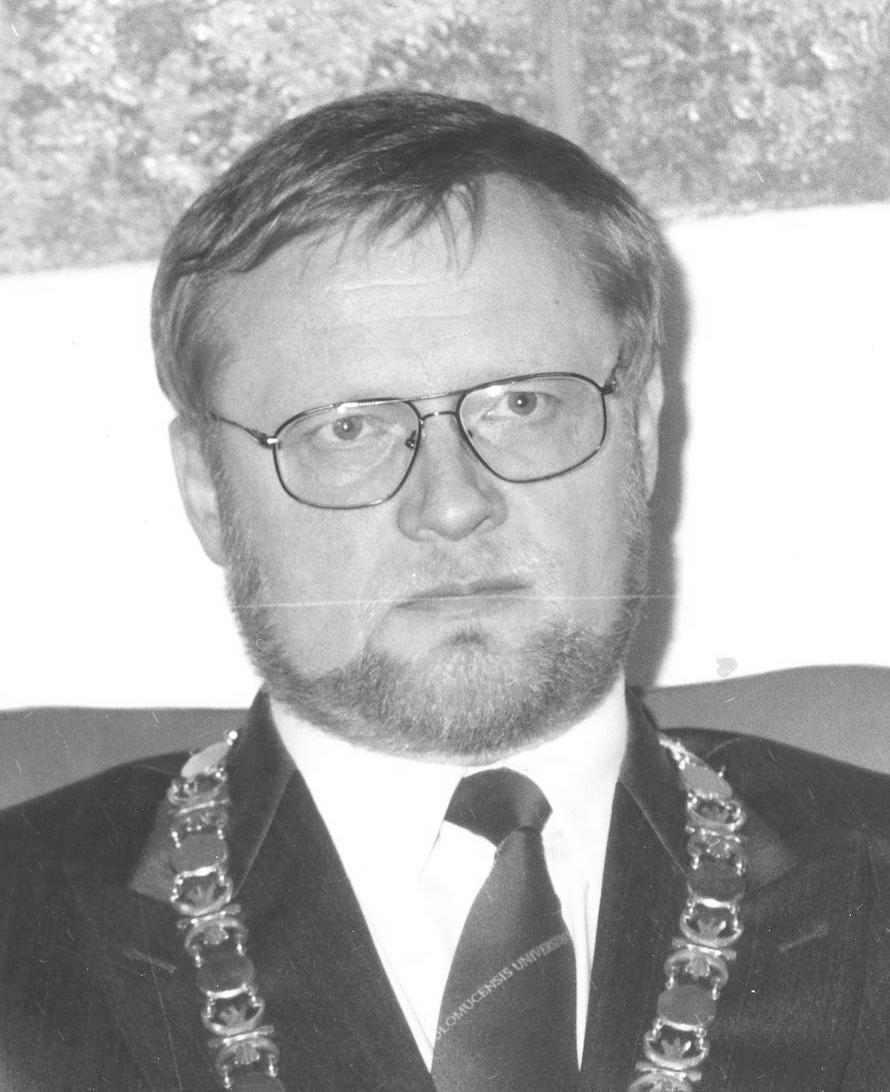
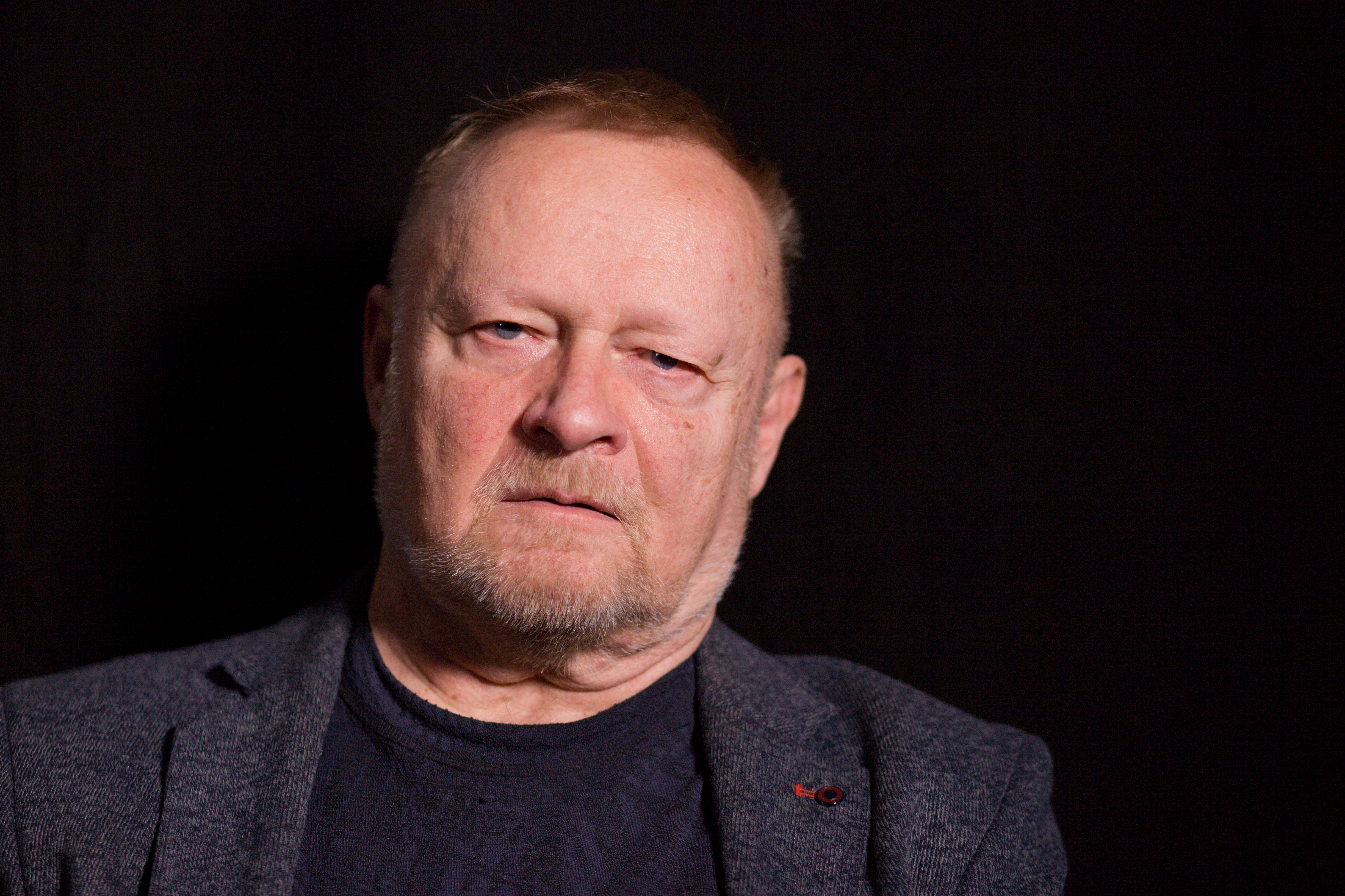
Prof. Dušan Šimek was born on June 20, 1950 in Nové Město na Moravě into a family of a teacher and a laborer. His father Dušan went through the Auxiliary Technical Battalions in the 1950s and left the Communist Party in 1967. Dušan Šimek spent his childhood and adolescence in Břidličná, Jeseniky. From an early age he was drawn to books, which was later reflected in the fact that he is the author of two collections of poetry - Po tichu and Po druhém tichu - which are sensitively inspired by his role model, the poet of pain and melancholy Jan Skácel, whom Šimek also met in person. After graduating from the Secondary General Education School in Rýmařov in 1968, the Soviet occupation entered his life, which he experienced in a difficult way. First he entered the technical school in Ostrava, where he discovered that his dream field was not technology but social sciences. At the Faculty of Philosophy of Palacký University in Olomouc, he studied a course with the cryptic name of Adult Pedagogy, focusing on the sociology of work and enterprise. Already there he encountered the practices of normalisation, where ideology rather than quality teaching and practices were in control of education. Because of his unrelenting attitude towards the communist regime, he got into trouble and sometimes had to change jobs. To his alma mater, where he refused to join the Communist Party and where he was personally involved in a student strike. In the mid-1990s, he became the first associate professor and in 2008 professor of the newly established field of andragogy, which he was instrumental in establishing and developing. Dušan Šimek lived in Olomouc at the time of the interview.
Hrdinové 20. století odcházejí. Nesmíme zapomenout. Dokumentujeme a vyprávíme jejich příběhy. Záleží vám na odkazu minulých generací, na občanských postojích, demokracii a vzdělávání? Pomozte nám!