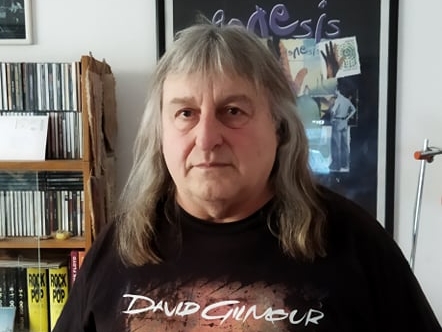
Jiří Moravčík

* 1957

  • "Then I started to think, because we always drove the Škoda cars, we went to Jethro Tull twice. And we managed, and the Škodas cars endured, and they came back, and then we started thinking about a bus. But you couldn't normally book a bus there. I had my mum in ČSAD, so it was good there. And we always needed to get a Socialist Youth Union stamp, because none of us were in Socialist Youth Union and had a stamp. So it was always, there was a stamp for a half litre of a pine gin and my mum ordered a bus and we went and she said, 'Just don't make any embarrassment,' and I said, 'No, no, no,' so we went to a concert and the first big concert we did by bus was a huge concert for Amnesty International for human rights and there was Bruce Springsteen, Sting, Peter Gabriel, Tracy Chapman. Well it just started at four o'clock and there were some Hungarians there before that and we took the bus. We got there and we bought the tickets and wen to the concert. It started at four o'clock, Sting finished at midnight and then Springsteen was about to start and somebody said, 'He usually plays a long time,' and I said, 'That'll be about an hour and a half. Well, Sting finished, and at four o'clock he was still running around the loudspeakers with his guitar, so it was over at four o'clock, and we got back at one the next day, and of course, as we got off, we didn't go to work, we couldn't. And we went to Koruna right away to sort it all out. But even as we got off, the driver said to me: 'Mr Moravčík, when I had seen you in the morning, all those long-haired guys, I got scared. But if you're going somewhere again, I'll go with you right away. It was great fun. If you knew what happened to me last week. I was here on a tour of the Vladimir Ilyich Lenin trail somewhere going up to Rysy. They got my bus so dirty with sick that I cleaned it all Sunday.´ So we had a good reputation, my mum was happy, I said, 'Tell my mum right now.' She was happy, so all good, so it was these trips of ours and such where we were meeting the music live - and the top music."

  • "Then somehow it was unfolding, there were some concerts and student May festivals, so you could see that it was slowly... But then there was the problem of the invasion, and all I remember is that we were under ten years old and we were playing football here for a bit. We'd always stop and watch the tanks and then we'd keep playing. The tanks were crossing the main road. They drove tanks, my mother cried that it was war, and some people, because they had bad experiences... We couldn't even imagine it, and basically that's how the day went on. We watched the news, but at ten years old you don't see it that way. Or it didn't have such an impact on him. It came slowly and gradually."

  • "It was a tightening of the screws. That was the consequence. Unfortunately, it was probably mostly the professional musicians who felt it the most afterwards, because mostly the musicians who played here at the parties, they could hardly get out of there anymore, so they played. Sometimes it was that they had to go to musical checks, that they had to these checks. So they had three songs learned, they had the same name each time, so if they were told, 'Play this one...' There had to be a progressive name, so they would play it, but if they were told, 'Play another one,' they would play the same one, but they had learned some of the songs. They just went through the check and played it at parties. They had a little bit of a job there, because they also had to earn money for the equipment, and here they had that. Nobody gave them anything for free. So the bands were playing, but there were less and less concerts by professional bands."

  • Celé nahrávky
  • 1

    Uherské Hradiště, 10.12.2021

    (audio)
    délka: 02:14:26
    nahrávka pořízena v rámci projektu Stories of the region - Central Moravia
Celé nahrávky jsou k dispozici pouze pro přihlášené uživatele.

Music helped us to survive the regime‘s persecution
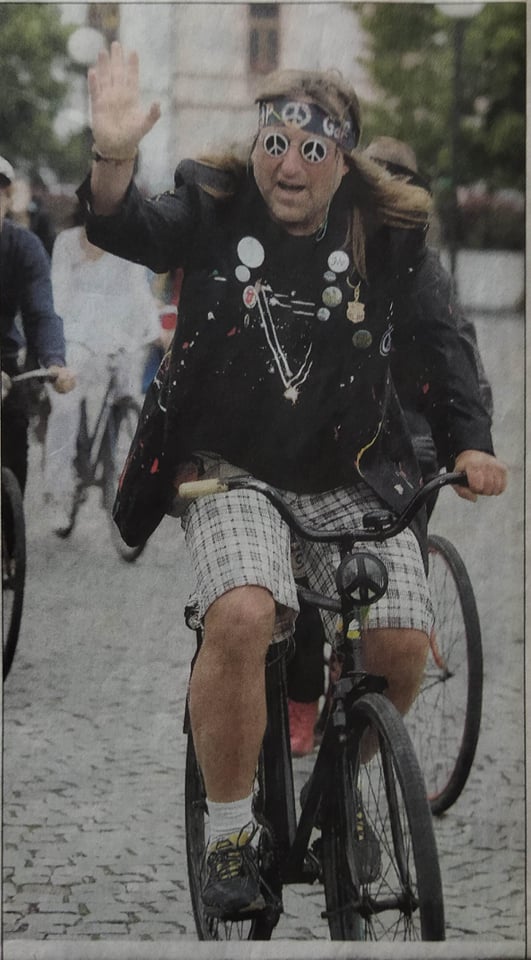
Jiří Moravčík in the early 1990s
zdroj: witness´s archive

Jiří Moravčík was born on 14 May 1957 in Uherské Hradiště into the family of Danuše and Antonín Moravčík. The family lived a normal life without any major clashes with the communist regime. As a child, he experienced the invasion of the occupation troops in Uherské Hradiště in August 1968. His father and mother took him and his brother Milan to frequent concerts organized by the Reduta in Uherské Hradiště - and it was here that Jiří‘s love for music was born, and it would accompany him throughout the entire period of normalization. In the mid-1960s Jiří discovered the Beatles, who were gradually joined by Western music icons such as Pink Floyd, Led Zeppelin and Yes. He found kindred spirits when he started teaching in 1971. He collected hard-to-find gramophone tapes and gradually formed a circle of people around him who collected and copied the music persecuted by the regime on tape. After completing his schooling and then graduating from secondary school, he entered basic military service, which he completed in the early 1980s. In the second half of the 1980s, he organized musical tours to Budapest, where musicians of renowned names - Sting, Peter Gabriel and Jethro Tull - performed. At the same time, he also maintained correspondence with friends who had emigrated. After the Velvet Revolution in 1989, he was involved in building the rock club Mír in Uherské Hradiště. At the time of recording in 2022, he was living there.