Eugenia Gutiérrez Ganzarain

* 1967

  • "Yes, we are talking about combining two of my passions, which are running, as I mentioned earlier, and activism, and I signed up for the Madrid marathon, which I ran on April 27. I decided to launch a campaign, the “Let's not abandon them” campaign, aimed at political prisoners and their families. I connected two passions, as I said, running marathons and Cuba. I launched this campaign with the aim of raising funds for the prisoners and their families, and it was very emotional to feel that I was doing something for them. As the daughter of a former political prisoner, the race itself was also very emotional. It always is because a marathon takes you to both physical and mental extremes, but here I had added motivation. And so I finished it, and I think it has been a good campaign—for me, of course, and I also think I will be able to provide some help. We are already allocating the funds to the families and prisoners."

  • "It was my first contact with the country, in 2016. That really opened my mind to getting to know my country, not just through memories, but through real experience. That was in 2016. In 2017, I embarked on a life project that has taken me many years and that I am still developing, which is running marathons. So I envisioned entering marathons with two flags, the Cuban and the Spanish. That was in 2017. In 2020, my father passed away, our father passed away, and therefore, I feel that I have to do something. It's like I'm reconnecting with Cuba again, and my father, who was an activist, who was the president of a party in exile—the Christian Democratic Party, the president of the Cuban Center—and with all that, he was a political prisoner. I felt that my father's legacy could not remain with his death and that someone had to pick up that baton. That was 2020. In 2021, the protests of July 11, 2021, a moment of hope, a moment to see that the people are reacting, that the people are alive. That they have something to say, spontaneous peaceful demonstrations throughout the country. It was wonderful, then came the repression, but I came back again, I said, I already know Cuba, they had already gone through it, we are talking about five years, that wonderful change, that's what I had thought, I have to know that change because there is going to be a rapid change and I want to know the before and after. 2021, I continue. This has led to many forced exiles living in Spain, and many people are beginning to mobilize. I am learning about new movements, the San Isidro Movement, Archipiélago, to name a few. And I go to many of the events that are organized in Madrid because, let's remember, Madrid, Spain, is the second country with the most Cuban emigrants, the most Cuban immigrants. So I get closer to the community, to the new Cuban community. I have the knowledge of my parents' generations, but I am getting to know them little by little, not introducing myself, but getting to know them. I was very curious to know what they were saying, what was happening to them, because we are talking about the cultural world, a totally different world, it was not only political and many people were there out of economic necessity, we are talking about 2021. In the following years, in 2023, I began to become part of the party my father belonged to, the Christian Democratic Party, of which my father had been president, and other organizations, and I think that's where it is. In other words, it was really from that moment on that I decided I had to be more active. In the last year, I have to say that being in contact with political prisoners, with historic political prisoners, hearing their testimony firsthand, has also reinforced my belief that this is important, fighting for political prisoners, for their freedom, because it is the basic condition for being able to continue talking about a peaceful transition in Cuba. It is the condition we are demanding of the Cuban government to see its willingness to change. So it has been a gradual evolution, there was always a seed, a germ that has been growing little by little, and now I find myself where I am, which is my life's goal, my life's purpose."
  • "Well, you're telling me about it, yes, I brought a handful of soil from our house that my mother asked us for, and we have it, we have a little handful here at home and another at her house. That's nice, and I don't know if there's anything else, really. I also took a handful of soil, but soil from when I was in Baracoa, soil to soil, soil from the island. And that too, and a little piece that the guide gave me, from the Malecón, from when there was a hurricane and it broke, some stones from the Malecón, and I gave that to my mother, she has it at her house. These are symbols, it's symbolism, it's like being connected, I mean, when you see it, you touch it, you're connected, because we're not going to go back to Cuba until there's a change. And well, we feel that separation again, which is very hard, I mean, not being able to travel and go there. Well, that's happening to a lot of people who have family members there too. We're lucky that we don't have family in Cuba, but there are many people who do, who have broken families and are very concerned about what's happening on the island, because the reality is that their family members are there and therefore the connection, the dedication, and the concern is daily."

  • "The present. After 66 years of the Castro regime, the deterioration of the country after 66 years is evident. Cuba is experiencing an unprecedented social, political, economic, and institutional crisis. Ordinary Cubans are in a daily struggle for survival. They have no food. They have nothing to eat. Many of them cannot eat three meals a day. They have power cuts, no electricity, constant blackouts, blackouts lasting between ten and twenty hours a day. That is impossible. We recently experienced a blackout here in Spain and we almost went crazy because we are not used to it. Imagine that happening constantly, every day of your life. This has led to a lack of dignity, so many problems in everyday life, and little hope or confidence in the future, which has led to the migration crisis of recent years. That is on the social level. On the political level, anyone who speaks out, who says they want a better life, who simply demands a decent life, a normal life, the kind that anyone in any country in the world can enjoy, is met with greater repression. We have over a thousand political prisoners, and that's the way it is. The regime's response to this, instead of connecting with the people, is greater repression and greater violence. But I also believe that we have reached a point where, when a country has nothing, nothing to lose, change is inevitable. And change is already happening. We saw it begin in 2021 with the peaceful demonstrations on July 11, and we have seen that since then they have continued because the deterioration has been incredible—with the COVID issue, for example, which we have not discussed, which also predates 2021, with health systems, services that the state has to guarantee, such as health and education, we see that they are increasingly restricted and increasingly deteriorating, increasingly restricted to a very specific group of people. So, going back to that a little, change is inevitable because there is nothing to lose. And the transition is already happening. It started in 2021, but we find that there have been spontaneous demonstrations throughout the country since then. Therefore, it did not stop in 2021. There has been more repression, of course, and now we are living in a historic moment because university students themselves have taken up the baton. And this is very interesting because that is the bastion of the regime: we can say that the students are that elite, that elite that could replace the current elite, but they have reacted to a situation, which is the right to information, the right to communication after the latest rate hike by the only telecommunications company, which was announced on May 30 by ETECSA. They have reacted in a very supportive and civic-minded way, and that gives me a lot of hope. Of course, it is not going to be an automatic process, but change is already happening in Cuba and it is inevitable, and there is no turning back. The government knows that they have hit rock bottom, that they can no longer solve the problem, and all that remains is for them to accept that they no longer know how to do it and... that's it. This is what I would like to say. Therefore, change is already here, it is inevitable, and all that remains is for the transition to take place.“

  • ”Yes, well, we are talking about a peaceful transition to democracy and the rule of law. That is my vision. The vision is first the transition, but then it is the rule of law, which is the institution, the consolidation of the rule of law in Cuba, democratic elections, where every Cuban citizen can choose who they want to represent them, where every citizen can exercise their rights and freedoms, where every citizen can develop their abilities in such a way that they can have a dignified life, which is what we all want, what we all defend anywhere in the world. Where human rights and freedoms are protected. That is my vision for the future, and where there is also reconciliation between the older and younger generations. I believe that it is extremely important for there to be democracy in Cuba, for the country to live in peace, for there to be reconciliation between Cubans inside and outside the country, between Cubans of different generations, of course, people who have not committed any war crimes, that is, who have not violated and who have not really exercised violence against other people."

  • Celé nahrávky
  • 1

    Madrid, 29.09.2025

    (audio)
    délka: 39:59
    nahrávka pořízena v rámci projektu Memoria de la Nación Cubana / Memory of the Cuban Nation
Celé nahrávky jsou k dispozici pouze pro přihlášené uživatele.

It is different to leave a country of your own free will than to be forced into exile, because the connection to that country will always be part of your life.

Eugenia Gutiérrez Ganzarain, 2025
zdroj: Post Bellum

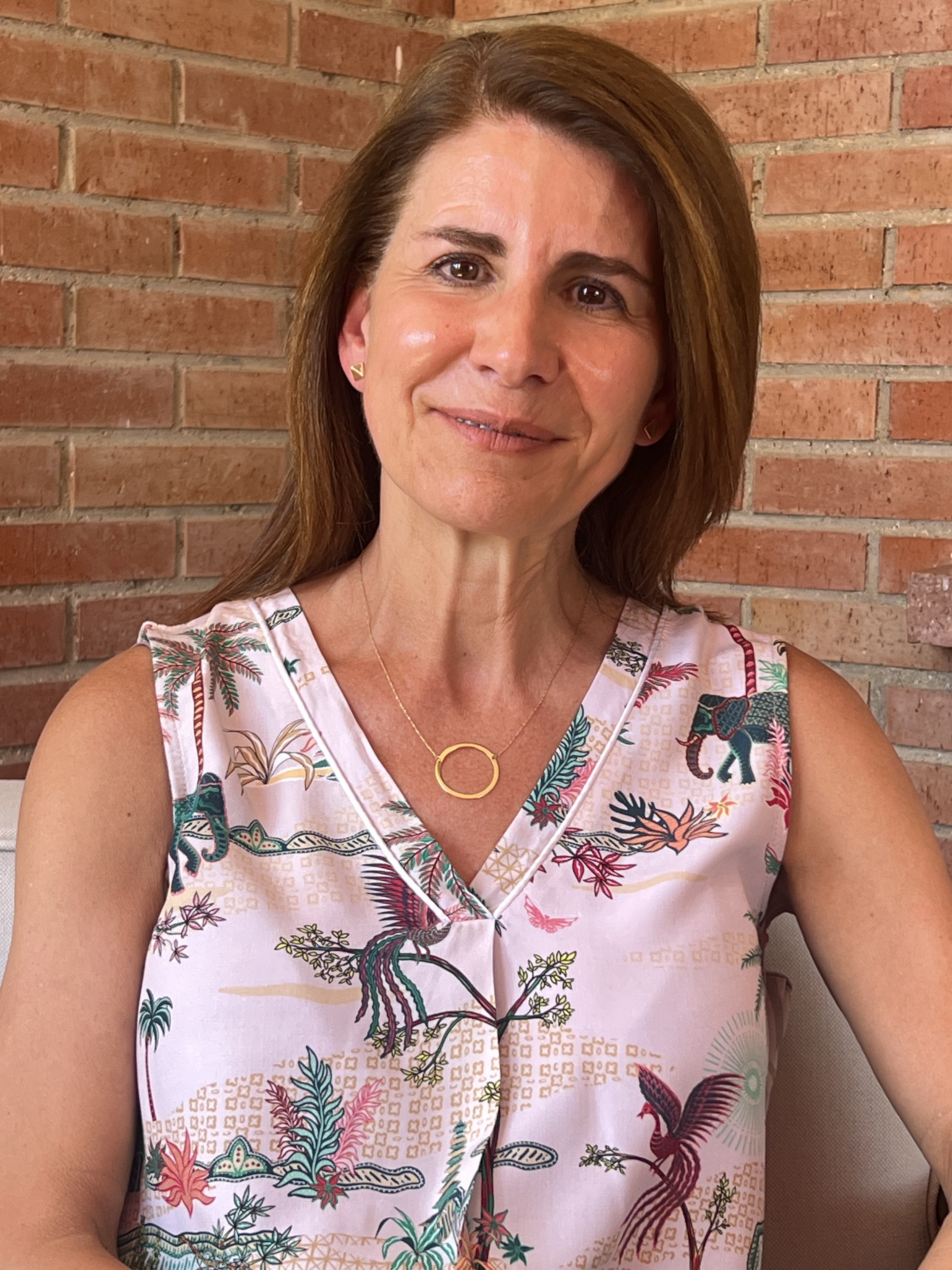
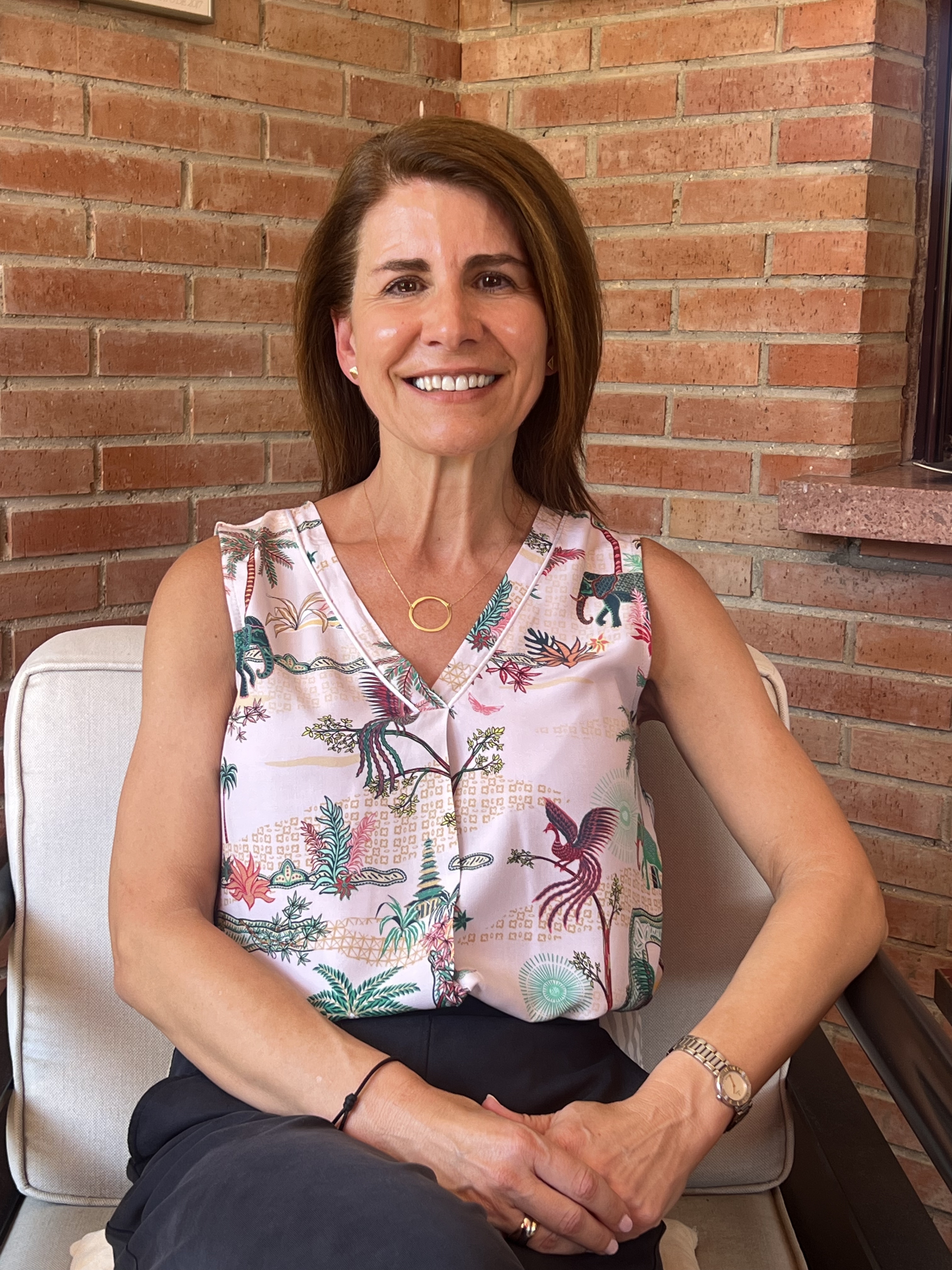
Eugenia Gutiérrez, daughter of Josefina Ganzarain and Vicente Gutiérrez, a former Cuban political prisoner, was born in Havana in 1967. She is the third of five siblings and the last to be born in Cuba. When she was just 14 months old, she emigrated to Spain with her mother and sisters to be reunited with her father, who had been forced into exile in 1966 (before she was born) for political reasons. Although she left the island when she was just a baby, Eugenia has always maintained a deep sense of patriotism, shared by her entire family. Her connection to Cuba has been a constant in her life through her exile environment, her Cuban friends, and, above all, the love for the island passed on by her parents. A journalist and activist, after her father‘s death in 2020, she decided to become more actively involved in the Cuban cause and the defense of human rights. Eugenia firmly believes that change in Cuba is inevitable. She argues that Cubans deserve to live in dignity and freedom in their own country, without having to go into exile, as has been the case for so many generations during 66 years of Castro‘s regime. Her testimony was recorded as part of the subproject Memoria de Nuestros Vecinos Cubanos (Memories of Our Cuban Neighbors).