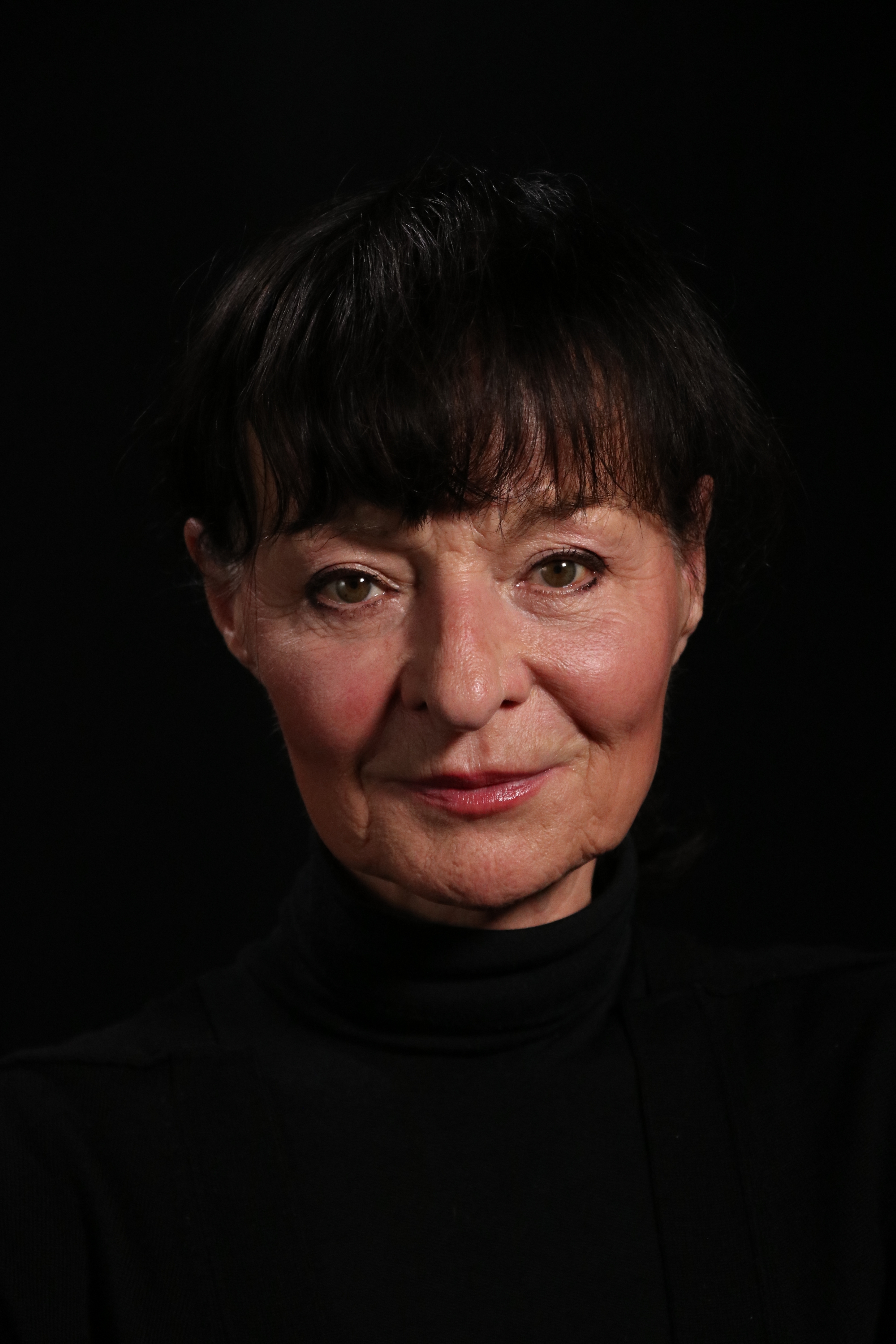
"Well, I don't think of it [normalization] as a period of grey in the sense of my work, because there were, even if only once a year, but it was worth it, there were Bertramka meeting. In the seventies and eighties, Dr. [Helena] Jarošová and Dr. [Dagmar] Březinová founded the artists' meetings at Bertramka. Something absolutely incredible. Always on the first weekend in September jewellers, artists, dressmakers [met there], it was two or three days, Saturday and Sunday. In that garden of Bertramka, jewellers were exhibiting, there were shows, exhibitions. In the rot that was around, they were little islands. So I met people there who were very close to me in their work. Even during the year we would live together and meet. But in spite of everything that was there and everything we were experiencing, those Bertramka meetings were an incredible boost, sunshine in the grey."
"There were two fundamental attempts to emigrate. The first was serious. Only our closest relatives, my mother's sister, knew that we wanted to escape. The whole library, the furniture, we wrote about everything [who was to take it] if we ran away. There were some fake passports, I remember that. We were to escape through Yugoslavia, absolutely everything was ready. We already had a little bit of bare flat - I'm exaggerating - but everything had been given away, we already had passports and everything. And then, maybe the day before we left, my brother was seriously injured by a drunken man on a motorcycle. So he stayed in the hospital, and my mother said it was God's voice, or a warning, and that we weren't going anywhere.
And then there was a second attempt with my husband, this was 1975. We were on our honeymoon and we even had tickets to Sao Paulo. My husband, being an excellent structural engineer, was promised a position with an architect in Brazil. It was in Rome and we were two newlywed couples. The three of them wanted us to emigrate. A lady who lived in Brazil arranged it for us. And I cried for hours in the hotel bathroom. And I was just unrolling the paper and crying. I couldn't imagine emigrating, leaving my parents, maybe never seeing them again. It was so painful for me that I couldn't leave. And so it was very dramatic. We were sitting in that room and my then husband said - well, say yes or no. I said I couldn't. And we came back, luckily he never reproached me. Because he was quite publicly against the communists, his life was not a bed of roses. So that was two attempts to emigrate."
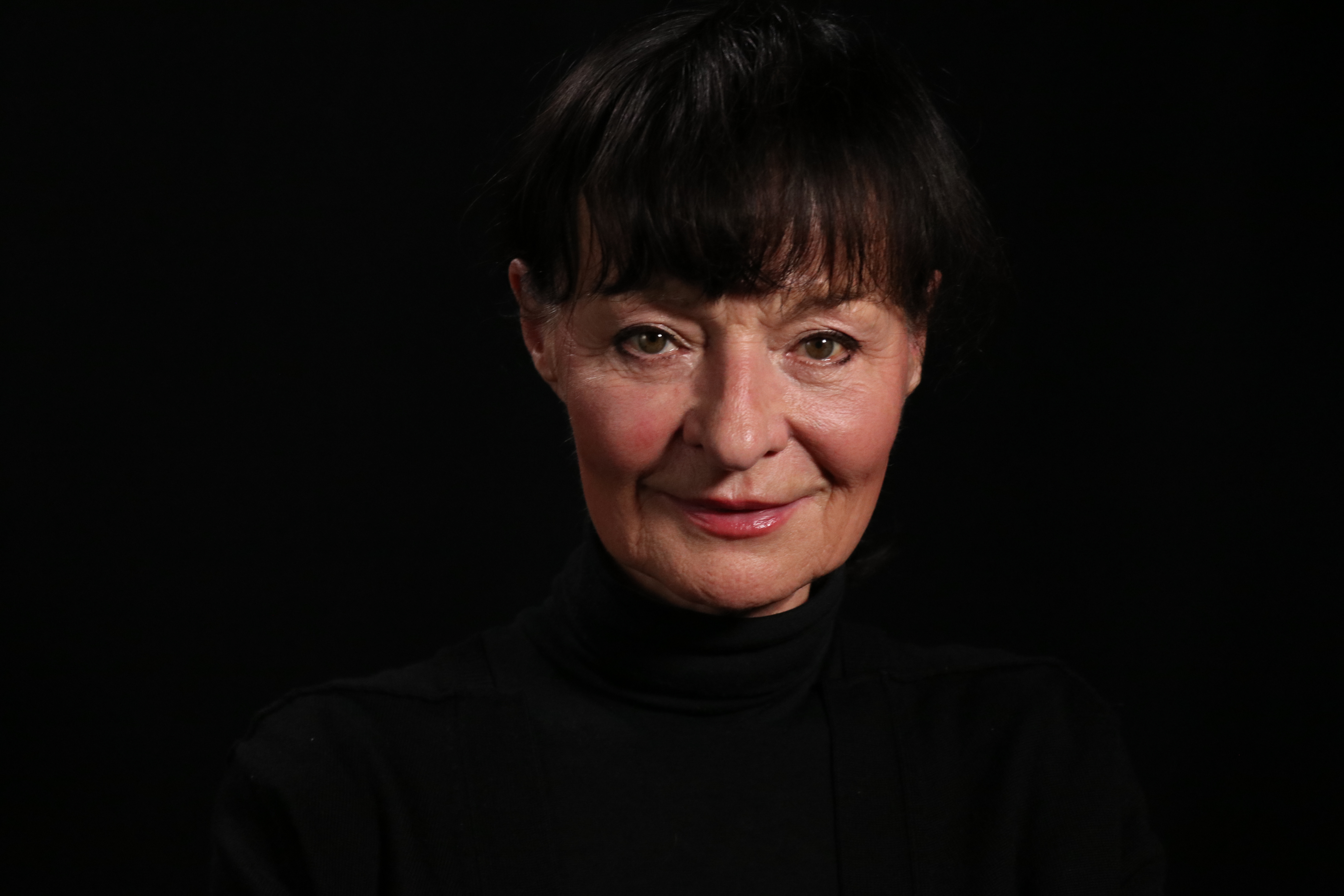
The designer Liběna Rochová was born on 21 September 1951 in Brno in the family of scientist Jaromír Prášil and actress Radoslava Prášilová, née Závadová. Her grandfather Bohuslav Závada was active in the Defence of the Nation organisation in Vysoké Mýto during the war, was arrested in 1940 and executed by the Nazi regime in 1942. Her father, Jaromír Prášil, joined the Communist Party of Czechoslovakia after the war, but left the party in 1951 to protest against the political staged trials. From then on he was not been able to practice his original profession. The cadre „stain“ also manifested itself in the life of his daughter Liběna, who in 1967 did not receive a recommendation from the street committee to study theatre costume at Secondary Technical School of Textiles. However, in the following year, 1968, thanks to the released atmosphere of the Prague Spring, she got into the school and graduated in 1972. After not being admitted to the Academy of Arts, Architecture and Design in Prague (UMPRUM), she embarked on a career as a freelance designer, for which she had to take the exams for the Association of Professional Clothing Designers. She offered her work for sale through the Dílo chain of shops and through unofficial fashion shows at the Foll family‘s home. In the mid-1980s, her father Jaromír Prášil emigrated to Austria and the family was subjected to interrogations and surveillance by State Security. In 1989, she signed a statement at the Folls called Several Sentences. In 1991, she was given the opportunity to present her work at the World Fashion Fair in Düsseldorf, which opened the door to the world, and she participated in it repeatedly until 1994. In 1999 she founded Studio LR for custom fashion design. From 2008 to 2023, she headed the Studio of Fashion and Footwear Design at the UMPRUM in Prague, where she received her professorship.
Hrdinové 20. století odcházejí. Nesmíme zapomenout. Dokumentujeme a vyprávíme jejich příběhy. Záleží vám na odkazu minulých generací, na občanských postojích, demokracii a vzdělávání? Pomozte nám!