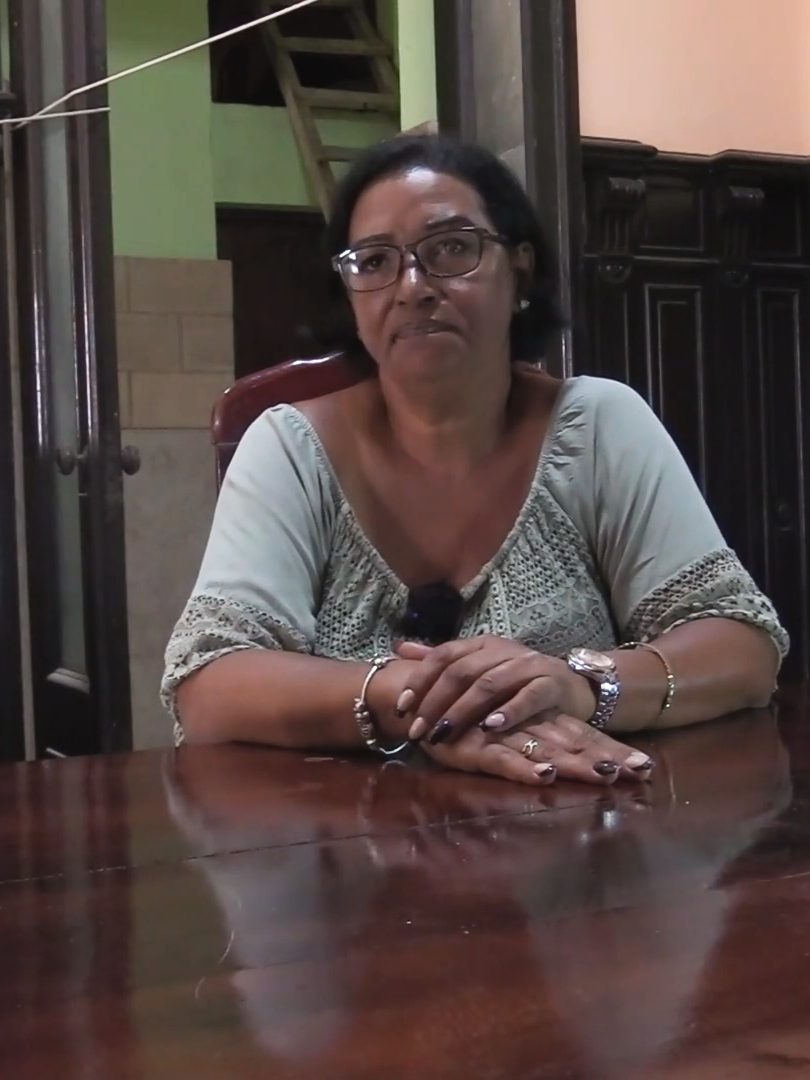
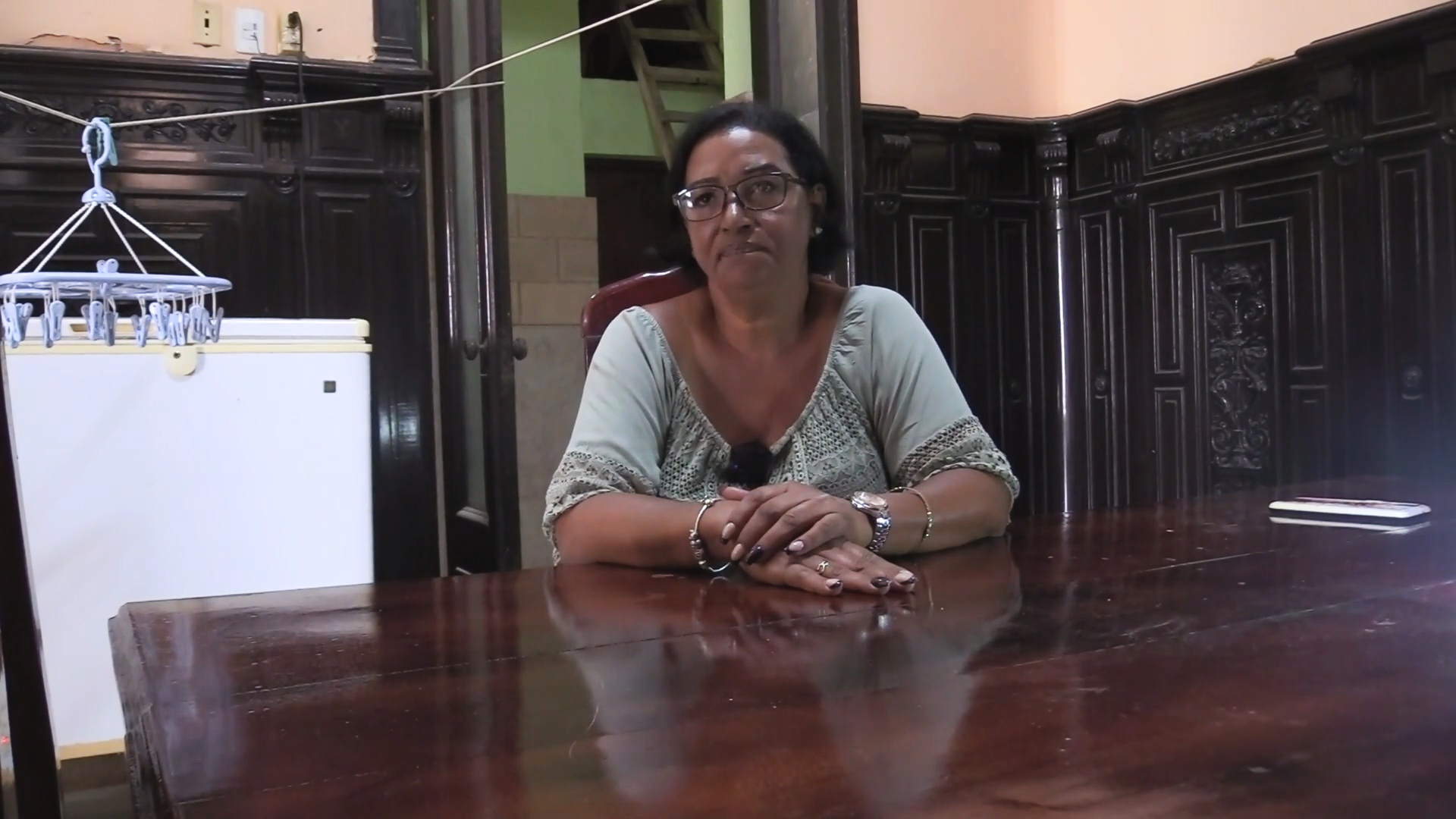
"The situation of women today is extremely serious. Women have been deprived of many of their rights. When we talk about Cuban women, we are talking about a sector of society that has been pushed into the background. Today, women lack something as basic as dignified menstrual care or assisted menopause. They suffer obstetric violence, racial discrimination, labor discrimination, and they don’t have access to proper hygiene or personal care. There is zero political will to address gender-based violence, which is now becoming visible thanks to social media and independent journalists, and the numbers are alarming. Women stop thinking about their own care because they have other priorities: food, what children need, what elderly relatives depend on, and what is needed to keep a household minimally clean. Public hygiene barely exists, and because of that, the entire country is exposed to viruses and disease."
"Let’s talk about femicides in Cuba. I became involved with the Cuban Alliance for Inclusion on September 20, 2019, after discussing with another woman the fact that women have no way to care for themselves during menstruation. You can’t talk about menstruation in public because it’s still a taboo, even today, even though it’s a normal biological process. We felt we had to talk about it because women are being affected and there are no products. At one point, even a minister went on national television and said that sanitary pads would be available eventually, but that women needed to be patient. In other words, women were told to wait and endure because there were no pads. Meanwhile, women are forced to go to the informal market to buy them at outrageous prices. A pack of ten or twelve sanitary pads can cost 300 or 500 pesos, which means you stop buying food for your child for one or two days just to buy pads that will only last two or three days. Bread alone can cost between 40 and 200 pesos. This is a product that should be available at pharmacies, yet it disappears for months at a time. That is how serious the situation is."
"At that time, many mothers suffered the loss of their children. Many mothers asked: why? They were not informed, especially because even young men doing military service were taken away. They didn’t tell you that your son was going to take part in the war in Nicaragua. They didn’t tell you in advance that your son was being sent to the war in Angola. Parents were given no say at all. They only found out once their son was already on the ship. Many parents learned their son was in Angola or Nicaragua only after he was already there. Mothers and fathers were left asking: when did this happen, how, at what moment? And they had no choice but to accept it. On top of that, we had no internet, no access to the knowledge people have today. There was a time when there was a program called University for Everyone, but it was cancelled once the government realized people were becoming too educated, understanding their rights and how to demand them. That didn’t suit the government, so they got rid of it. Back then, people didn’t even know that if you didn’t want to go, you had the right to refuse. As a parent, you have the right to know where your child is. If my child is doing military service in Matanzas and is being transferred to the eastern region, there should at least be communication between the unit and the parents. But that didn’t exist. They would just show up and say: pack your things, you’re leaving, we’re vaccinating you. They gave you more vaccines and told you the plane was leaving in two hours. And if you asked about your parents, the answer was: we’ll take care of it. That’s all they said. Thank God I never took part in any of that. They vaccinated me, but that was as far as it went, because I was determined to refuse and not go anywhere. They knew it, and it was even written in my file that when I realized what the vaccines were for, I said: sorry, I’m not going anywhere."
"After that came the congress of the Federation of Cuban Women and the Union of Young Communists, and they told me I couldn’t say what I was used to saying — the needs, the obstacles, the lack of things, in other words, the real opinions of the students. They told me I couldn’t do that, that I had to say only what I was authorized to say, exactly what they told me to say. I refused to participate in that congress, and that brought consequences. At an assembly held in the National CTC theater, they gave me a public reprimand for refusing to take part. I was sitting in the second or third row, I asked for the floor and said that if this public reprimand was for refusing to participate in a congress where I was supposed to honestly express the real opinions and real difficulties students and schools were facing, then I didn’t want to be a militant anymore. I felt and I thought that this was exactly what my parents had taught me — that you must always tell the truth — and that was what I saw myself doing, not lying and not covering up the sun with a finger. They told me that wasn’t how things worked, and I said that from that moment on, I did not accept the public reprimand and I was leaving the organization. I admit it was a pretty ugly outburst, because I threw my party card onto the stage. From that moment on, I never believed in anything related to the revolution again, and I began to form my own convictions based on what I had lived through."
Zelandia de la Caridad Pérez Abreu was born on 23 June 1964 in Havana, Cuba, and grew up in the capital in a family environment initially identified with the revolutionary process: her mother was a member of the 26th of July Movement and engaged in community and social work after the triumph of the Revolution, while her father was a working man integrated into the system. During her childhood and adolescence she was a committed and academically successful student, active as a Pioneer and later a member of the PPI and subsequently the Union of Young Communists (UJC), which she left after refusing to repeat officially sanctioned speeches, censor students’ opinions, and comply with ideological demands that interfered with her family’s religious beliefs; this stance led to a public reprimand and her decision to renounce militancy. After completing secondary school, she trained as a clinical laboratory technician at the Carlos J. Finlay School of Medical Teaching, carrying out practical training in health institutions in Havana; during this period she openly rejected the obligation to participate in the so-called internationalist mission to Nicaragua, refused deployment despite institutional pressure, and this refusal was recorded in her file, after which her professional qualification was later invalidated. She subsequently retrained as a hairdresser, secretary/office worker, and assistant educator in early childhood institutions, and worked as a teaching secretary in an institution dedicated to children with behavioral and social integration difficulties, a position she left in 1993, during the Special Period, due to growing pressure linked to her critical views. Since 20 September 2019 she has been a member of the Cuban Alliance for Inclusion, where she focuses on women’s rights, and since 2017 she has led the Cuban Commission for the Defense of Electoral and Constitutional Rights, dedicated to citizen accompaniment, monitoring electoral processes, overseeing local government management, and documenting violations of constitutional and human rights in Cuba. In 2017–2018 she was proposed by residents of her neighborhood as a candidate for local delegate, a process that was blocked through police actions, including her transfer and detention, in order to prevent her nomination. Her activism has focused in particular on the defense of women’s rights, the denunciation of gender-based violence, the demand that femicide be recognized as a specific criminal offense, and the promotion of shelters for women victims of violence, an area in which she has received international training, including in Colombia, and in which she continues to work today as a civic and feminist activist in Cuba.
Hrdinové 20. století odcházejí. Nesmíme zapomenout. Dokumentujeme a vyprávíme jejich příběhy. Záleží vám na odkazu minulých generací, na občanských postojích, demokracii a vzdělávání? Pomozte nám!