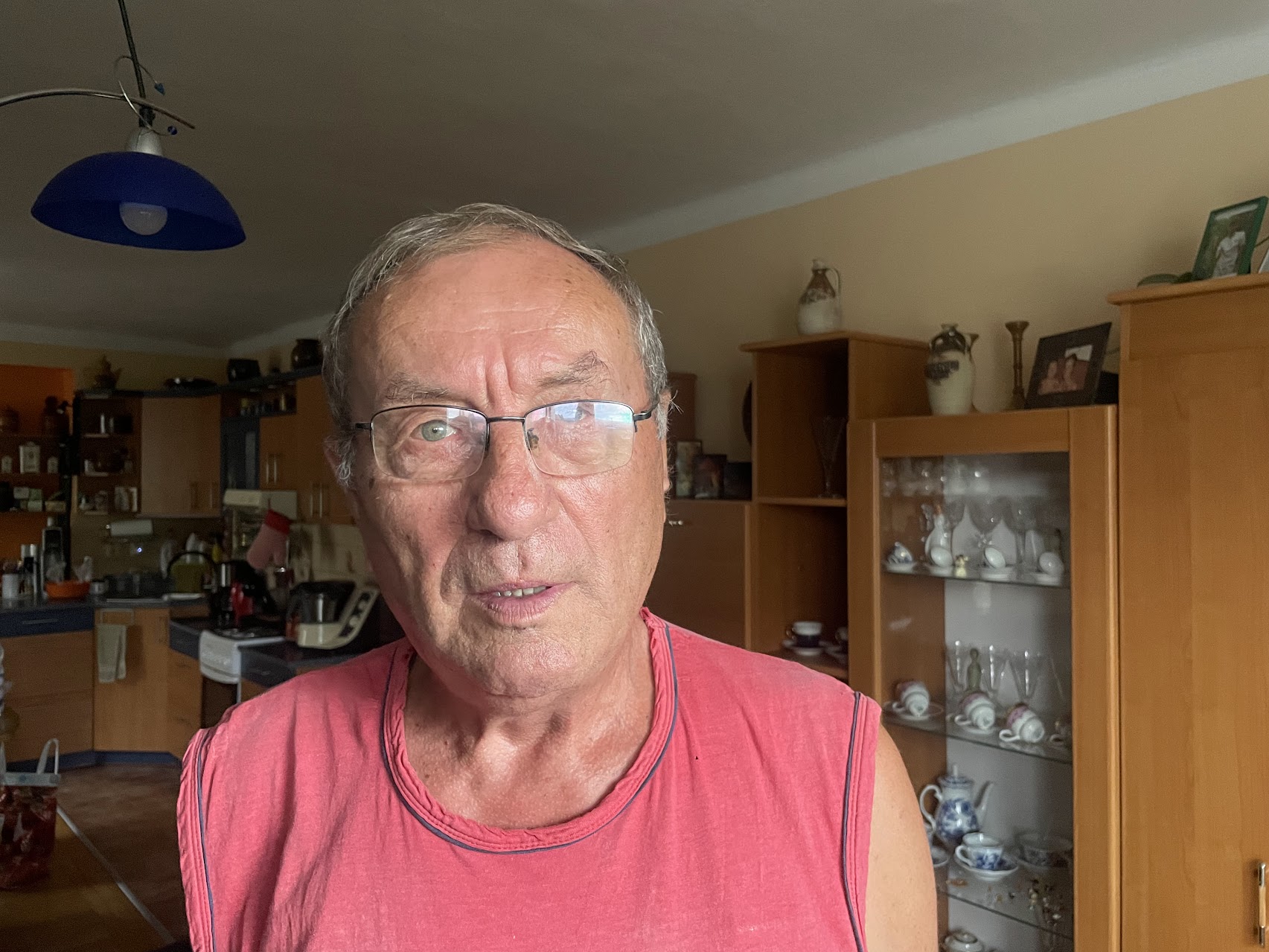
Vlastimil Jahoda

* 1948

  • "Well, after four years my parents moved out. My father came from Krčmaň and they moved there. Because in short they had a business there, they had a butcher shop there, they rented a pub there, and because [nationalisation] would come, it was all cut off, the business. They moved to Krčmaň, where my father was born, and there they got a house from my aunt, which they repaired and fixed up. And that's where I grew up from the age of four or five. I remember when my mother went to Brodek near Přerov - with money. We had about 70,000, and the currency reform came and she cried all the way there and back because she brought a few pennies for 70,000."

  • "Once in [the year] 1969... there used to be a cooperative farm here, and that also beloged to Oseva. And of course we had an office here, a technician, a mechanic and an agronomist. The mechaniser was from Bílý Potok and he told me to hang the flags on the morning of the 8th [of May] - the Russian and ours. Or maybe on the 9th [of May] it was celebrated earlier. I said it would. Well, we were in a pub. Then he says to me: 'I've already hung it, you're sitting in the pub, you're not going to hang it, it's going to be trouble again.' But he hung it up, and Mezl came and started swearing that the farmers... and so on and I don't know what, he was swearing at me. And I said I didn't hang it and I don't know why it's there. And that I was supposed to hang it up next day, and he bothering me and talking until I went and took the Russian flag to the pub and threw it at Knot and he got tangled in it until he fell. And then the cops came and that was it. Then they were guarding us, but then the head of the cops in Javorník was a reasonable guy. We hid [the flag] so it wouldn't be a mess. The housekeeper said she didn't see anything here. Thanks to the boss of the policemen it turned out well, a hundred-crown fine each, but one more time and it would be bad, they said. But that was only because somebody somewhere was saying something, not that I was doing it for political [reasons], that I was upset. If it was supposed to hang, it was going to hang, well. So what are you going to bother me about."

  • Celé nahrávky
  • 1

    Bílá Voda, 02.09.2025

    (audio)
    délka: 56:16
    nahrávka pořízena v rámci projektu Stories of the region - Central Moravia
Celé nahrávky jsou k dispozici pouze pro přihlášené uživatele.

A fight broke out in a pub over a Soviet flag
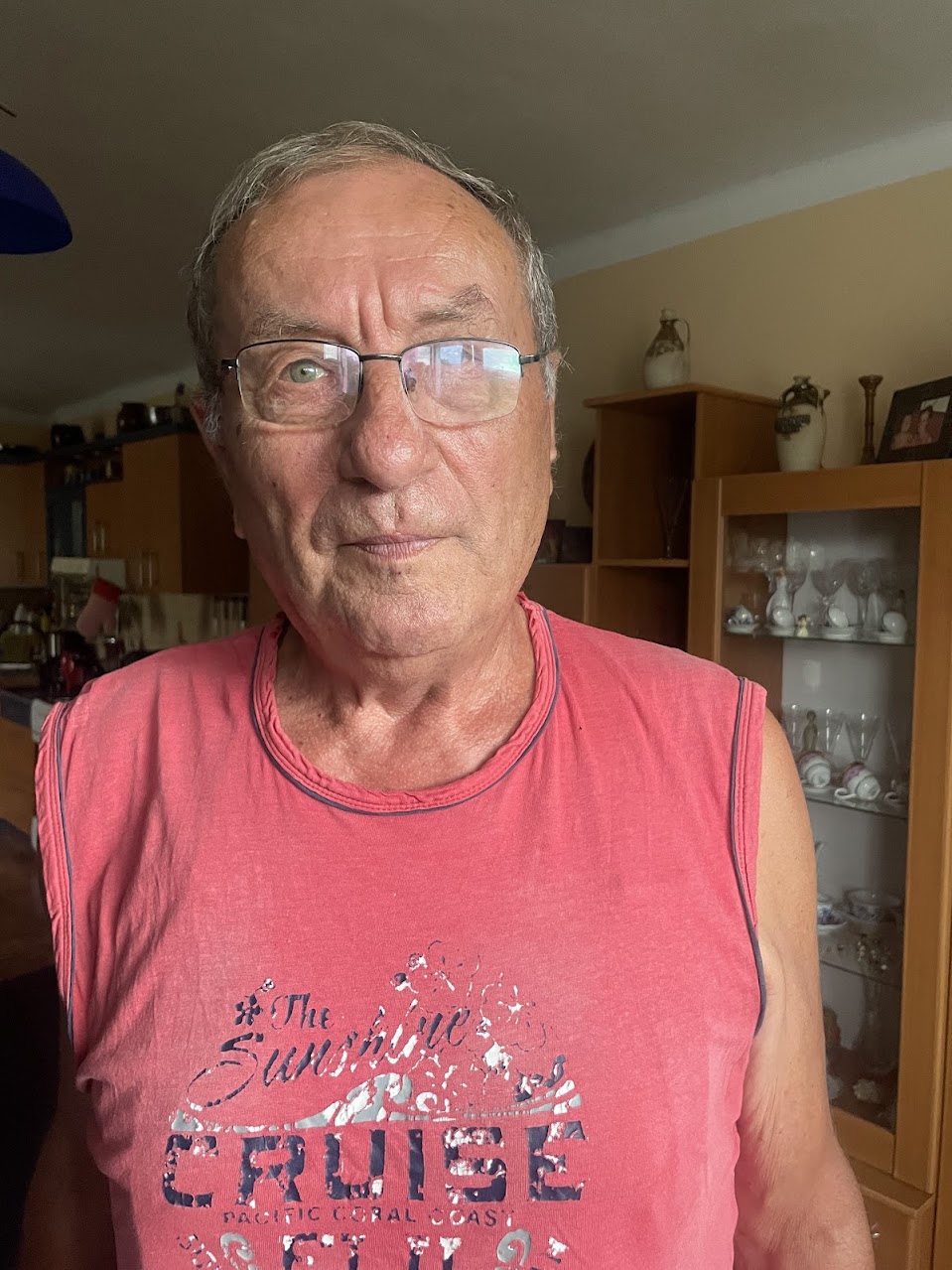
Vlastimil Jahoda, 2025
zdroj: Post Bellum

Vlastimil Jahoda was born on 22 October 1948 in Bošovice near Slavkov into the family of Josef Jahoda and Pavlína Jahodová, who ran a butcher‘s shop and a municipal pub. The family business was gradually liquidated after 1948 by nationalisation and the intervention of the communist regime. His father, a trained butcher and sausage maker, invested in the local slaughterhouse. However, he lost everything and in 1952 the family moved to Krčmaň. Vlastimil Jahoda was the youngest of four siblings. In 1953, the family was hit by the currency reform, during which they lost a large sum of cash. His mother worked in the local cooperative farm, his father in the meat industry in Přerov. He died prematurely at the age of 50. The mother was left alone with three children and the family lived in very modest circumstances. Vlastimil Jahoda studied at the secondary agricultural school in Olomouc, graduating in 1968 during the Prague Spring. In the summer of 1968, he joined the state farm in Bílá Voda as a trainee. The farm was later taken over by Oseva. In 1969, he got into a political conflict after he removed a Soviet flag from the farm building. This was followed by a police investigation, a fine of 100 CZK and surveillance. He worked as a livestock specialist in Bílá Voda and later as a manager in Bílý Potok. In 1988, under pressure of losing his job, he joined the Communist Party. He was a member of the party only until 1989. After the collapse of Oseva, he became one of the founding members of the new agricultural company SABAS Javorník, where he worked as a manager and agronomist in Bílý Potok. He refused offers to join new political parties after 1989. He retired at the age of 64. He and his wife Ludmila raised two sons and were living in Bílé Voda at the time of the recording (2025).