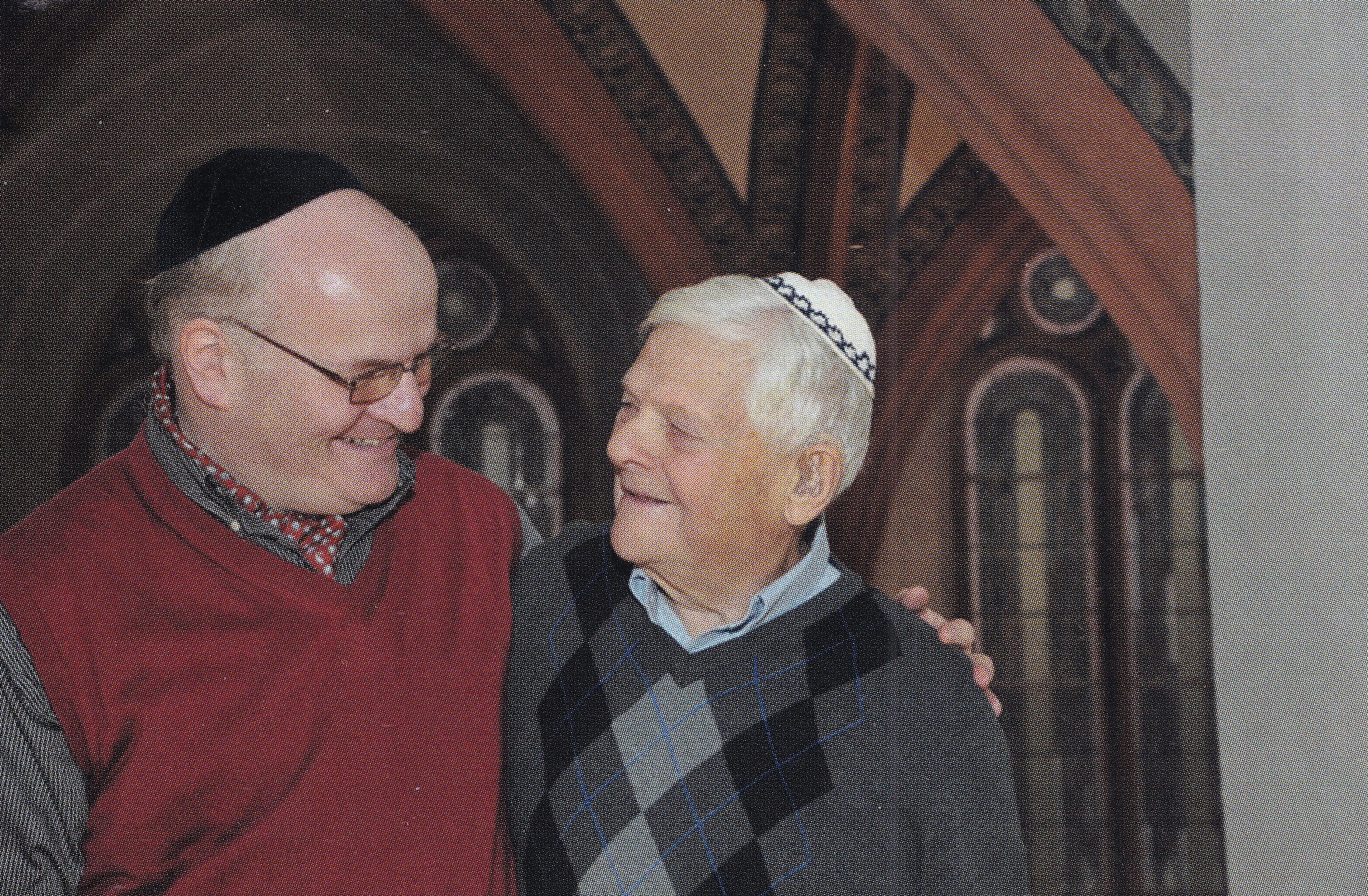
"So the Dalai Lama's visit was coming up, and the President invited me to the castle again, and there he started telling me again that it would be inappropriate and that the Lama regime was just terrible and that things were happening in Tibet and that China had helped to lift things up and so on. He was telling me some things from his point of view there. Well, and he more or less wanted - he couldn't ask me to commit to him here and sign something, he couldn't, but he tried to motivate me to do it. And he also began to make more specific the list of honorees. And now, suddenly, somebody probably told the President that my name was also behind the nomination of Jiří Brady and that there was a family connection. And the President said, 'Yeah, I've considered it,' and that he saw it as meaningful and so on. Time went on and at the Slovak Embassy, on the anniversary of the Slovak National Uprising, we were invited to a reception and every time the President is present, of course, the members of the government are led to the table where the President is. So President Zeman was sitting there, and then the then ministers Jan Mládek and Dan Ťok and the then Slovak ambassador Peter Weiss and I were sitting there. And President Zeman said, 'Well, I signed your uncle's nomination, but if you meet the Dalai Lama, I will cancel it.' I thought to myself, "My God, what does that even mean... am I hearing this right?" He's haggling over some kind of award here, have I even begged for anything?' And I was like, 'Should I tell these guys here - did you hear that?' and so on. Well, I didn't say anything, then I went to a colleague when this moment at the table was over and I said, 'Hey, this is what happened to me.' So there were some who remember me telling them right away. The president was very much socially tired, to put it euphemistically, but that doesn't excuse him, he just haggled there, or wanted to haggle that way over a state award."
"At the Institute for the Study of Totalitarian Regimes there was a board of directors that was composed of both members of the Confederation of Political Prisoners and the so-called 'eight-sixth-year-men'. There was no problem in studying and opening the archives from the post-August 68 period, but those who - or their ancestors and relatives - built or co-built the regime in the 1950s had little interest in opening that phase. While the Confederation of Political Prisoners said, 'No, as the law requires us to do, we have to study, digitise, open up, make accessible that whole phase', I said, 'Yes, that's what the law requires us to do, I totally agree with that' - and there were very strong clashes of opinion. Then there were several dozen bags of shredded material at the Institute for the Study of Totalitarian Regimes and at the Security Services Archive, which was part of the Institute. I became acquainted with the work of the so-called Fraunhofer-Institut in Berlin, because I was very much in contact with the Gauck Office, which was headed by the later Federal President Joachim Gauck - actually similar, like a German institute - and there the Fraunhofer-Institut developed a special scanner, I saw it with my own eyes, which was able to integrate even the materials that had gone through the shredding machine. I don't know how that is possible, but I saw that it was possible. And there was some tremendous fear from that. We brought a number of those bags in Berlin and that created such a wave of resistance in the council that after the term of some members of the Confederation of Political Prisoners ended and the Senate elected other members of the council, I was removed from office in 2013, after some really heavy clashes of opinion, and the project came to a halt and there were all kinds of issues around digitization. In short, I was hugely relieved, I must say, because it really was a stay on the front line, as I say."
"And then the curtain fell, the year eighty-nine came. And sometime in the ninetieth year, in České Budějovice, at the main post office on Senovážné Square, I was standing in line at the post office window. And a few people in front of me stood the State Security guy who used to come to me most often. And I could feel completely the wave of disgust and disgust and hatred that had risen in me. And I remember thinking, 'Well, am I going to tell these people now - I'm going to say it fully now - look, this is the State Security swine?' and I didn't. He must have sensed it telepathically somehow, because he turned - we met eyes, he got out of the line and walked away. I didn't say anything, but - and this is a hugely important experience for me - I realised at that moment in that post office that I was the one who was losing. Because if I had done that, the motive for my actions would have been revenge - hatred - and that must not be. And I said to myself, 'Never, never again must this be the motive for your actions.' And even in my difficult conflicts later with Miloš Zeman, for example, I remembered that, or the Institute for the Study of Totalitarian Regimes. It is an extremely valuable experience for me, I am grateful for it, from the Lord God. At the moment when I had absolutely no power in my hands, I was completely handed over to them, but I felt this deep vertical connection - so there, there one was winning, but not at that moment when one was filled with negative emotion. That's a hugely important experience for me, and I'm grateful for it."
"Friends who will be, or those who will be, listening to my narrative before long, believe me to be a happy man. I am grateful to the Lord God for what I have been given, and each of us has the opportunity to change things for the better. And even maybe that tiny stone placed on that bowl of scales of goodness, right and justice doesn't end up in a black pool deep and meaningful. Let's not get poisoned and always try to look for those sources of positive energy that each of us needs. I personally find a lot of it in the spiritual realm, but I'm not saying everyone has to, that's everyone's business. But it's meaningful and life is beautiful and it's a great gift and let's not spoil it for each other. May the Lord God bless us all."
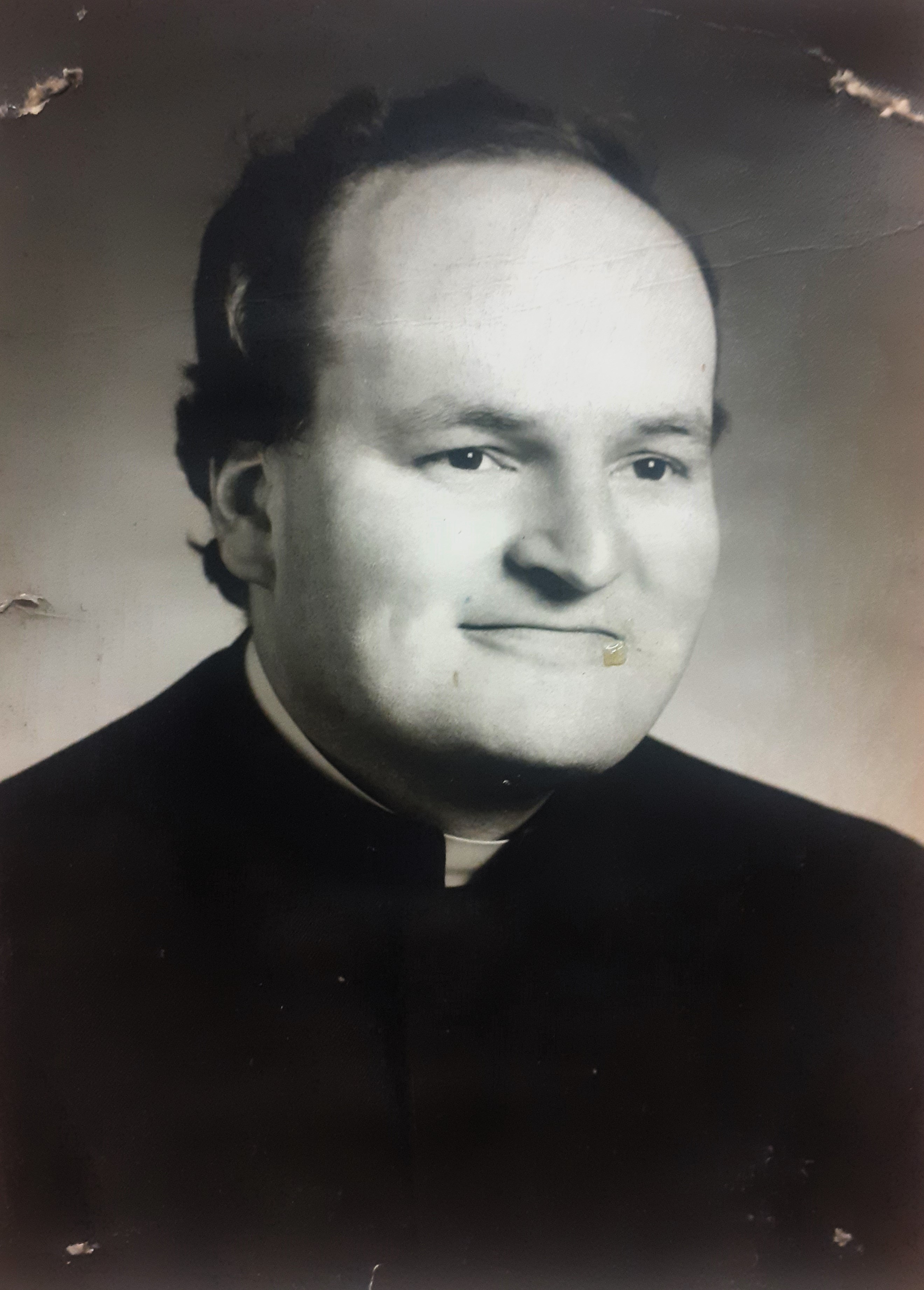
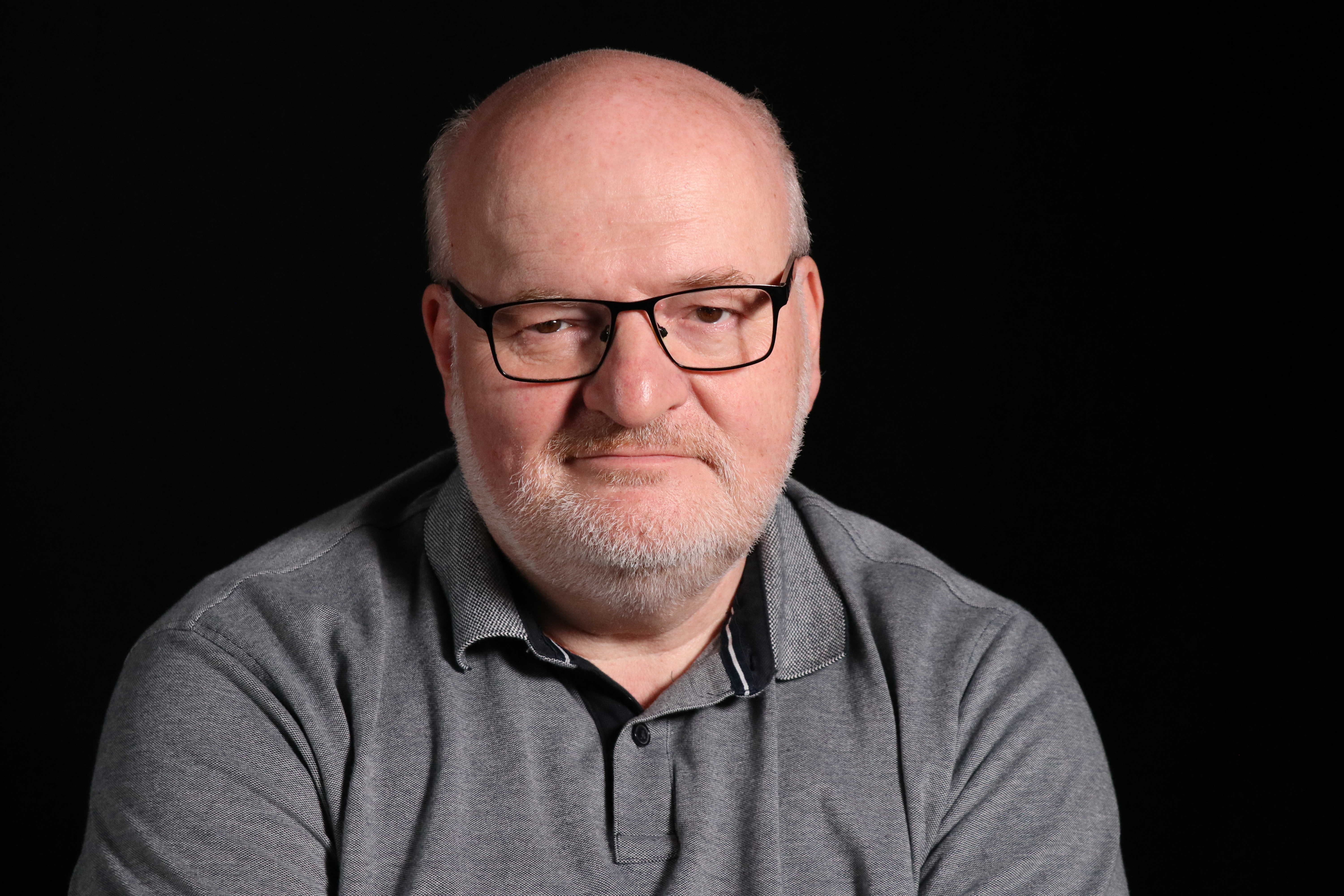
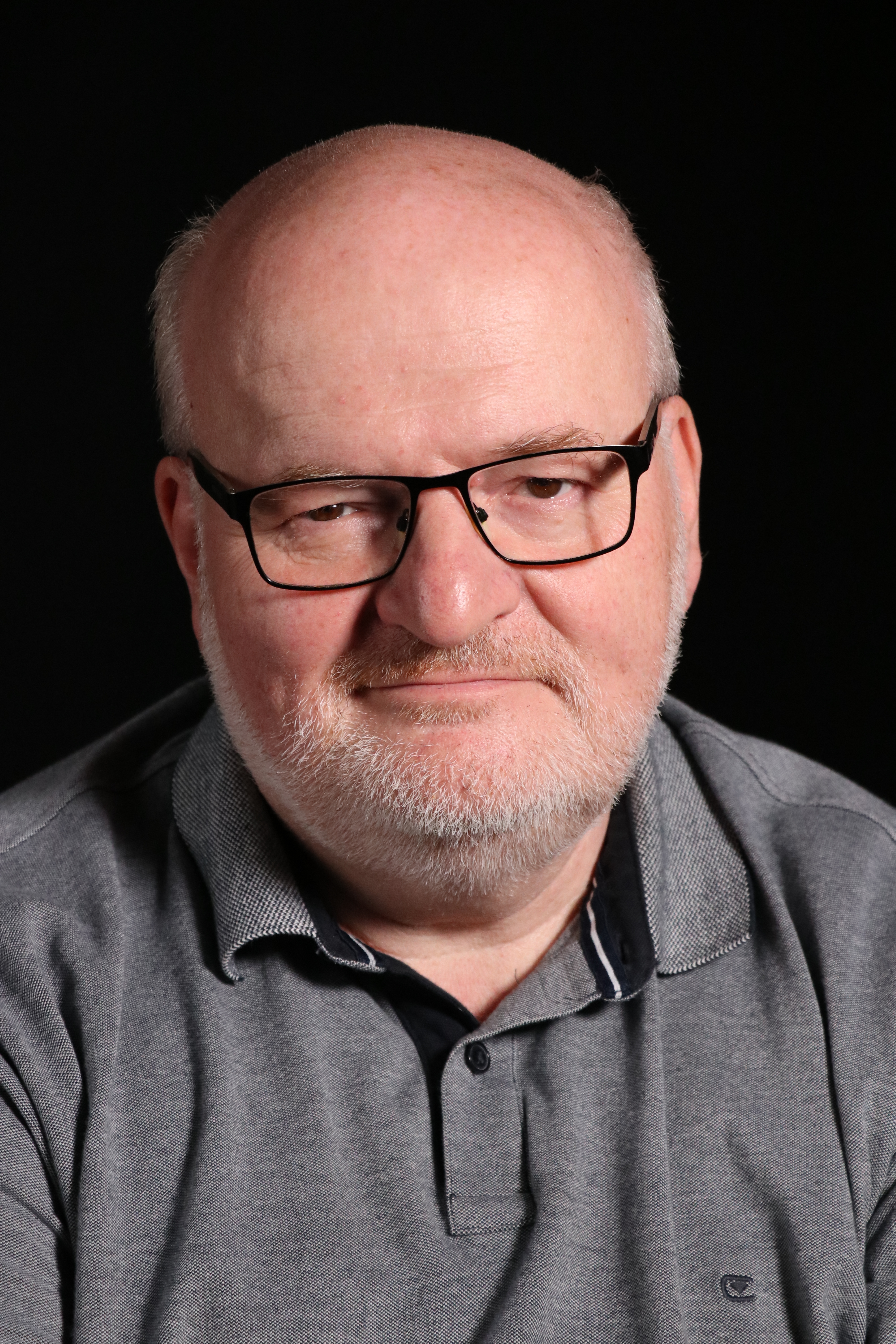
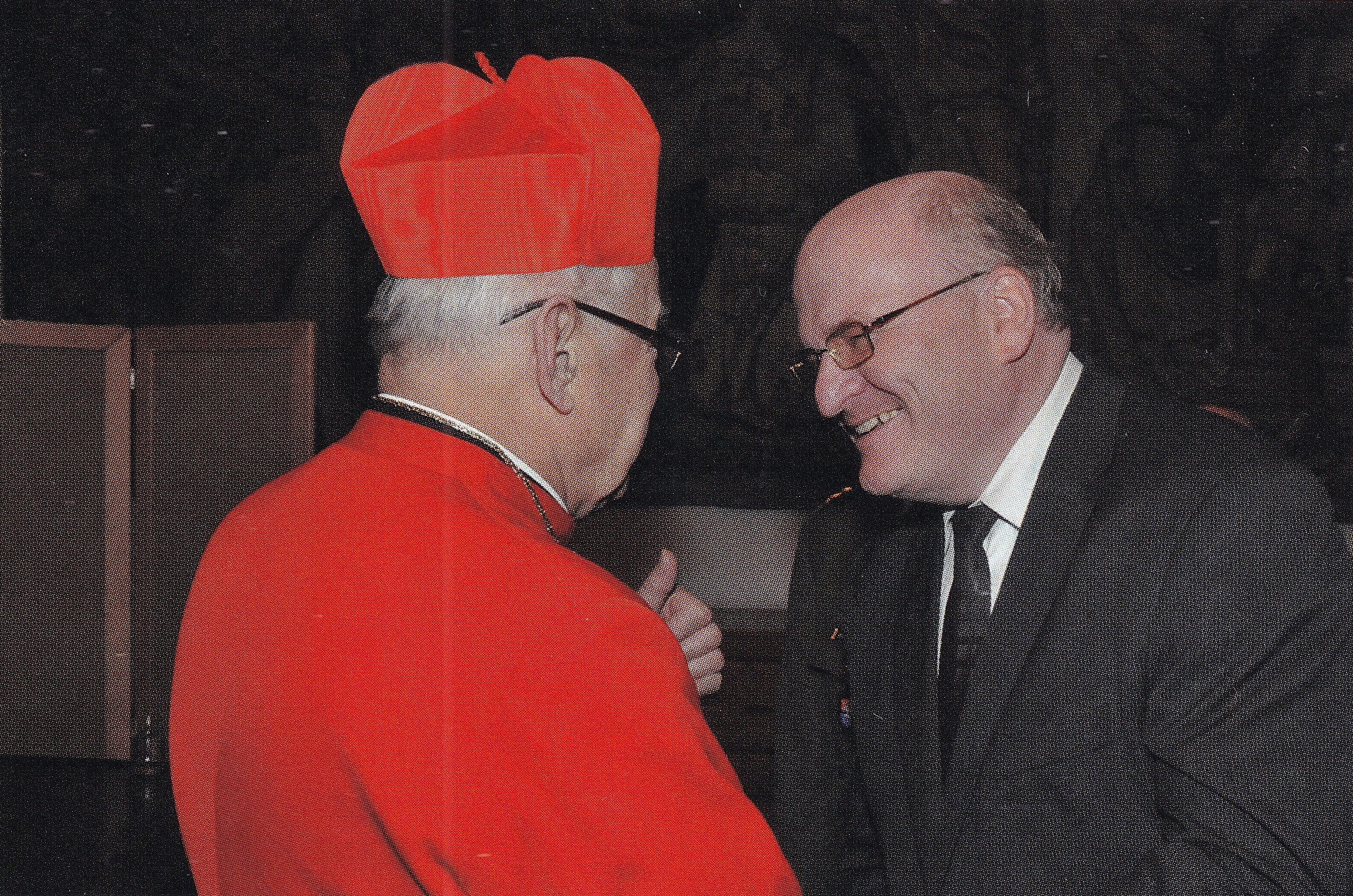
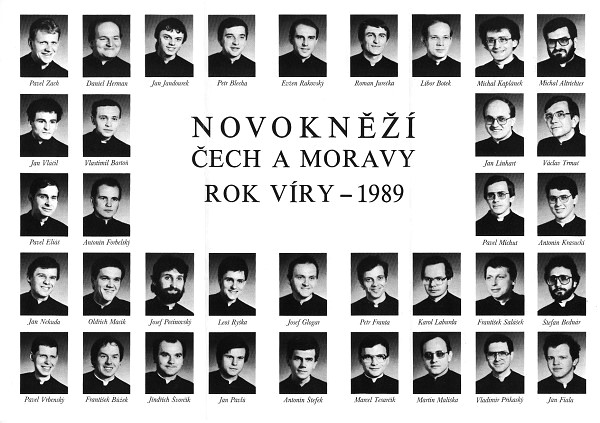
Daniel Herman was born in 1963 into a family marked by the Holocaust and communist persecution. Because of his origins and activities connected with church life, State Security soon became interested in him. After graduating from the Cyril and Methodius Theological Faculty, he was ordained a priest and appointed chaplain in Klokoty near Tábor. The Velvet Revolution brought a significant change to his life - he became secretary to Bishop Miloslav Vlk of Budějovice, whom he later followed to the Prague archbishopric. After completing internships abroad, he headed the press department of the Czech Bishops‘ Conference for nine years and held the position of press spokesman. He remained publicly active even after his retirement from the ministry in 2005, when he worked in the intervention team of the Police Presidium, headed the Information Office of the Ministry of Culture and the Prague office of Professor Jan Švejnar. In 2010, he became the director of the Institute for the Study of Totalitarian Regimes, where he worked to make available and process documentation contributing to the understanding of the impact of totalitarian regimes. After his dismissal in 2013, he entered politics, becoming an MP for the Christian and Democratic Union – Czechoslovak People‘s Party (KDU-ČSL) and Minister of Culture in Bohuslav Sobotka‘s government. Since 2021 he has served as Honorary Consul of the Principality of Liechtenstein in the Czech Republic.
Hrdinové 20. století odcházejí. Nesmíme zapomenout. Dokumentujeme a vyprávíme jejich příběhy. Záleží vám na odkazu minulých generací, na občanských postojích, demokracii a vzdělávání? Pomozte nám!