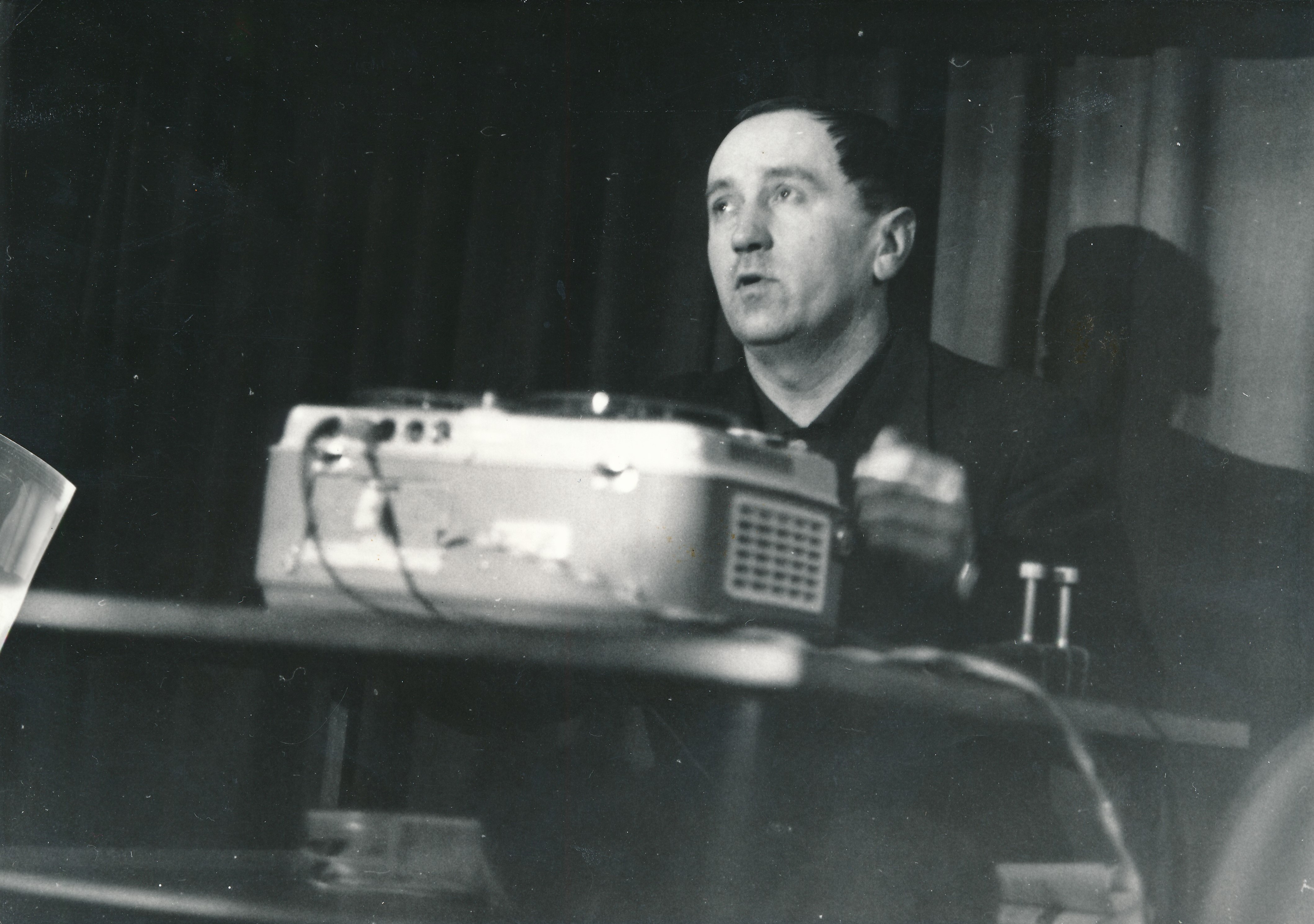
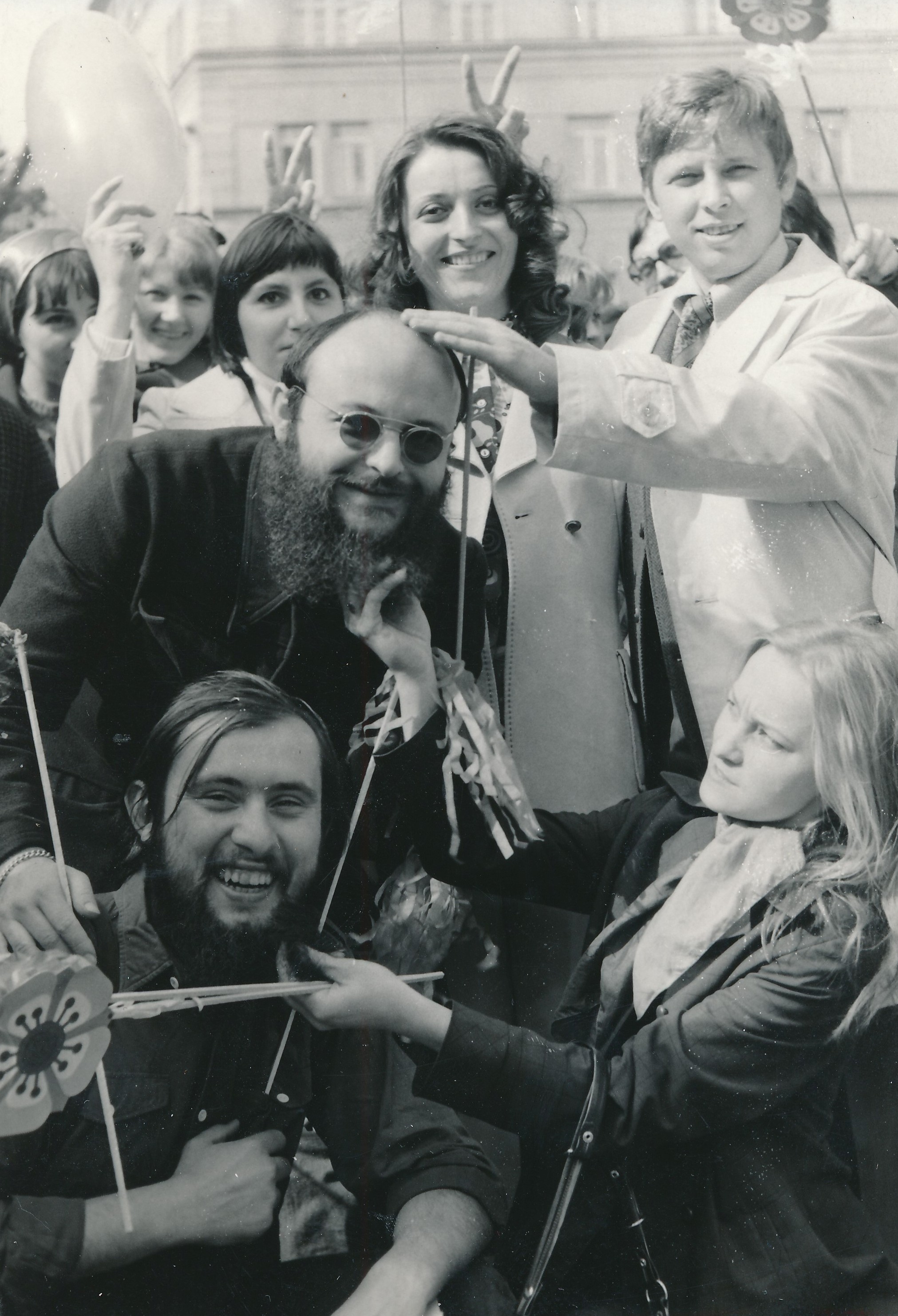
"The social schizophrenia was growing. Now we have clearly seen how things are and that the power does not want to give way at all, and even though in that Russia there was a kind of perestroika with Gorbachev, not here. Here they were holding on to those welded positions and, on the contrary, they wanted to tighten up."
"We were doing a show, I think it was this one called Daughters of the Nation at the Chmelnice, and they used to come up the stairs and it was full, it used to be full, and they used to say to me - please, there's someone down there waiting for you. You're supposed to drag him over here, without tickets. So I rolled down and there was Havel still standing there with some young guy. And he says - please, there are no more tickets, so get us there somehow. So I took him and he said - but my State Security guard is here too. That was the other one, the young guy, so I dragged them both there. So they liked it, and we always played the same show two days in a row, and the second day somebody says to me, one of the organizers, says - you have a visitor downstairs. And so I went downstairs again and there was this State Security officer standing there and he said - I was here yesterday with Vašek Havel and we liked it very much. And I came today with my wife. Couldn't you get us there? And so I got them there. So there were incidents like that."
"We met this strange man, this semi-crazy man, Jan Novák, who was fit to be the head of, as it were, the globe, and we made him such a... He invited us to the Brno Bohemian and we did this kind of a dawn for him and we did various trips and happenings. He wrote - he called himself the only and last Bolshevik - he wrote a textbook of communism and he sent that to Khrushchev in Russia, in Moscow. We used to meet at that plague column or at that fountain, at the plague column on Liberty Square, and many times several hundred people would gather there and he would tell them various calamities and read his poems and plays. But it was kind of absurd."
"When the war started, when the Nazis had already raided the place, my mother, grandmother and aunt were hiding with the Poles in an alcove behind a closet. It was in the house so they could go into the garden at night, but otherwise it was in that alcove. So it was complicated because it was dangerous to go to the toilet, to sort of move around in there, so they had a bucket and so on. So they used to hide in there with grandmother and auntie. My grandfather was a goldsmith, so maybe they had some gold, so they gave it to them so they could sort of stay there."
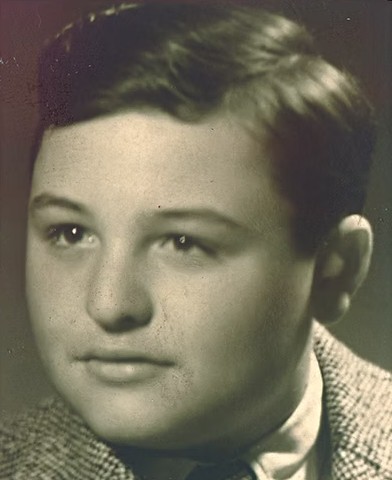
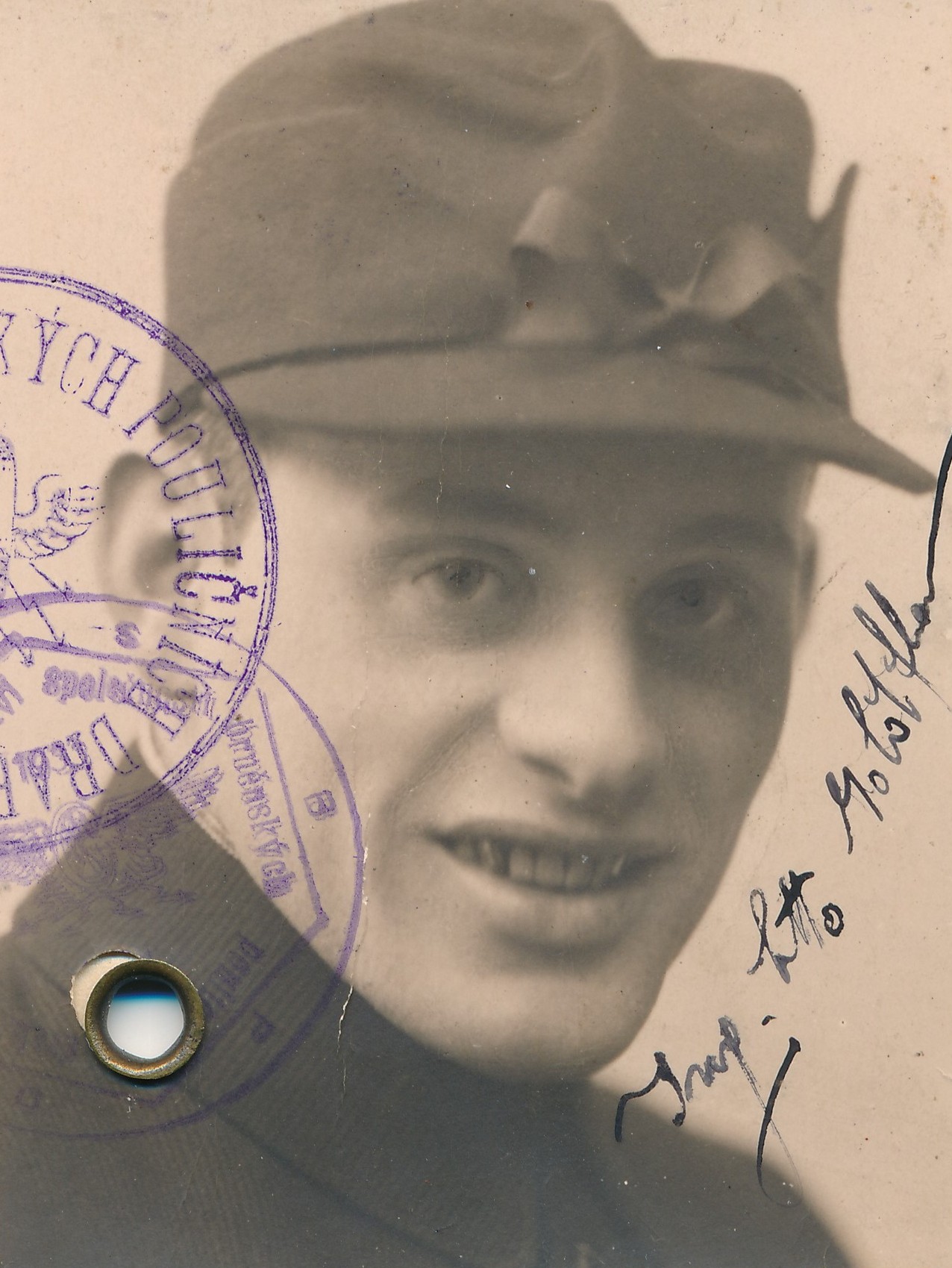
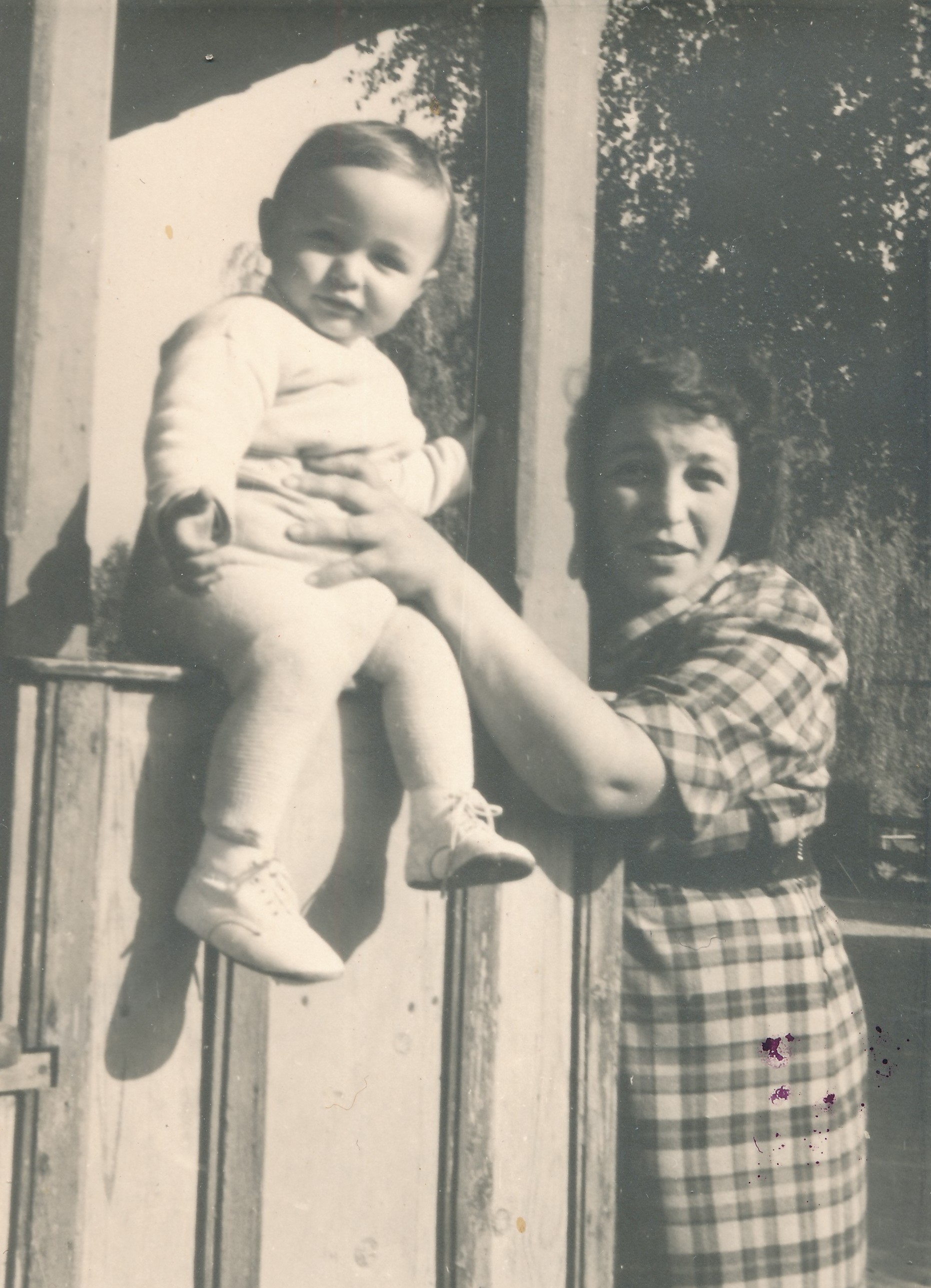
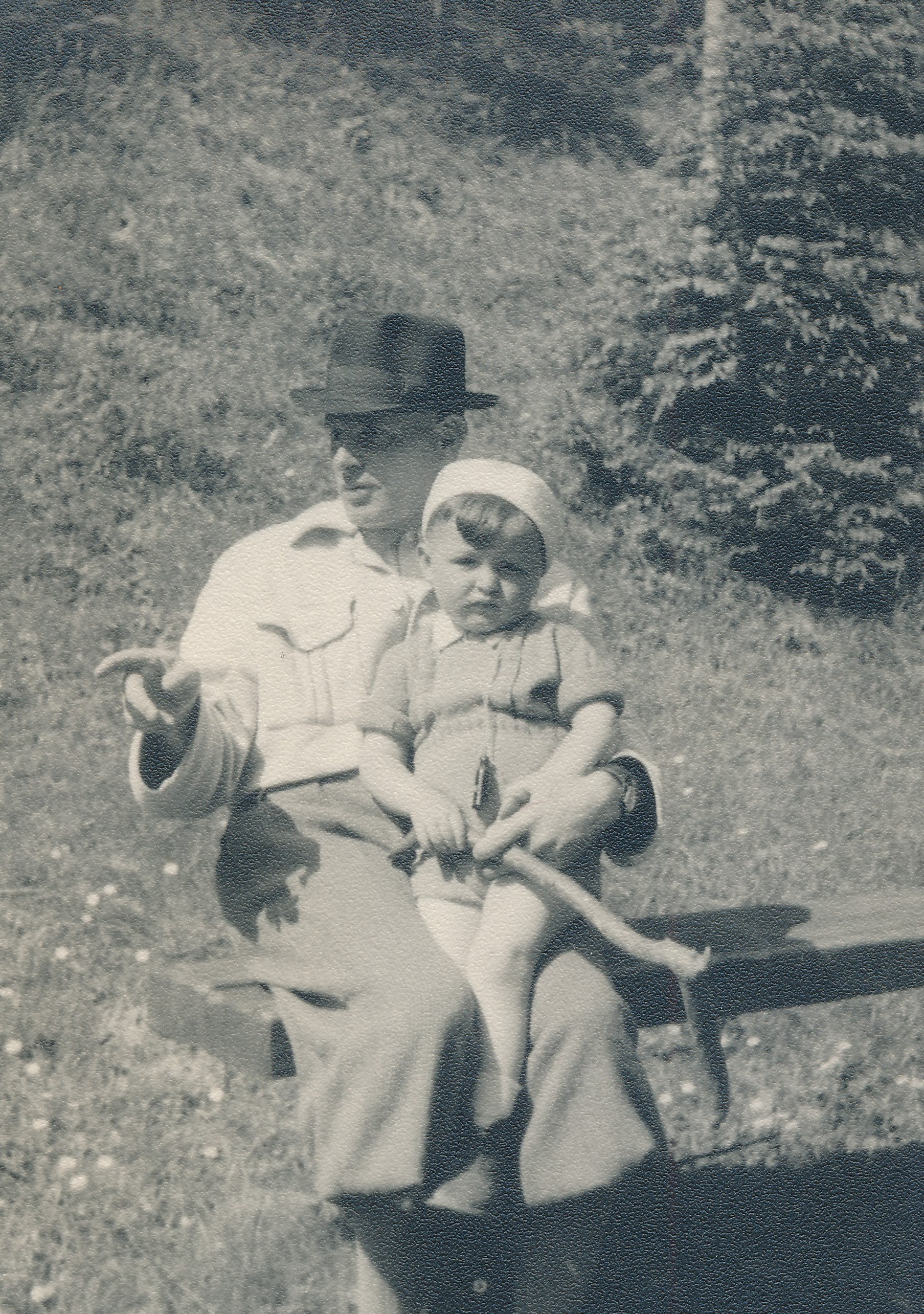
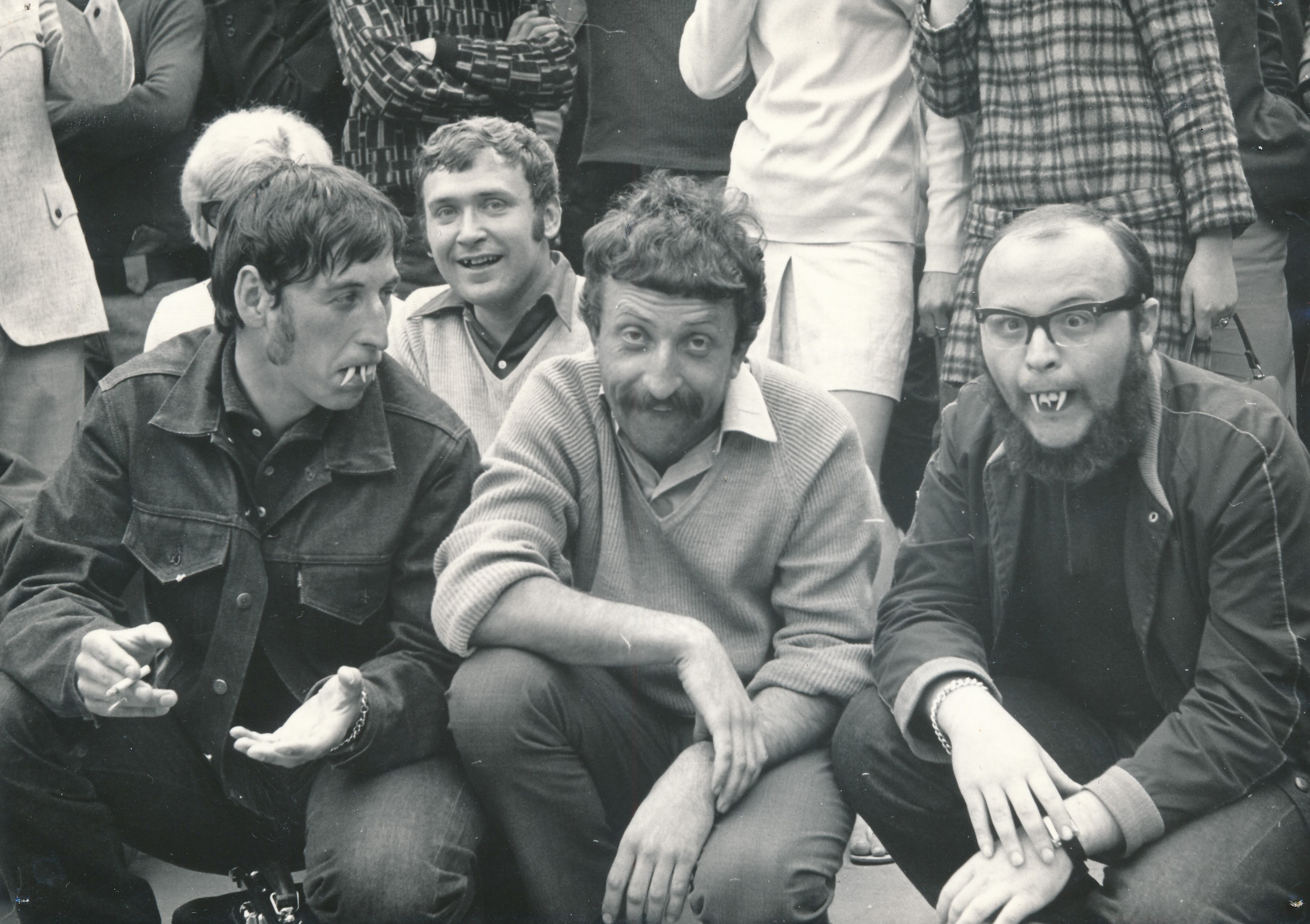
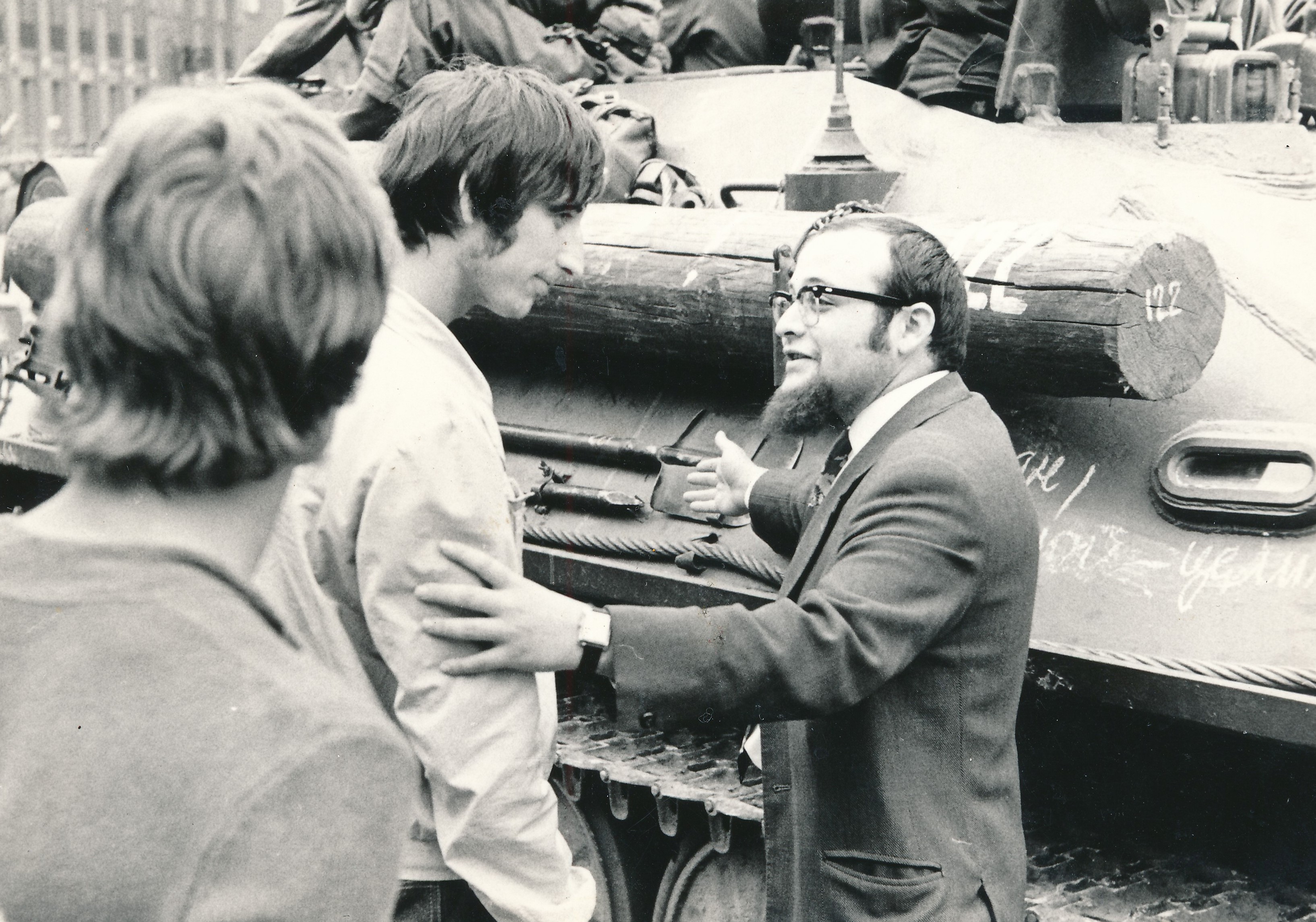
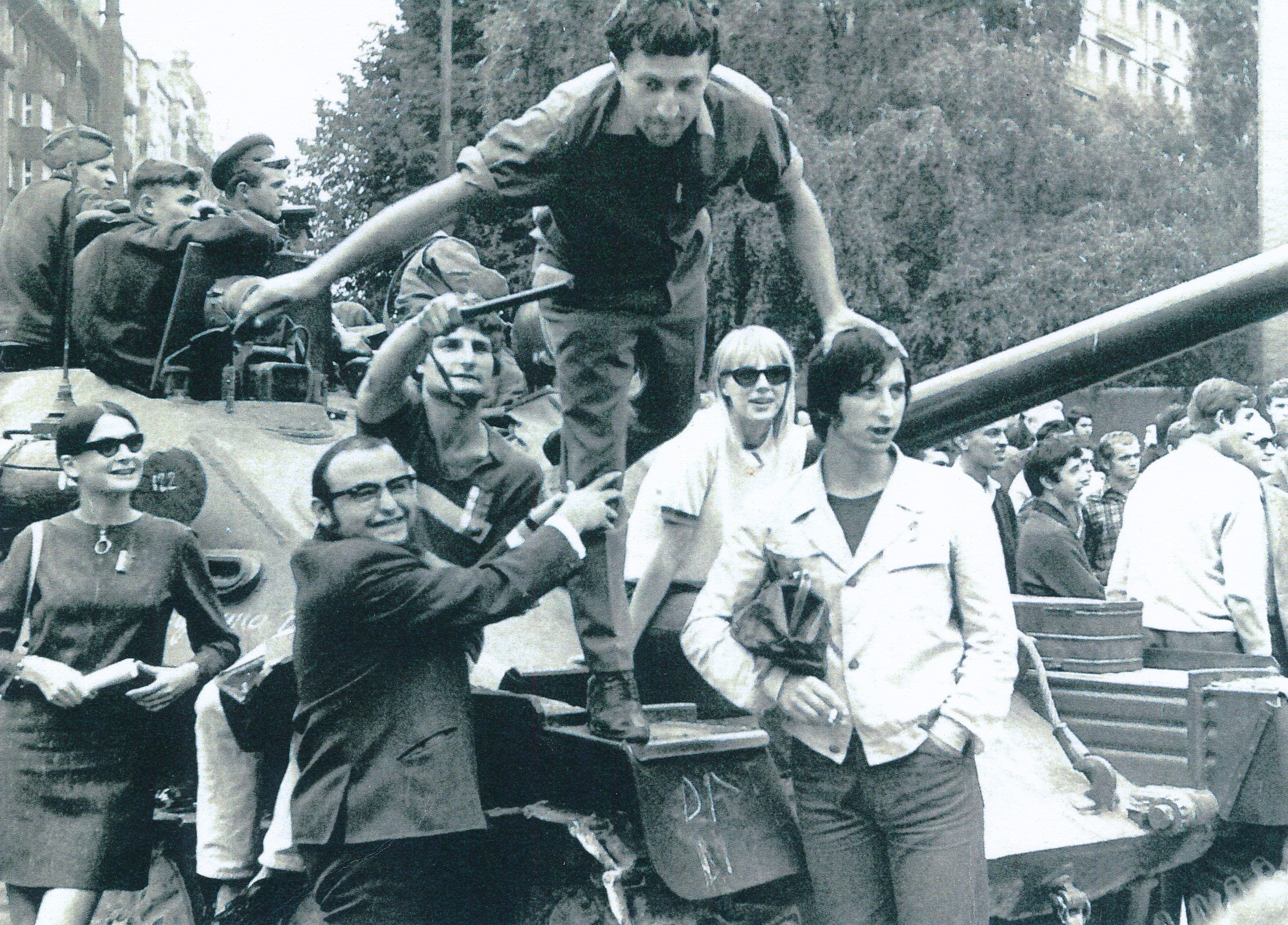
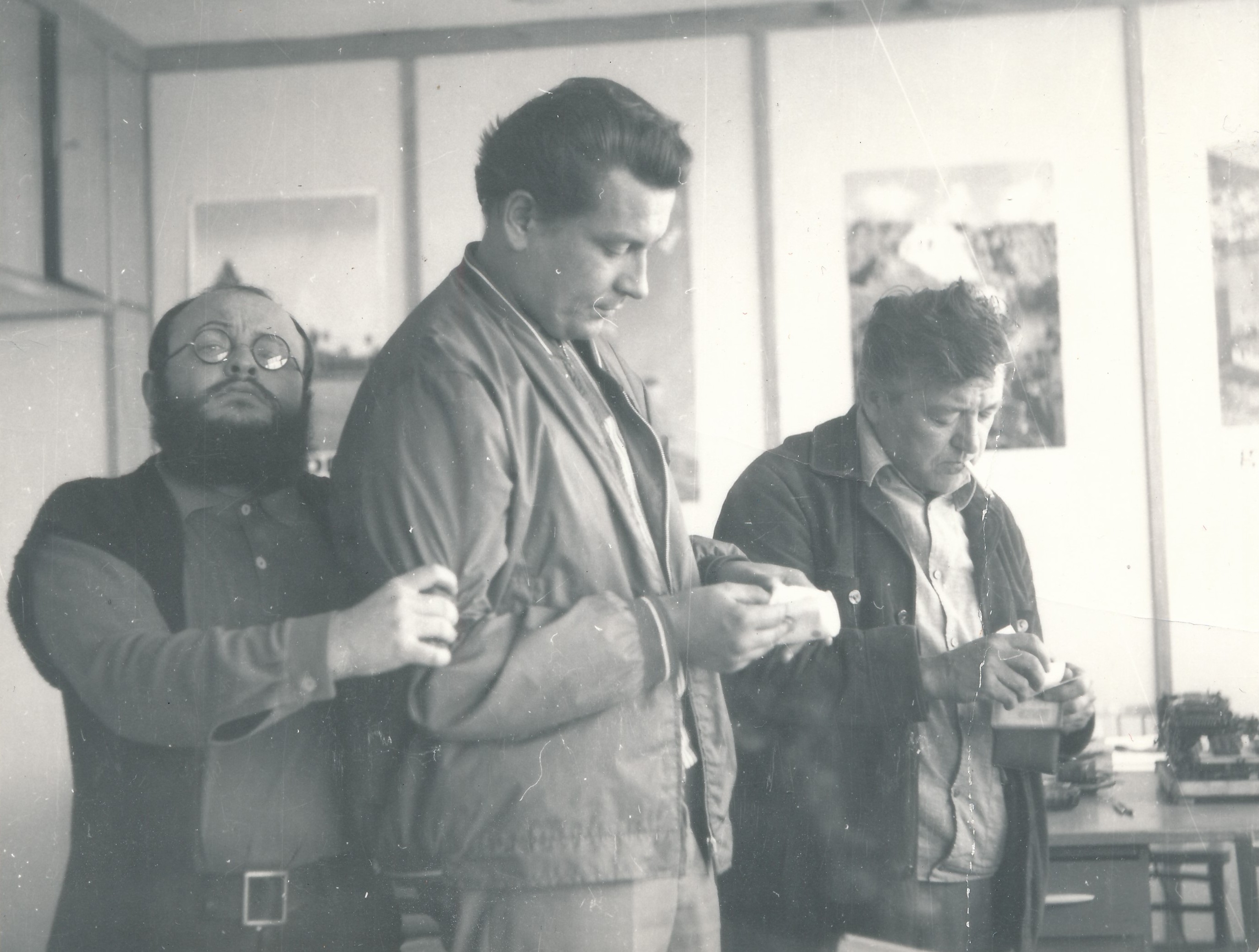
Arnošt Goldflam was born on September 22, 1946 in Brno to Jewish parents Otto Goldflam and Sona Eisenberg. One could hardly find a worse time and place for a man of Jewish origin than Eastern Poland in the first half of the 1940s. Both parents met there and then - Soňa lived there with her family in the town of Sokal, Otto was deported here by the Nazis, later joined Svoboda‘s army in the Soviet Union and went through all the liberation struggles. After the war, his parents were reunited and settled in Brno. Their son Arnošt, after his mother‘s untimely death, defied his father‘s wishes and became a worker in a foundry rather than study any of the exact sciences. He changed several professions, flirted with fine arts and in the 1970s studied theatre directing at the JAMU. He started his career at the Hanácké Theatre in Prostějov, later HaDivadlo, which, thanks to him, among other things, rose from a small provincial theatre to one of the leading avant-garde theatres of the 1980s. It managed to stage productions that balanced on the thin line between what was still tolerated and what was already running up against the censorship of the time. Similarly, he also sought to position himself as an anti-regime artist while at the same time finding it difficult to resist pressure from the State Security. After 1989, he continued to direct plays, teach at the Brno JAMU and write. He is the author of more than 80 plays and dramatizations.
Hrdinové 20. století odcházejí. Nesmíme zapomenout. Dokumentujeme a vyprávíme jejich příběhy. Záleží vám na odkazu minulých generací, na občanských postojích, demokracii a vzdělávání? Pomozte nám!