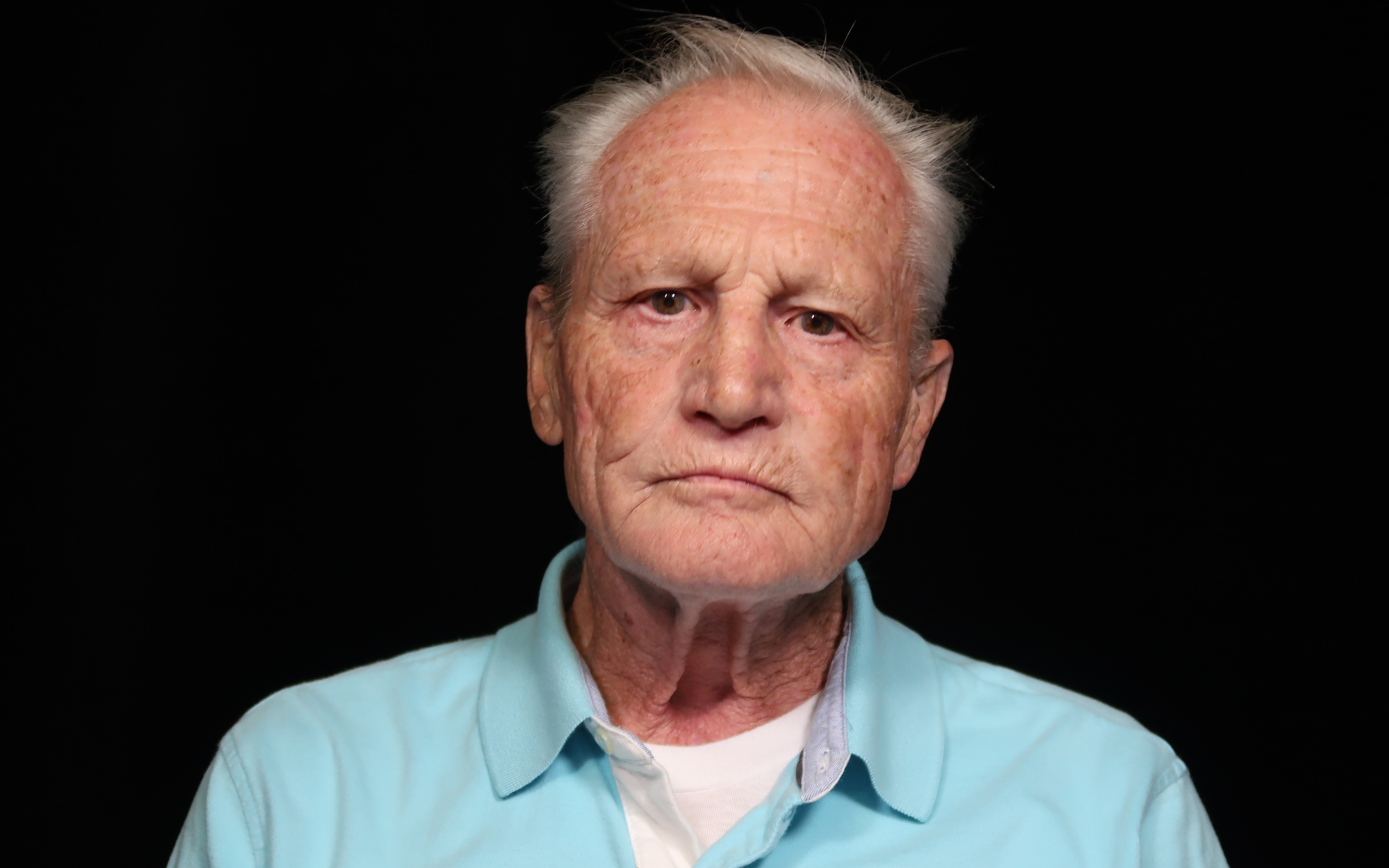
Ervín Reisky

* 1931

  • "So we waited, we were scared, even though people were going there to look for mushrooms, but nobody came across us in that place. Briefly, we waited there, and then we tied our boots around our necks, barefoot, we skipped... But we knew there was a patrol there from time to time. Whether it was the Russians, the Germans, I don't know, but there was a patrol, they were watching along that way. So at one o'clock in the morning, at two o'clock in the morning, like that, we slowly [walked] down that mountain. As soon as we were almost on that road, we started running across that road, because you didn't know if somebody was going to shoot, but just across the road down. Across that little stream, we jumped [over it] and we were running up the hill and we were screaming like monkeys because it was... Those nerves almost burst after that escape because you don't know what's going to happen, what can happen. But then we were already on the west side, in West Germany, so by the time we got to that village, it was two or three in the morning. There was a police station, there was light, so we checked in at that police station."

  • "It's not that far from us to Auschwitz. You had to know something, they must have known a lot. To what extent there...That's what I wanted to say. I started to learn badly, I remembered my father and I had an uncle in Katowice. So my mother sent me there one day to that Katowice, to change my ideas. He had found a job there, my uncle, in the twenties or thirties, in the ironworks, and he got married, married a Polish woman, had a family. And so my mother sent me there one day. So I took the train through Ratiboř and I didn't know which way to go. And I think even today that it had to go through Oświęcim, that way. Because the train stopped once, the soldiers got on from each side, they closed the curtains so that you couldn't look out. And on the train they said, maybe some secret factory or something like that, but today I think it must have been Auschwitz, that some of those wagons were attached, that they were unloaded there, in Auschwitz, but I don't know. I don't know where the train actually stopped, that the soldiers got on there, and that you weren't allowed to look out and see what was going on."

  • "I started going to second grade and I remember the Czechoslovak army very well because there was always military music, playing in the square, merrymaking, fairs, merry-go-round, and everything. And then the war came. I saw from Hlučín, because the garrison there was normal, they had to withdraw, they went through Hlučín, and the soldiers, because they had to leave it, I know they were shooting in the air."

  • "Because my mother sent me to pick up my father from the pub, and there were people talking, Czech, German. It depended on who was the last to arrive or the first, so they started, for example, in Czech, a word in German and so on. I heard certain elements there, let's say, about Schuschnigg, he was in Austria at that time, so they were talking about it, about Schuschnigg, they were talking, I listened to it as a child, about Mussolini and they had jokes about it, and about Hitler too, but I didn't perceive it at that time. I knew about these people, Mussolini, Schuschnigg, Hitler, but I didn't [know] the background of any of it as a five-, six-year-old."

  • Celé nahrávky
  • 1

    Ostrava, 24.09.2019

    (audio)
    délka: 20:53
  • 2

    Ostrava, 24.09.2019

    (audio)
    délka: 01:32:15
  • 3

    Ostrava, 24.09.2019

    (audio)
    délka: 01:06:52
Celé nahrávky jsou k dispozici pouze pro přihlášené uživatele.

We jumped over the stream and screamed like monkeys
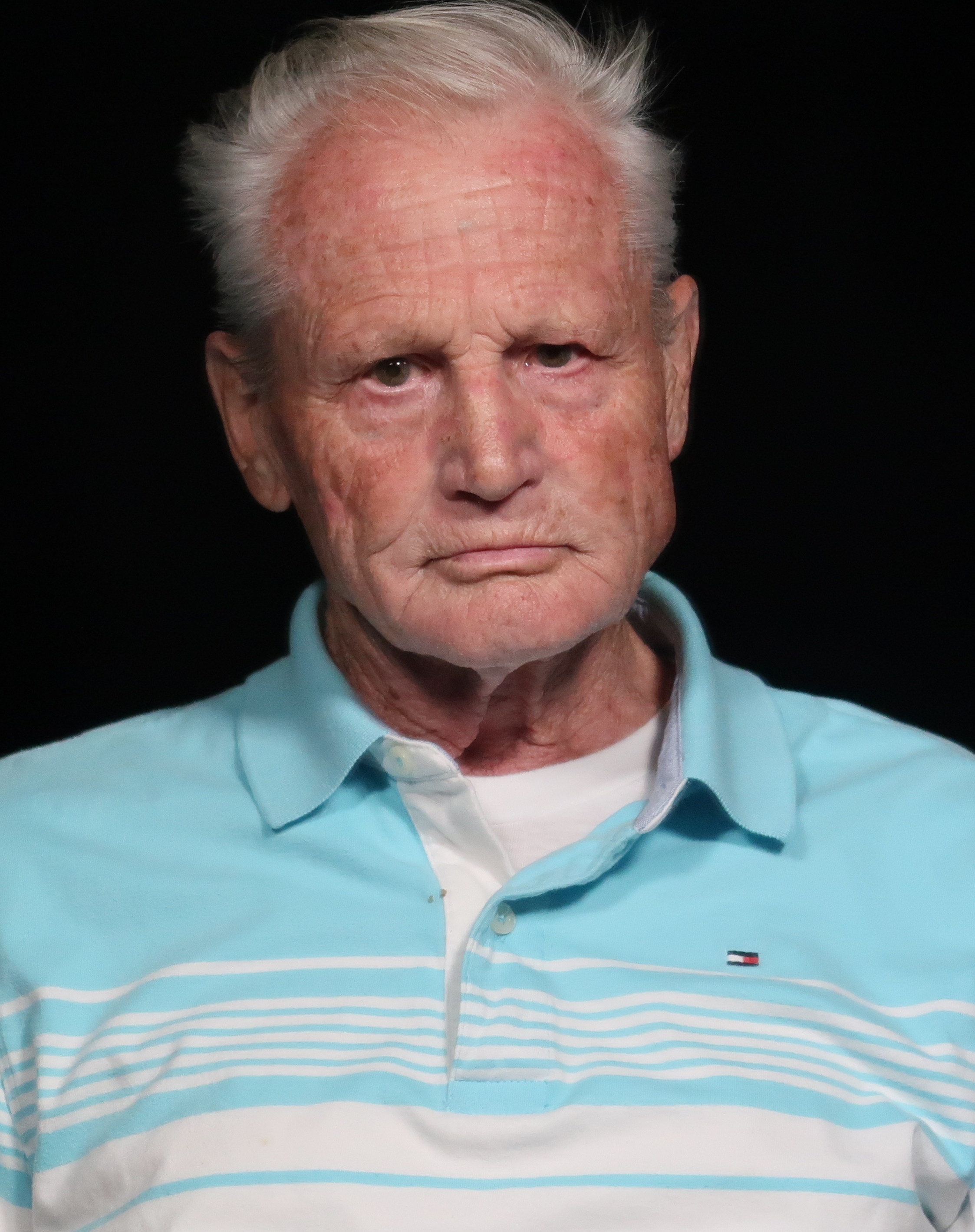
Ervín Reisky in 2019
zdroj: The Institute for the Study of Totalitarian Regimes (ÚSTR)

Ervín Reisky was born on 28 June 1931 in Hlučín to a mother from Heroltovice near Libavá and a master locksmith originally from Hlučín. His father declared his Czech nationality in 1924, his mother spoke German. At first he attended a Czech school, but after the annexation of Hlučín to the Third Reich, the teaching changed to German. His father was called up for service in the Wehrmacht. In the autumn of 1940 he suffered a gunshot wound in Holland, where he also died. Ervín Reisky lived in a boarding house for two years because his mother could not support him and his brother, three years younger, on his pension. After the Second World War, he finished municipal school and entered a mining apprenticeship. He earned a good living in the mine and supported his mother and brother. After the communist coup in 1948, he wanted to study, but because he was not in the communist party or the youth union, he did not get a recommendation. With three friends, he decided to leave his homeland illegally before he started his basic military service. At the end of August 1951, they left by train for Děčín and crossed the border on foot into East Germany near Bad Schandau. Wearing their best clothes, they set off without money or a map. They travelled on foot and by train through Pirna and Chemnitz to Reichenbach, where the family of Karel Staš‘ cousin provided them with food and instructions for their onward journey. In the village of Lichtenberg near Hof, they crossed the guarded border at night and checked in at a police station in West Germany. They spent some time in the Valka-Lager refugee camp near Nuremberg. Then Ervín Reisky and Karl Staš were offered a job by a Czech working for the American intelligence service. In the French zone near Lake Constance, they were trained and given pistols. The two friends returned from the border by the same route through East Germany to Czechoslovakia and Hlučín. A very risky venture for which the death penalty was imminent, they were lucky to make it. They contacted several people in Hlučín and found a possible telegraph operator. After returning to Germany, they received no further instructions and could not return to the camp anymore. Ervín Reisky found work in the mines in Essen. After four years in Germany, he was allowed to travel to Canada, where from 1955 he supported himself by running a business in various fields. He married and had two sons. His younger brother joined him after the Warsaw Pact armies invaded Czechoslovakia in August 1968. They were also visited by their mother, who had in the meantime legally emigrated to Germany to join her sister. In 2019, Ervín Reisky was living in Toronto.