"I watched with astonishment one of the past superiors who is now Metropolitan of Altai, Father Sergius Ivanikov. What was happening in the church and cemetery during his tenure? Today it appears that he did much more damage to the church than was apparent at the time. Apparently, all the frescoes were painted over or removed during his tenure. Moreover, it is not clear how professionally it was done. The original chandelier that was installed in the church disappeared during his tenure, and today there is an imitation hanging there. The original censers have disappeared, the original lamps that hung in front of the icons from the 1920s. Today, 10 years after his departure, it turns out that he has done much more evil than expected. I then arranged with one of the superiors to photograph the frescoes in the church. I photographed with a large lens, with a high magnification, with good lighting, and for the first time I could see the details of these frescoes. Usually when you enter this church, they are in the dark. I figured, which was later confirmed by reading the literature that has been published on the subject, that this is actually an important monument of Russian culture abroad. Then I started to compare this church with other similar buildings and I found that throughout the 1920s, starting with the First World War, you can count on one hand the churches that were built by Russian emigrants. The Olšany temple was the first one founded after the revolution. And the first church to be built completely."
"At the same time, I was dealing with the Soviet cemetery at Olšany Cemetery. It was clear to me even then that there were about 50 graves there with something wrong with them. Firstly, these graves were marked as graves of unknown soldiers until 1985. And secondly, there was no mention of them in the Russian archives. It was suspected that in the graves the Vlasov´s army soldiers were mitakingly buried. By that time I had read something and understood that the Czech public, the Prague people, at that time perceived both the one and the other as Russians. They did not always see the fundamental difference that citizens of contemporary Russia see between the Red Army and the Vlasov´s army. Such a version was a bold assumption. Because it was unpleasant for some to hear. But to me it seemed like a logical explanation - where did the graves come from, of which there is no mention in the Russian archives. It was at the end of the war and there shouldn't have been a large number of unknown graves. I started to orientate in it. And from this point of view, the subject of the Vlasov´s army soldiers came up. At the same time, 2014 came. Russia occupied Crimea, Russia invaded Donbas. And I started thinking about this topic. What if war breaks out tomorrow? Am I militarily fit - what if I get drafted into the army? How can I go to defend a regime I have no relation to? I started thinking about moral and ethical questions - what choice did the Vlasov´s army soldiers face 75 years ago and what choice will I face. It is a similar situation. On a completely different scale, of course. I haven't experienced even a fraction of what people experienced back then when they faced that choice. I didn't experience the Civil War, collectivization, Stalin's terror, the Red Terror, or the Nazi concentration camps."
"Since the last phase of the activity was necessarily connected with the embassy and it was impossible to carry out the reconstruction of the Red Army soldiers' Cemetery in Olšany without close cooperation with the embassy, I understood from the very beginning that this was a compromise with my conscience. I will cooperate with the authorities who kill people with their own hands, who disperse demonstrators with their own hands. Fortunately, all this happened before the poisoning of Navalny, before the latest excesses - when we learned that Russian agents were behind the explosions in the Czech Republic. I decided to go for it because there is no other way to solve this problem. If I refuse, they will do it themselves and it will be even worse, and the people who could have got the names will not get them again. I decided for myself. Fortunately, no one from the embassy offered me money for this job. They seemed to understand. At the beginning of the work, there was talk of giving me an honorary mention, but I said that we'd better 'sweep this matter under the carpet' - I don't want any awards from the Russian state, and I don't want any money from the Russian state either. It was a rather principled attitude that helped me to survive the matter. Because last summer, when there were beatings on the streets of Moscow, people's arms and legs were broken, women were kicked in the stomach and so on, I wrote another letter to the embassy staff that same day, saying that another document had been found confirming that the man was called so-and-so and not something else."
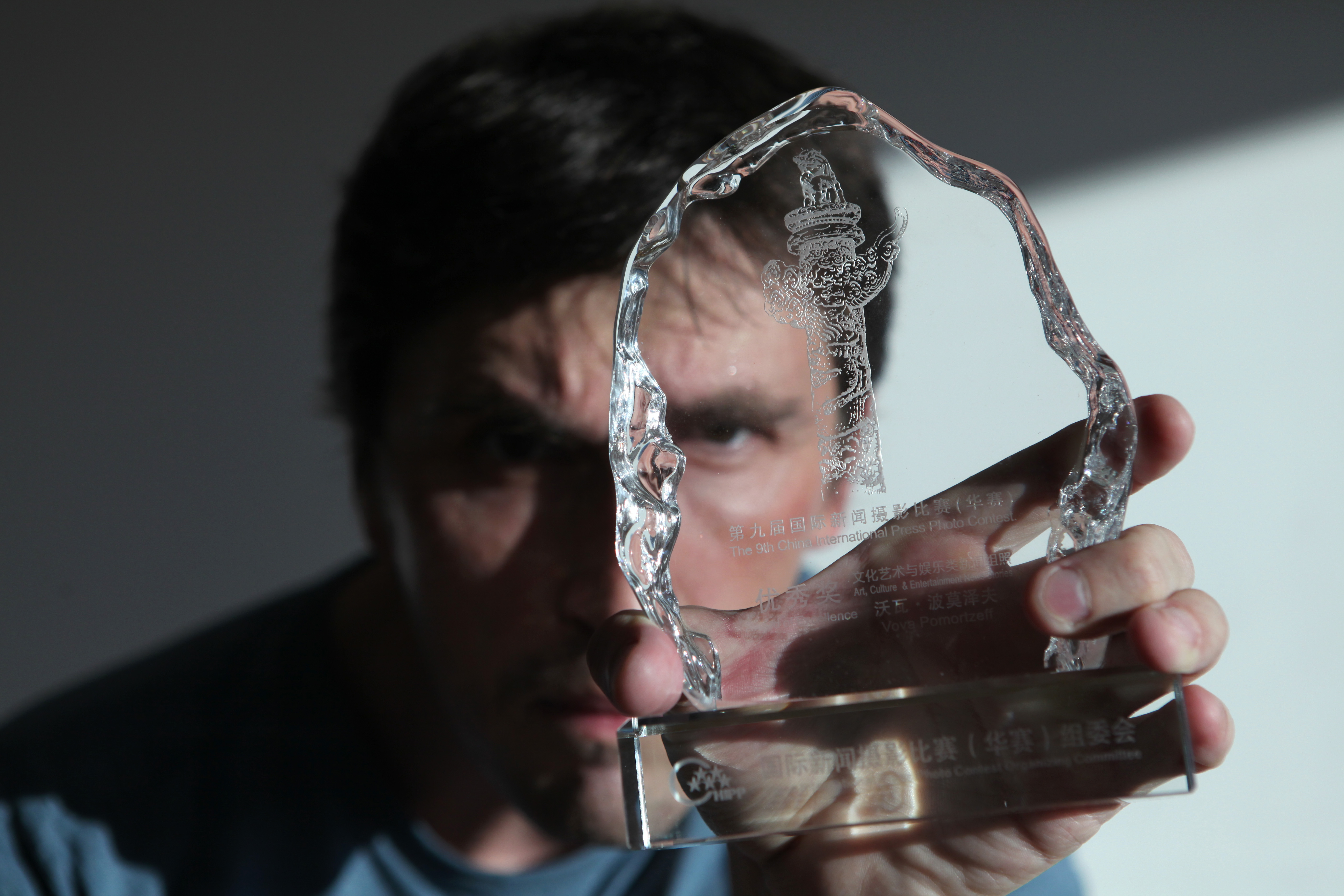
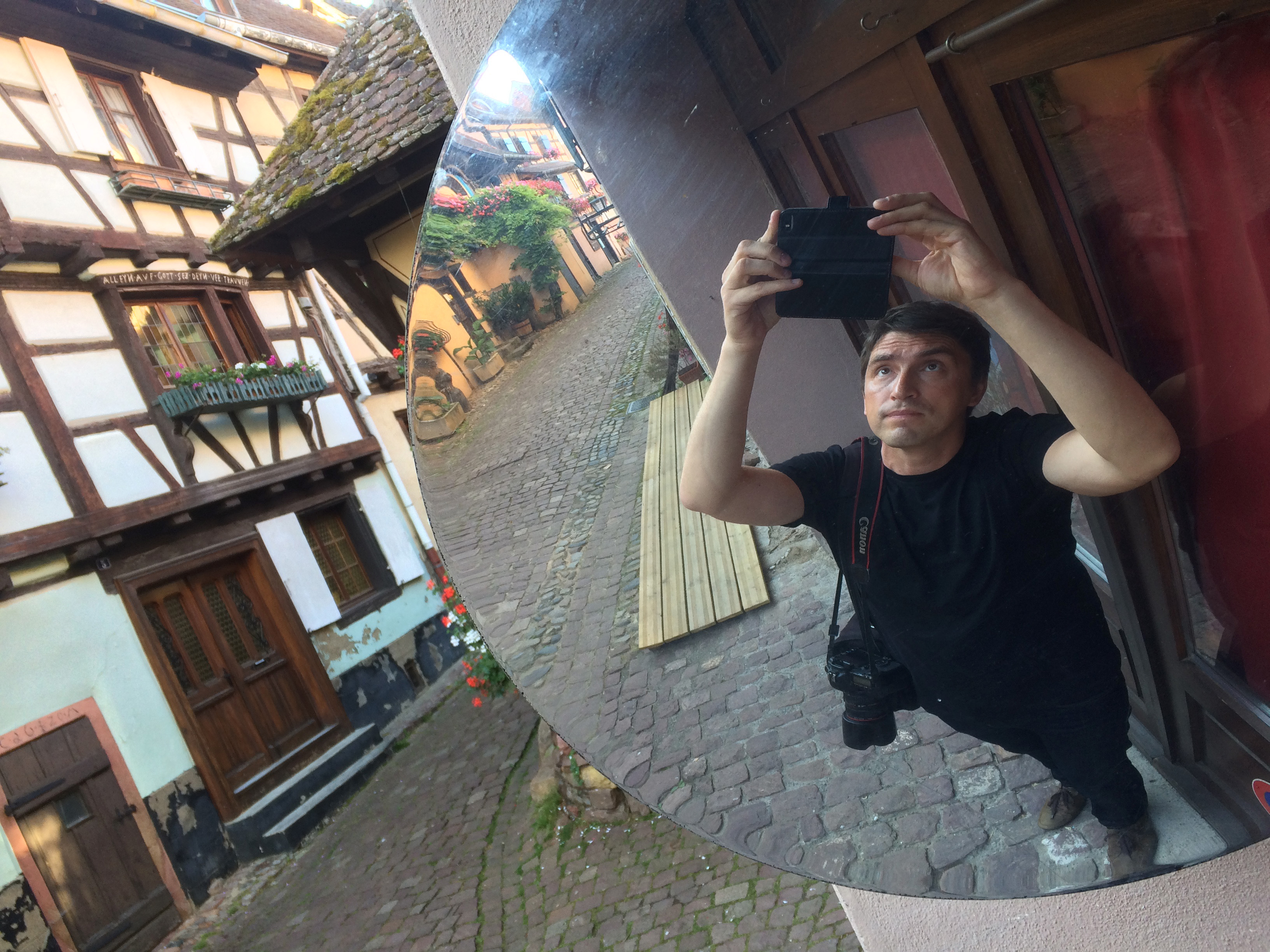
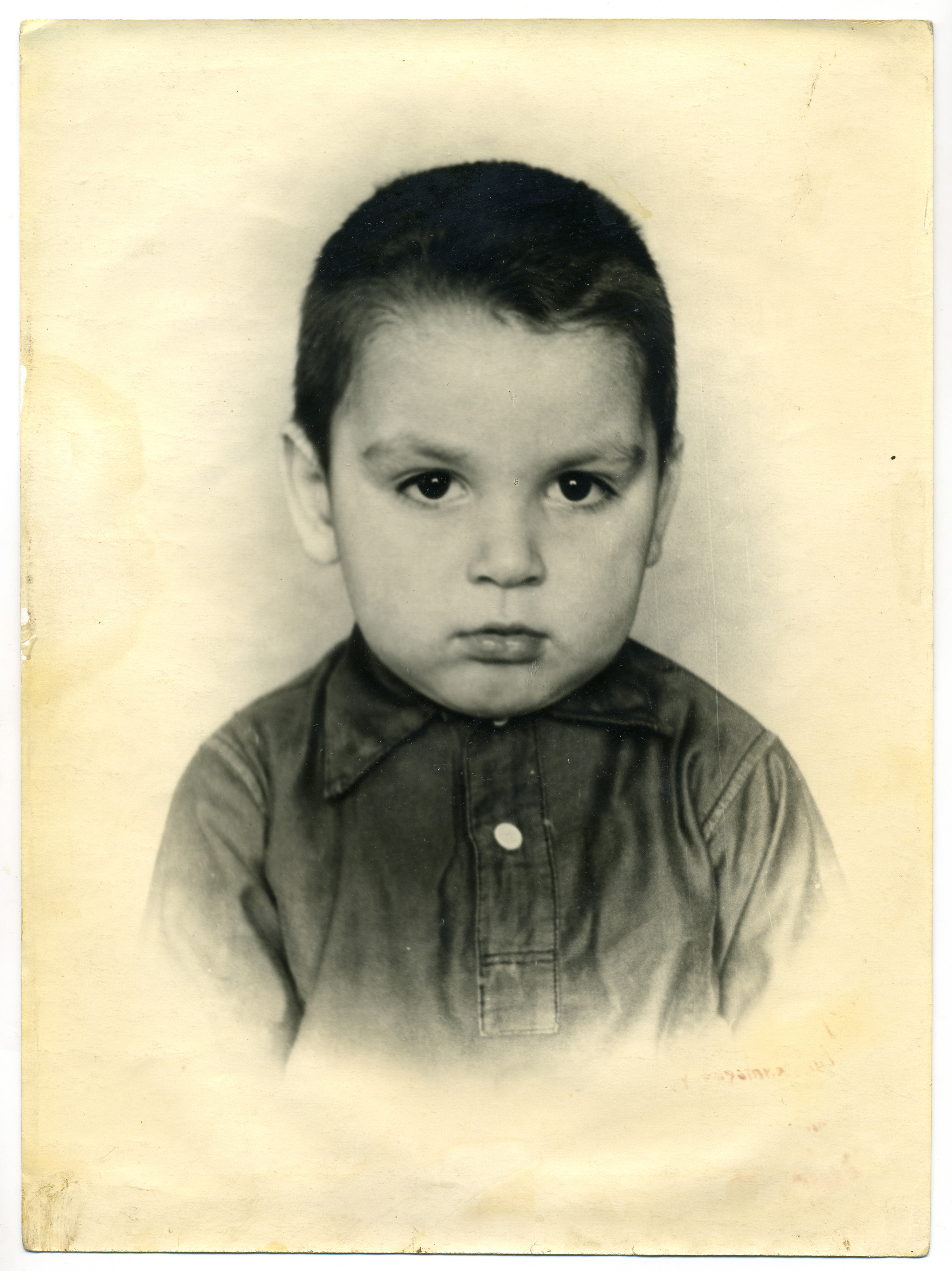
Vladimir Pomortzeff was born on 23 July 1974 in Sverdlovsk (now Yekaterinburg) in the former USSR. His grandmother Valentina Sharina, grandfather Yuri Sharin, mother Tatyana Yurievna Pomortseva (née Sharina, born 1951, Sverdlovsk) and father Anatoly Nikolayevich Pomortsev (born 1952, Polevskoy) were teachers at the Ural Polytechnic Institute. In 1997 the memoirist graduated from the Ural State Academy of Architecture and Art. He worked as an editor at the economic newspaper Delovoy Ekspress. In 1999 he went into emigration to the Czech Republic. He worked as a journalist and photographer for a Russian-language newspaper in Prague. He founded his own newspaper, the Prague Express. Since 2005 he has been a freelance photographer. He has worked with Corbis, Fokus, CTK and RIA Novosti. As a researcher, photographer and public figure, he deals with the history of Russian war graves from the First and Second World War in the Czech Republic. In 2014 he published a documentary photographic project Forgotten Prisoners of the Great War (on the 100th anniversary of the outbreak of the First World War). In 2017, he released the documentary project The Misery of the Losers, which included photographs of 114 monuments in Germany built to fallen German soldiers in World War I and World War II. In 2018, he published a documentary project, The Prague Graves of Vlasov‘s army soldiers, which documented 19 graves of soldiers in General A. Vlasov, identified the abandoned graves and achieved their inclusion in the register of military graves of the Ministry of Defence of the Czech Republic. Since 2016, he has been researching the Church of the Assumption of the Virgin Mary at the Olšany Cemetery, conducted research into the history of the church‘s construction, alerted the Prague City Council to the destruction of the frescoes in the church, and in 2021 the lease for the church was cancelled for this reason. For more than ten years, he carried out research work on the Soviet memorial at the Olšany Cemetery and found 150 errors on the monuments to Soviet soldiers; in 2021, in cooperation with the Russian Embassy in the Czech Republic, the errors were removed. He organizes regular free lectures for the public about the Soviet memorial and the history of the Church of the Assumption at Olšany Cemetery.
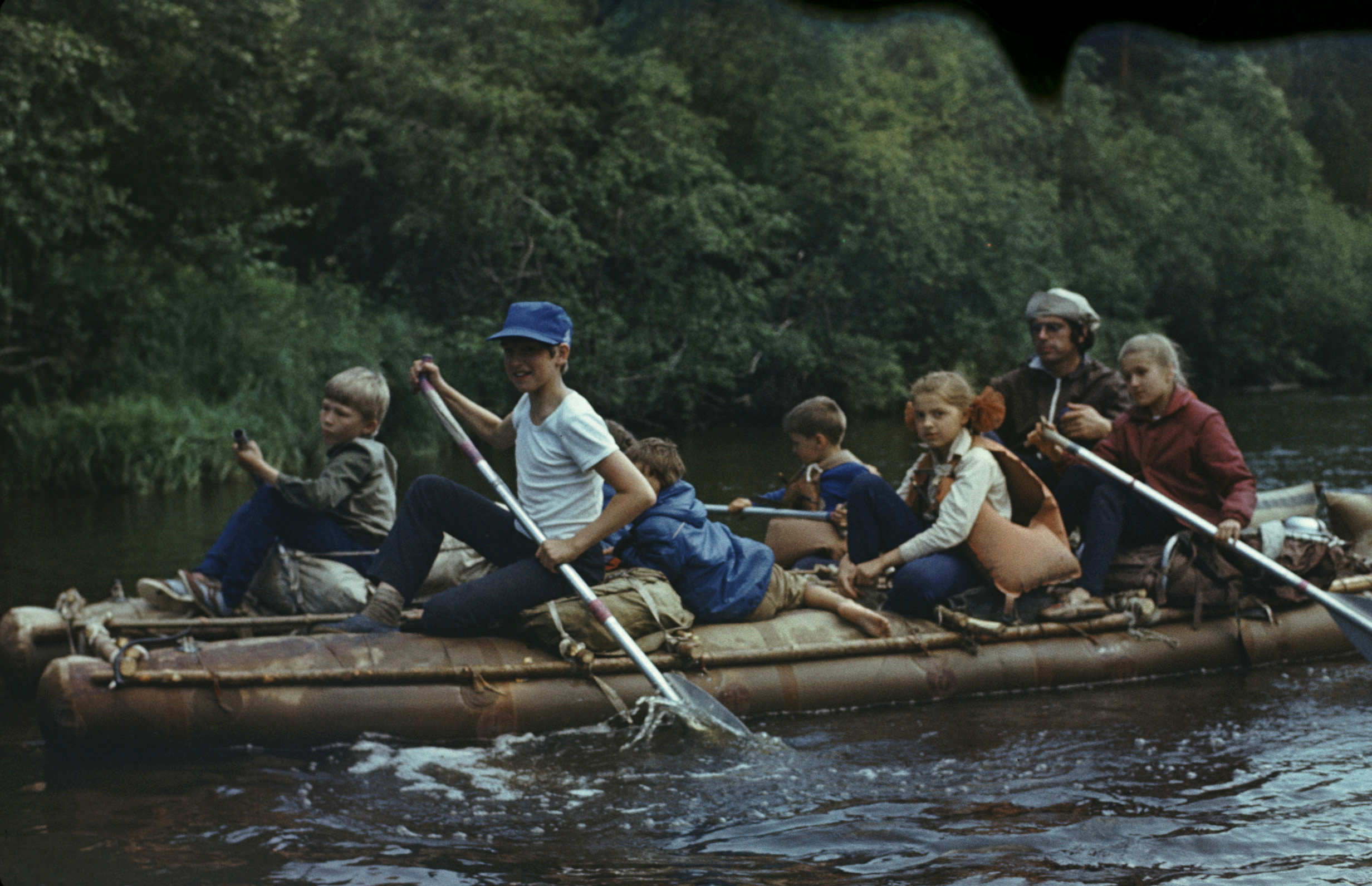
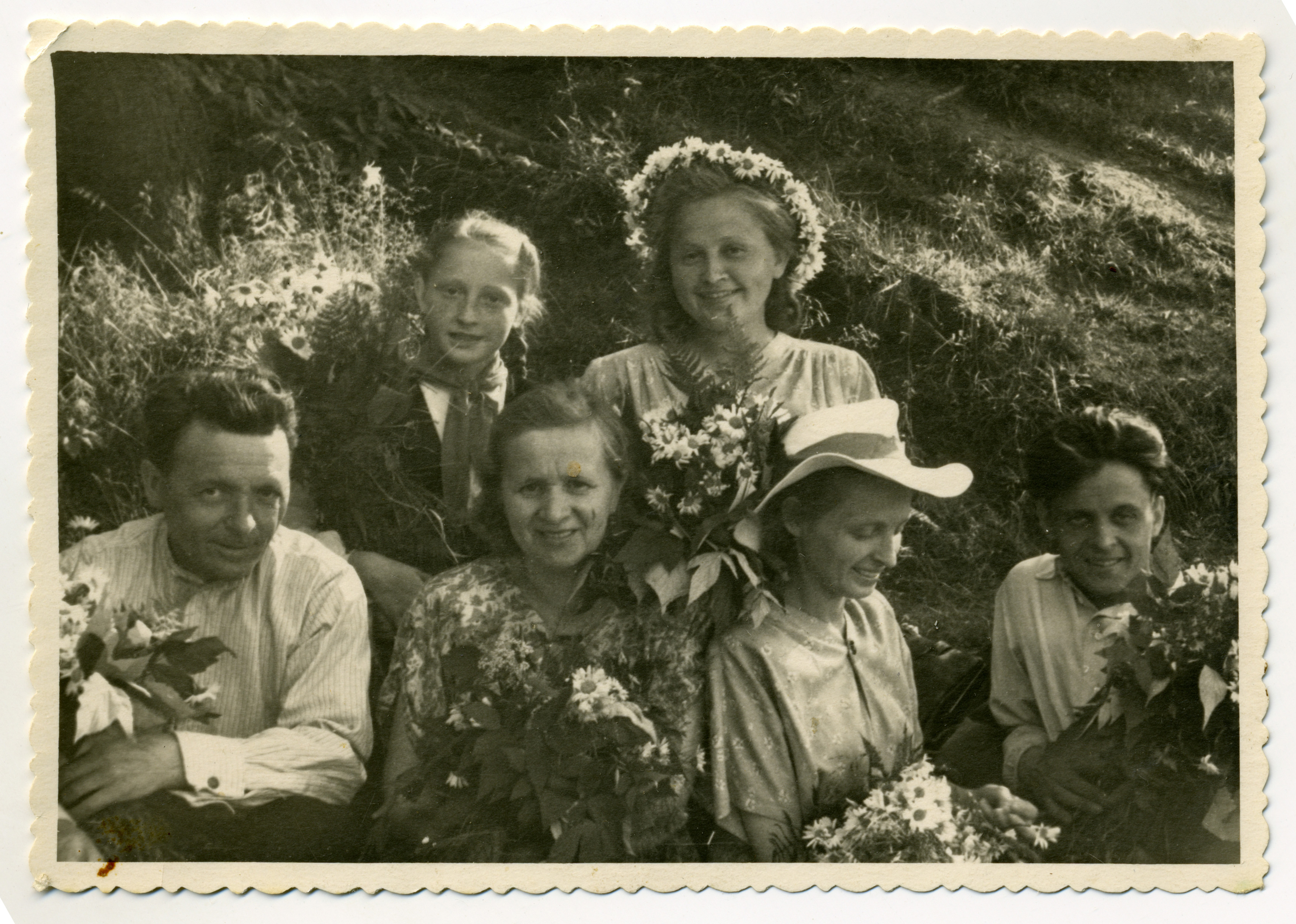
Going down the Aduja River in the Central Urals. Seated on the left: Pavel Kugaevsky, Vladimir Pomortsev, Yaroslav, Yuri Likhachev, younger sister Yelena Pomortseva, father Anatoly Nikolayevich Pomortsev, Anna Likhacheva, 1986. Photo: Tatiana Pomortseva
Going down the Aduja River in the Central Urals. Seated on the left: Pavel Kugaevsky, Vladimir Pomortsev, Yaroslav, Yuri Likhachev, younger sister Yelena Pomortseva, father Anatoly Nikolayevich Pomortsev, Anna Likhacheva, 1986. Photo: Tatiana Pomortseva
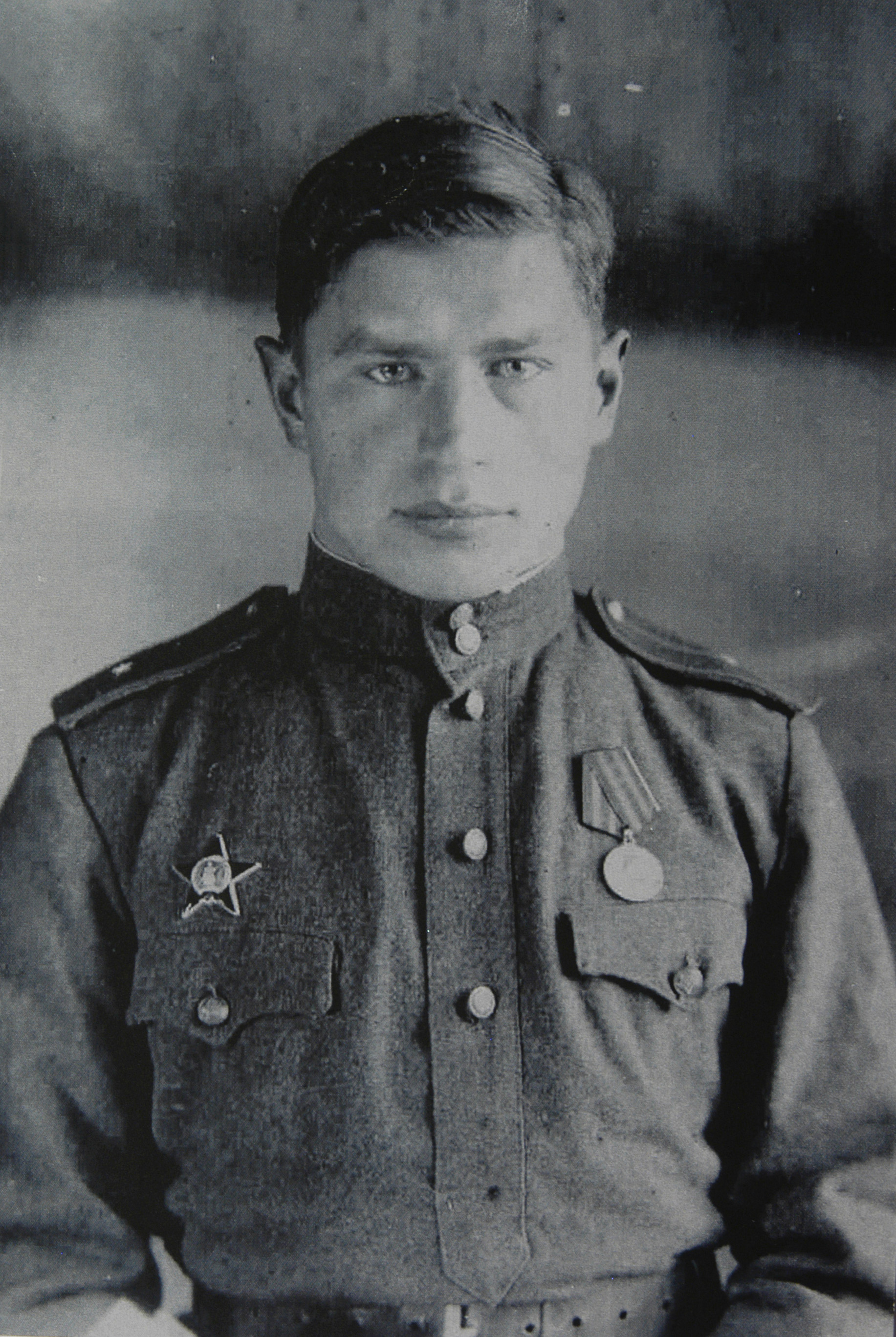
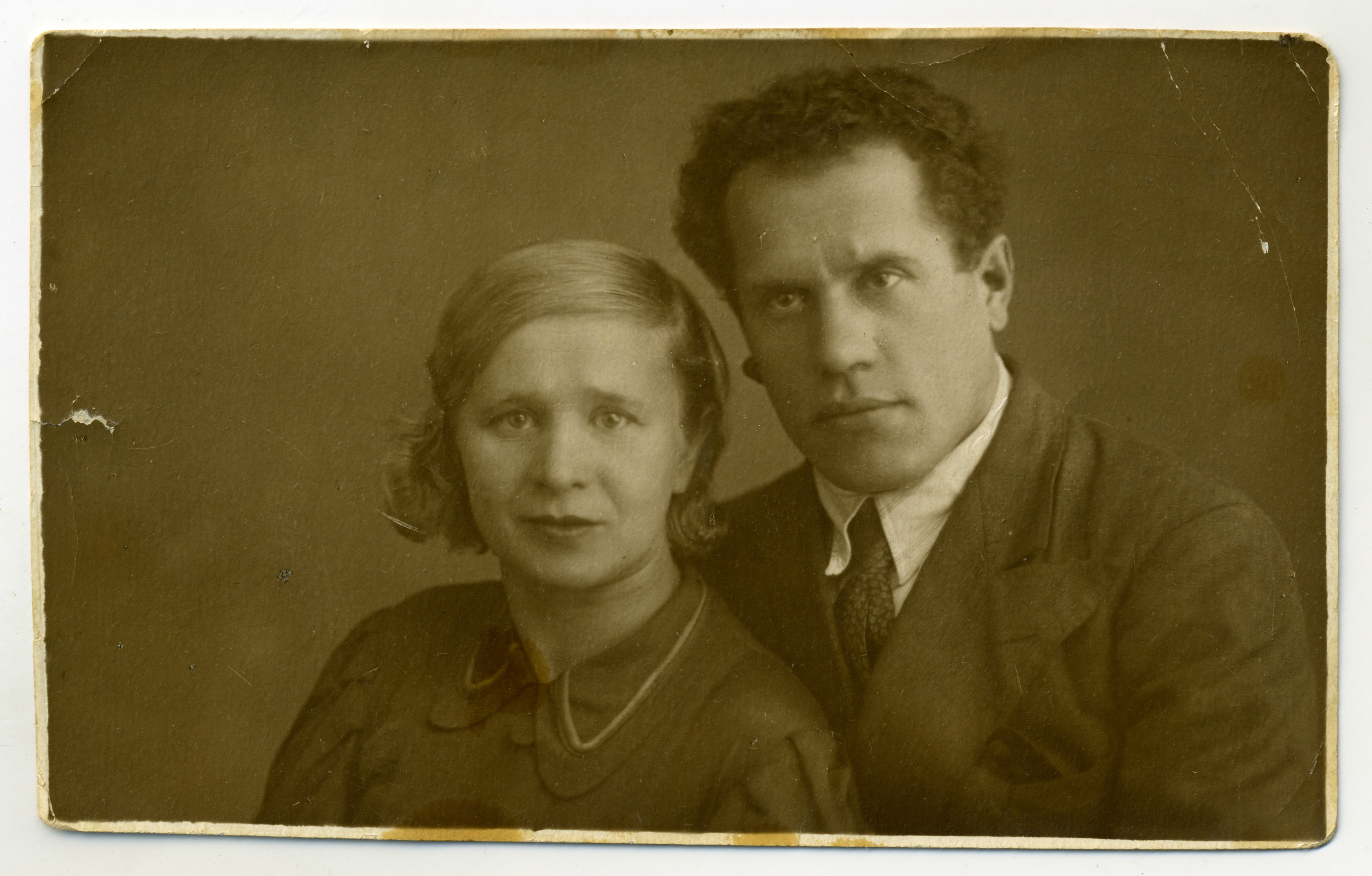
Grandfather Yuri Sergeyevich Sharin in the war in the rank of lieutenant of the medical service. The photograph was probably taken on 25-29 April 1945 near the village of Pelkeninken in East Prussia (now the village of Kabanovo in the Kaliningrad Oblast) immediately after my grandfather was awarded the first Order of the Red Star on 24 April 1945 and before his unit was sent to the Far East on 30 April 1945.
Grandfather Yuri Sergeyevich Sharin in the war in the rank of lieutenant of the medical service. The photograph was probably taken on 25-29 April 1945 near the village of Pelkeninken in East Prussia (now the village of Kabanovo in the Kaliningrad Oblast) immediately after my grandfather was awarded the first Order of the Red Star on 24 April 1945 and before his unit was sent to the Far East on 30 April 1945.
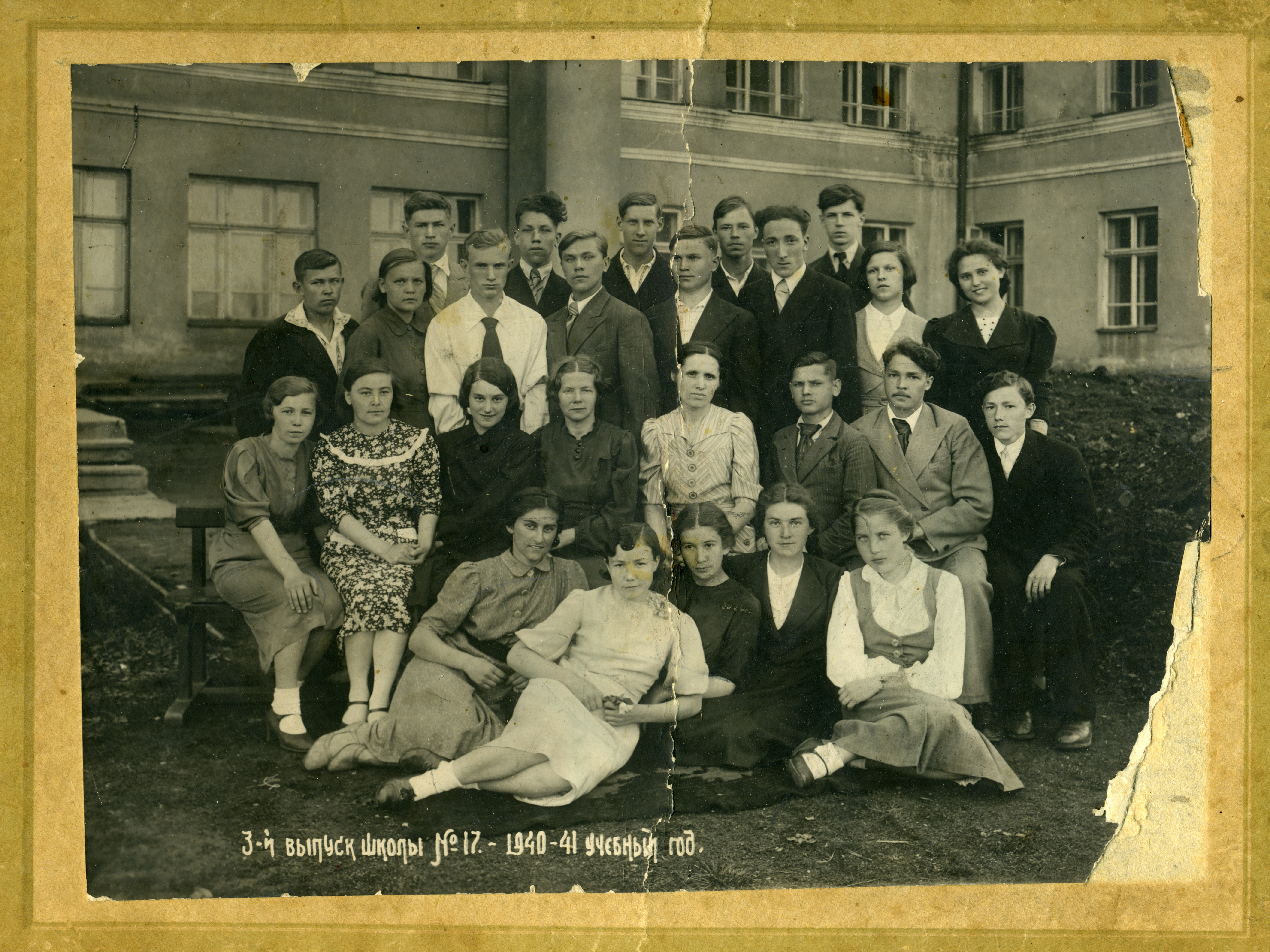
Grandfather's graduation photo. Third graduation of school No. 17 of Sverdlovsk city, academic year 1940-1941. On the far left in the last row is grandfather Yuri Sharin. "Grandfather's graduation fell on June 21, 1941. The next morning the Great Patriotic War began. It seems that of the 13 boys in my grandfather's class, only three returned home alive." Sverdlovsk, 1941
Grandfather's graduation photo. Third graduation of school No. 17 of Sverdlovsk city, academic year 1940-1941. On the far left in the last row is grandfather Yuri Sharin. "Grandfather's graduation fell on June 21, 1941. The next morning the Great Patriotic War began. It seems that of the 13 boys in my grandfather's class, only three returned home alive." Sverdlovsk, 1941
Hrdinové 20. století odcházejí. Nesmíme zapomenout. Dokumentujeme a vyprávíme jejich příběhy. Záleží vám na odkazu minulých generací, na občanských postojích, demokracii a vzdělávání? Pomozte nám!