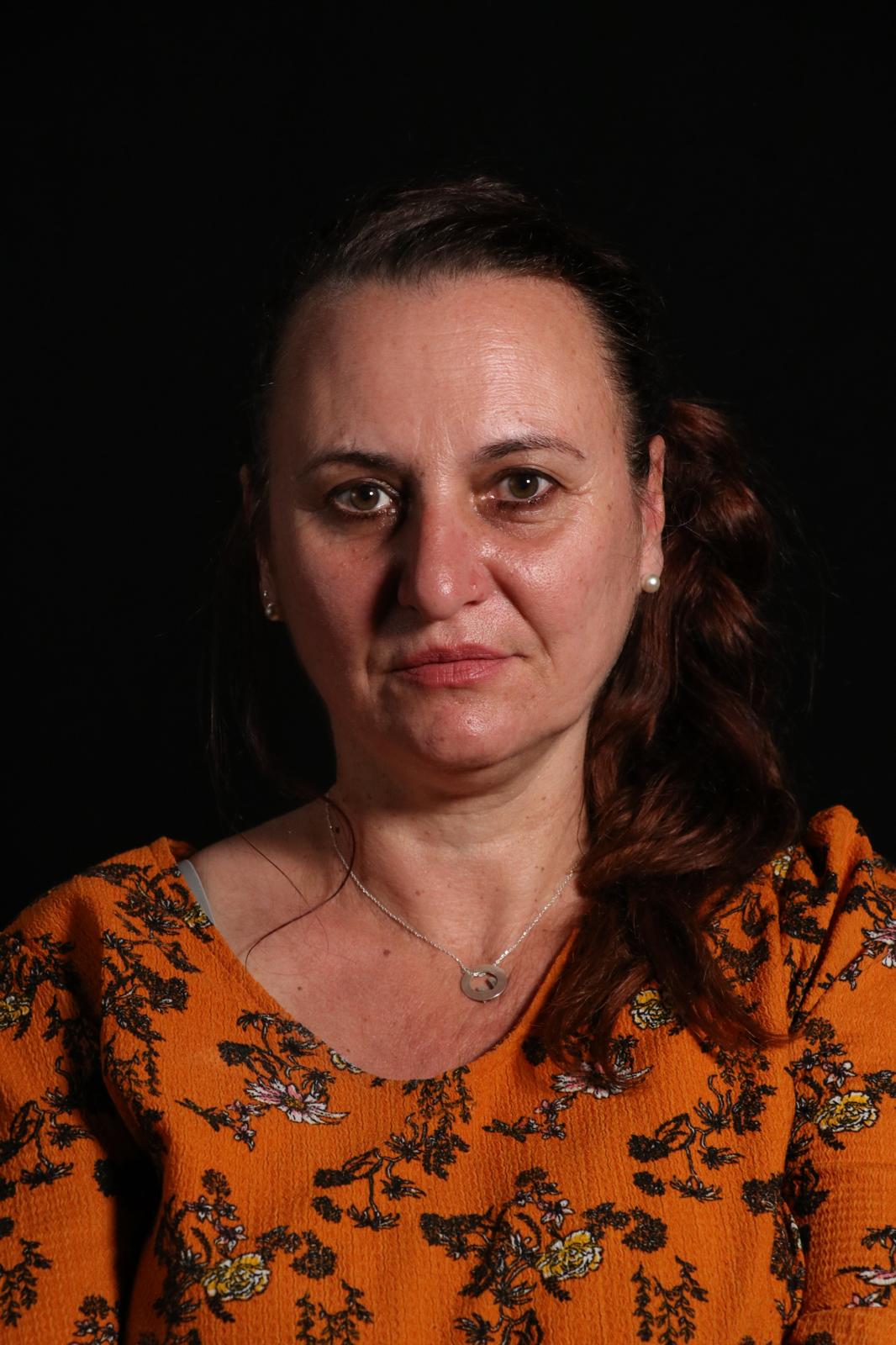
"We gave a kind of temporary shelter to all these various people. I remember two cases. One was a young mother, a Croatian with children, from Banja Luka. It was not just what she said - she also looked like she had seen demons from another world. The look on her face was a pure soul's shock at a grave a crime. Her pure soul could not grasp the crime; the crime was all the stronger because you cannot grasp it. You wouldn't do it to anyone so you don't understand why they did it to completely innocent people. The fear and the shock and all made her look like she came from some other demonic world. The other case was a person whose throat the Serbs tried to cut in Sarajevo - like this. He actually had scars from that. So I physically saw what happened, while it wasn't yet what it was going to be: the worst there was, those concentration camps and things like that."
"Dana Němcová, as you may know, is like the mother of our Yugoslav community. We all loved her cordially and we mourned her death terribly. For us, she's such a, I don't know, such a morally supreme being that you can be. I don't know if you know this, but at one point, she used that fantastic reputation of hers (which a lot of people don't do, yet she did), approached the then Minister of the Interior, I don't know who it was, and she said, 'You know what? Those Yugoslavs are not going anywhere; give them all permanent residency. They are such an enrichment to our society. What happened to them is so sad, but we can only be glad they chose us.' That's the one per cent of the population that really gets it. I know that when we were all collectively showing her love, she kept getting defensive and saying, 'I should be grateful to you! Look at what you've done for this society... And now your children are doing it!' That's how she was. I remember being desperate, I'm still dealing with the question of how this could have happened, and that's what I was saying, the soul versus the evil. That's a very complex, deep human question for some people. I talked to her about it a little bit and she said the source of this happening is indifference, that's the worst part."
"I remember being in a group called the 'Circle', I'm not sure now... maybe in 1991. These were people who, from the beginning... Serbs mostly, and us, a few other nationalities. I didn't see it that way at the time. I kind of still felt then that it was Yugoslavia. Not only Yugoslavia per se, but these principles. It wasn't so important who was what nationality, let alone religion. But there weren't many of us. Like today, in certain cases, there are just a few people who openly oppose some horrible crime against someone else. I understood that I could not lead an anti-nationalist revolution in Serbia being a Bosnian. There should have been millions of Serbs before me so that I could join them, but they were not there - they were on the other side. That's the first thing. Then my dad told me - of course, parents can't be happy when their child emigrates - but he said, 'If you stay here you'll either end up in the cemetery or in a lunatic asylum', which I suppose would actually happen. That was the end of it, and then I started to look at it differently. That was kind of the evolution of my identity."
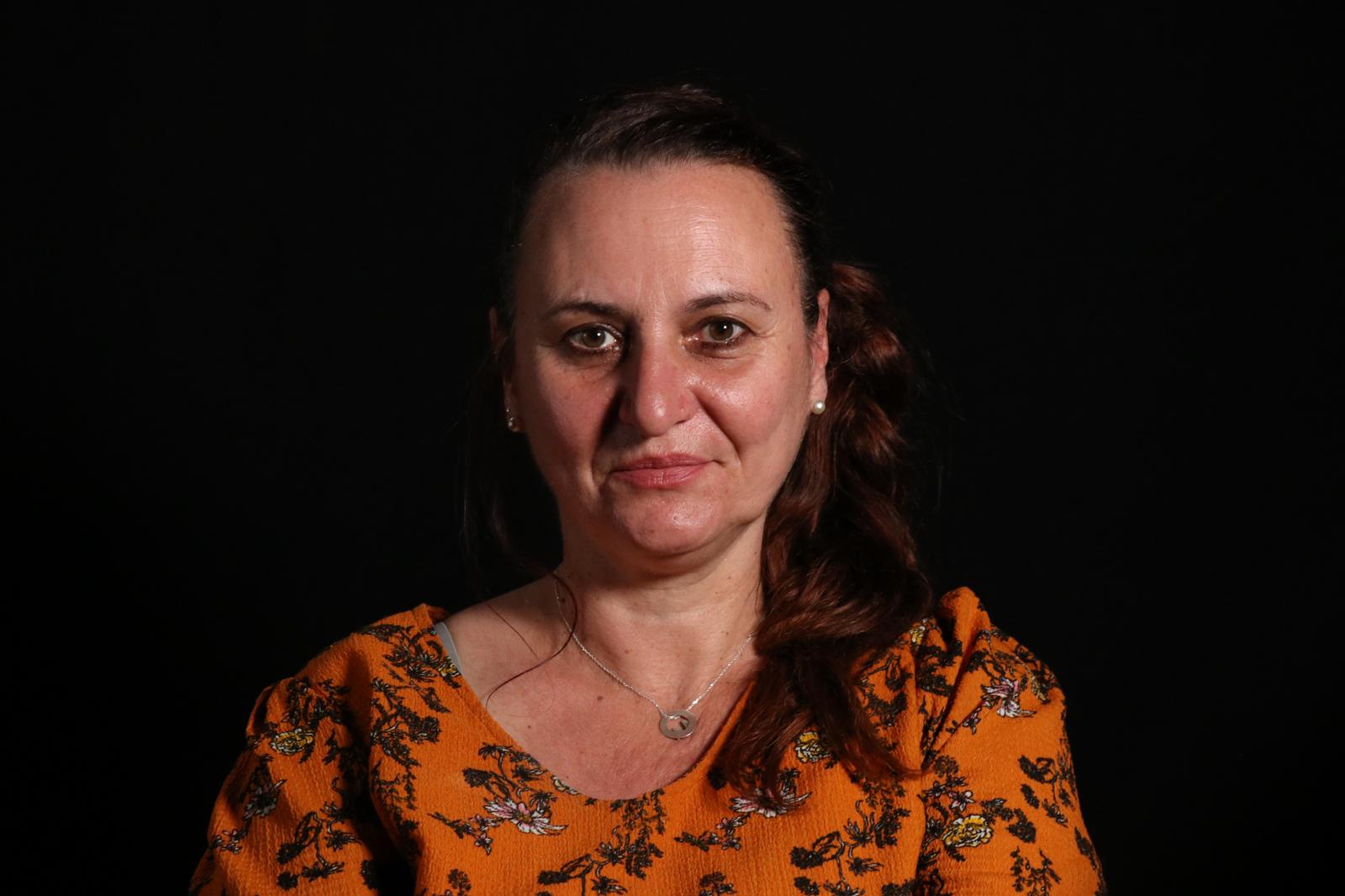
Selma Muhic Dizdarevic was born in Belgrade, Yugoslavia on 23 December 1968. Soon after her birth, her parents moved to Tripoli, Libya where her father opened a dental practice. They also tried to get their daughter to Libya, but the military revolution in 1969 prevented her transfer, so she lived with her grandparents in Belgrade for several years. Her grandfather Ibrahim was a high-ranking army officer in the Yugoslav People‘s Army, a veteran pilot of the Second World War and an anti-fascist partisan. After a short stay in Libya, Selma Muhic Dizdarevic returned to Belgrade with her family. Between 1987 and 1992 she studied at the Faculty of Philosophy of the University of Belgrade. As an ethnic Bosnian, she perceived the rapidly mounting tension between the different Yugoslav nations. Therefore, she decided to leave Belgrade and move to Prague with her then husband Jasmin in August 1992. She first made a living with a silver jewellery business and, after the birth of her children (son Tarik and daughter Samra), returned to the university environment at the end of the millennium. She started her doctoral studies at the Faculty of Social Sciences of Charles University, which she successfully completed in 2009. Her topic was civil society, human rights protection, and protection of minorities and vulnerable persons. She has worked with a number of NGOs and initiatives - namely the Czech Helsinki Committee, Romea and the International Network Against Cyber Hate (INACH), which she led as Executive Director between 2009 and 2010.
Hrdinové 20. století odcházejí. Nesmíme zapomenout. Dokumentujeme a vyprávíme jejich příběhy. Záleží vám na odkazu minulých generací, na občanských postojích, demokracii a vzdělávání? Pomozte nám!