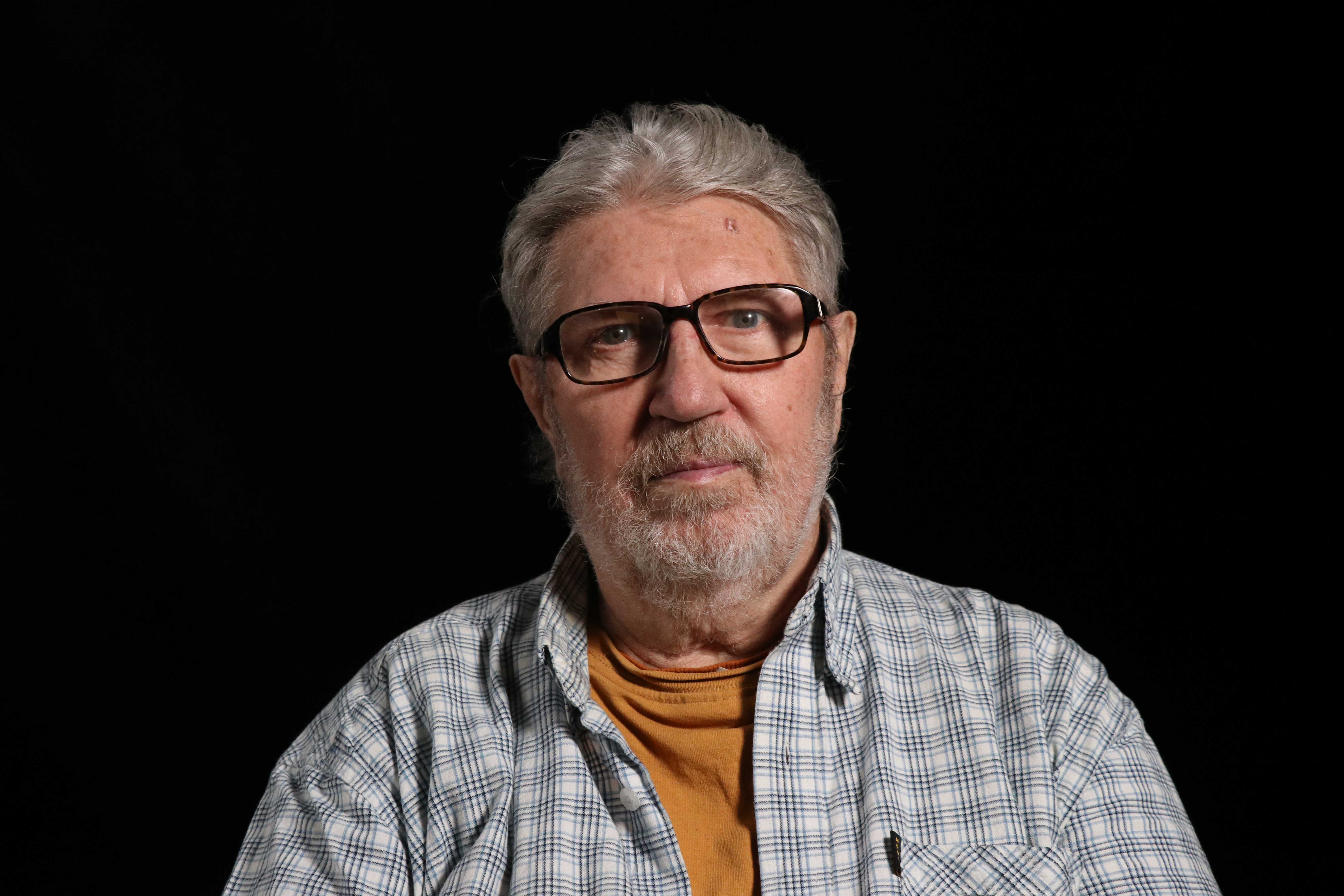
František Hacker

* 1937

  • "Anticharter, it was a matter of being called by the Pragokoncert headquarters at seven o'clock in the morning, that I had to be at Dr. Hrabal's, the general director of Pragokoncert, at eight o'clock, it was an urgent matter. So I was there at eight o'clock in the morning, at the director of Pragokoncert. There was sitting Štaidl, Karel Vágner, Zagorová, Helena Vondráčková... There I was given the task... Because Walda was in West Germany. I was told that in two days there would be a gathering of artists and I had to arrange for Walda to be there. I called Walda, but nobody knew that I had a connection to him. I didn't call from home because we knew the phones were tapped. I called from a phone box. I had to keep dropping coins into it, it was to Germany. I told Wald what the situation was. And he said, 'Look, you just didn't get hold of me, that's it.' I told the director of Pragokoncert the next day that I hadn't got hold of Wald. That he wasn't going to be at the convention. And the director said, 'Well, you're going to sit at the chairman's table instead of Walda, and you're going to take attendance.' I was in charge of the attendance sheets. That's what I'm trying to prove... Those who say that somebody signed some Anticharter, that's not true. Everybody signed the attendance sheet in front of me, I'm the only one who did not sign it because I had it upside down and I didn't sign myself."

  • "The script of what was said between songs was approved for the stage. Many times I had to write letters to the Ministry of Culture, to the Ministry of the Interior, to Pragokoncert, to the Central Committee of the Party. When Walda... A denunciation came that Walda [Waldemar Matuška] was mocking the police. But Walda didn't say that. He said on stage: 'You know the joke, how those who wear green uniforms...' He didn't say 'policemen', he said 'hunters'. But the whole room knew he was talking about cops. Because the joke was notorious. A denunciation came, and I had to write to these institutions on behalf of Walda: 'I didn't say that the policemen are idiots, that they are stupid, dumb...' I had to deny it sentence by sentence. That was my job."

  • "The foreman said to me, 'Until you come properly dressed and cut your hair, don't come here', and I didn't come for three months. Back then, there was a law to protect two-year-state plan: for every hour missed, four hours had to be served. Four days for every day. I'd already taken my leave for half my life ahead of time. A letter always came home in the post box and I always packed it up so my parents wouldn't find out. In the morning, I always pretended to go to work, took a snack. I'd go - there were guys called the Vyšehrad Riders (Vyšehradští jezdci), for example, and next to them there was a group called the Hen House (Slepičárna). In those days there were various groups around Prague. At our place [in Pankrác] there was a group called Loupežníci (Robbers) above the depot, and in Vršovice there were the Vršovice Balconies (Vršovický balkony), because they met at the Vršovice town hall, where there were balconies on the corner. It was all overgrown with bushes, nobody could see them, and they played guitars and sang there."

  • "[At Pankrác], that's where the prison is. We weren't allowed there just after the war, as boys, but... There was a public execution of K. H. Frank. We used to sneak in there as boys in the crowds of adults watching. That was between the depot and the prison, there was a gallows set up. He was speaking German, but there was a gentleman standing next to us translating. This K. H. Frank said: 'The time will come when we will pave Wenceslas Square with your heads.' H. Frank was arrogant, even before he died."

  • Celé nahrávky
  • 1

    Praha, 02.02.2021

    (audio)
    délka: 01:41:34
    nahrávka pořízena v rámci projektu Stories of the 20th Century TV
  • 2

    Praha, 02.08.2021

    (audio)
    délka: 01:57:44
    nahrávka pořízena v rámci projektu Stories of the 20th Century TV
Celé nahrávky jsou k dispozici pouze pro přihlášené uživatele.

Tramp freedom in the wheels of normalization entertainment
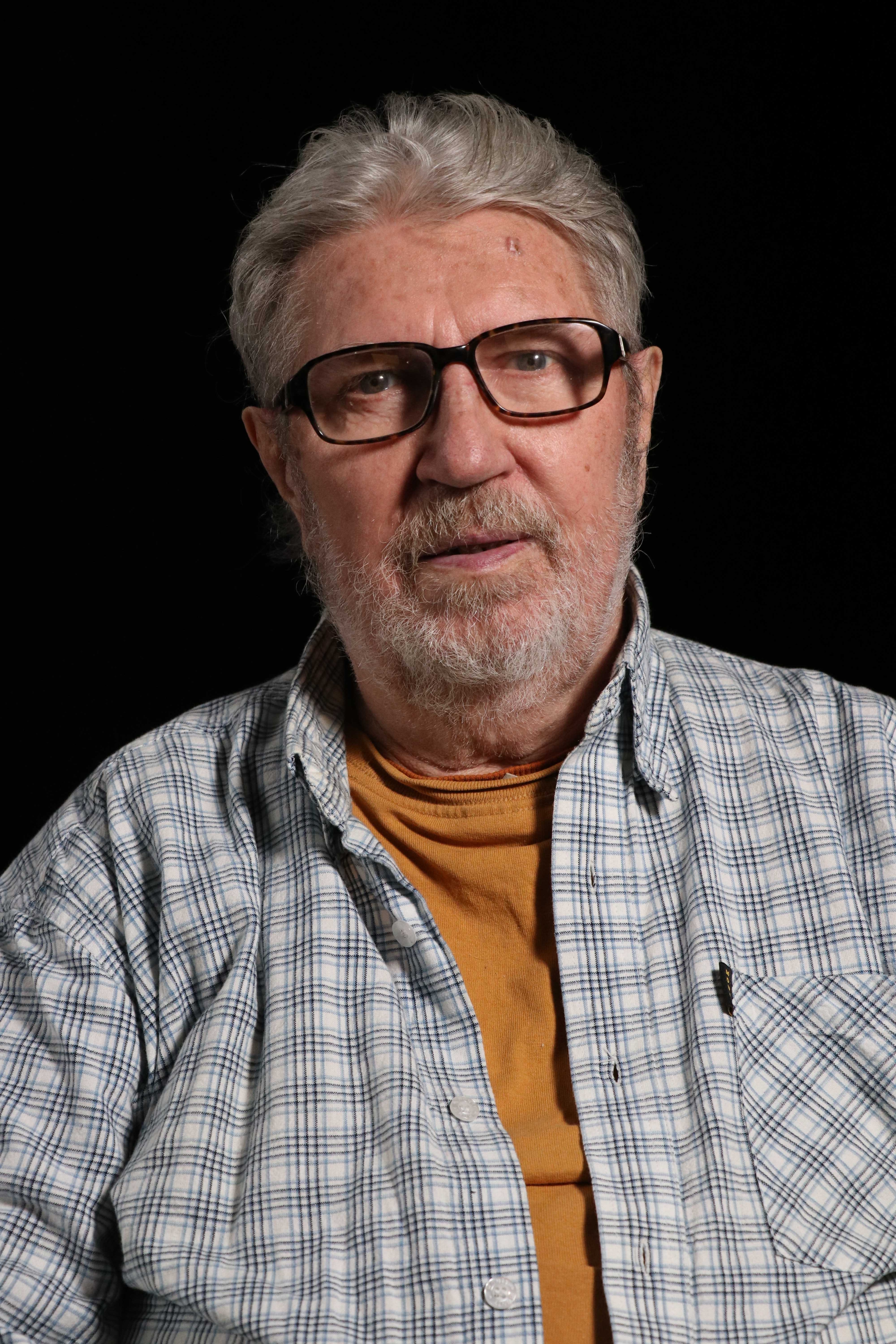
František Hacker during recording
zdroj: Post Bellum

František Hacker was born on 3 August 1937 in the family of František Hacker Sr., a Prague waiter. He grew up in Pankrác, where as a child he witnessed the street fighting during the days of the Prague Uprising in May 1945. A year later, on 22 May, he witnessed the execution of K. H. Frank. At the beginning of the 1950s, he apprenticed as a turner in the ČKD in Vysočany, but at the same time he was one of the „cool guys“ hated by the regime, drawn to Prague bands, played guitar and ran away to tramp in the countryside. After his military service he worked as an instructor for Svazarm, but at the same time he participated in the thriving of the Czech country scene in the first half of the 1960s. In 1963 he founded the band K.T.O. (Kamarádi táborových ohňů), with which he performed professionally from 1968. During the 1970s, the then very popular Waldemar Matuška began to perform with the band. K. T. O. was then performing in the West, recording on Czechoslovak television and it belonged to the middle stream of Czechoslovak pop music at the time, which was, however, redeemed by concessions to the communist regime. Moreover, at the beginning of 1977, František Hacker had to join the Appeal of the Czechoslovak Committees of Artists‘ Associations, the so-called Anticharter, which was the regime‘s response to the declaration of Charter 77. In 1981, one of the founding members of the K.T.O., Vlastislav Morava, emigrated from Czechoslovakia to the West. Surprisingly, the singer Waldemar Matuška also stayed in the USA in 1986. Especially the second emigration had fatal consequences for the band: František Hacker lost the opportunity to earn a living by giving concerts and selling musical instruments in a shop in Prague on Wenceslas Square. After 1989 he continued his musical career.