"One time, in 2011 or 2012, when Vietnam was the chair of ASEAN countries, we, together with the International Federation for Human Rights, made a human rights report under the president of Vietnam. We thought that for ASEAN, instead of announcing it in a Western country, we would announce it in an ASEAN country. We decided to announce the report in Bangkok, at the Foreign Correspondents' Club of Thailand. Mr. Ai was still a political refugee so he needed a Thai visa. Thailand gave him a visa, but at the last minute they canceled the visa and they said he could not go. When asked why, they did not provide reasons. I am British, I do not need a visa to go to Bangkok, so I took charge of going to present the report with the International Federation for Human Rights. I am British, I have a proper passport and mark from the Queen of England. I went to the Paris airport, I got on the plane and the airline asked: Are you Ms. Faulkner? “Yes, yes, yes”. They said sorry, you can’t get on the plane. “Huh, why?”. Thai airlines, they said that you seem to be working in human rights, right? "I do. In my opinion, [working in] human rights is not a crime. Why? What’s the problem?" The Vietnamese Ministry of Foreign Affairs said that if I get on the plane, they cannot land in Bangkok. So for me, it’s a terrible thing that even though I’m not in jail, but Hanoi has such a long arm that it can ban a non-Vietnamese citizen from going to Vietnam. I am going to Thailand, I am not going to Vietnam… And they can ban it. So I know, Vietnamese civil society activists in Vietnam are very brave. Because when they have such an attitude, they will be in jail. Another thing is that the press, BCC, and other countries don’t mention it. I think that Hanoi banning someone like that is a serious matter, not an easy matter. So, I see that wherever we go, Hanoi considers us as enemies. I do not consider Hanoi as an enemy. But if they consider us as an enemy, it means that our work is partially successful. Otherwise, they will take it lightly and they will not pay attention to anything we do."
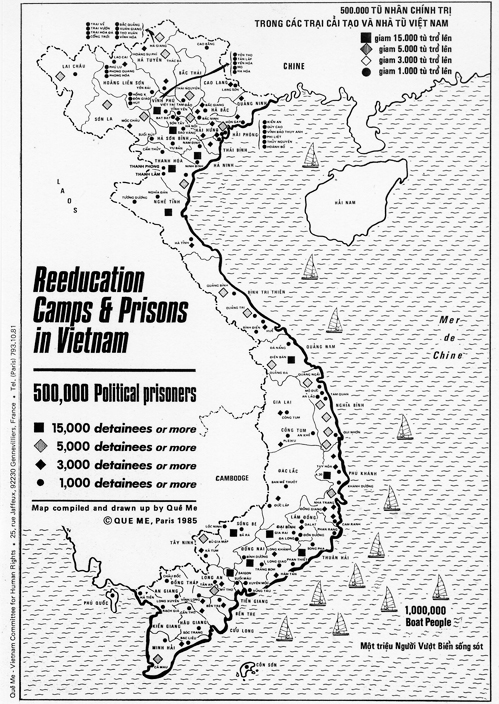
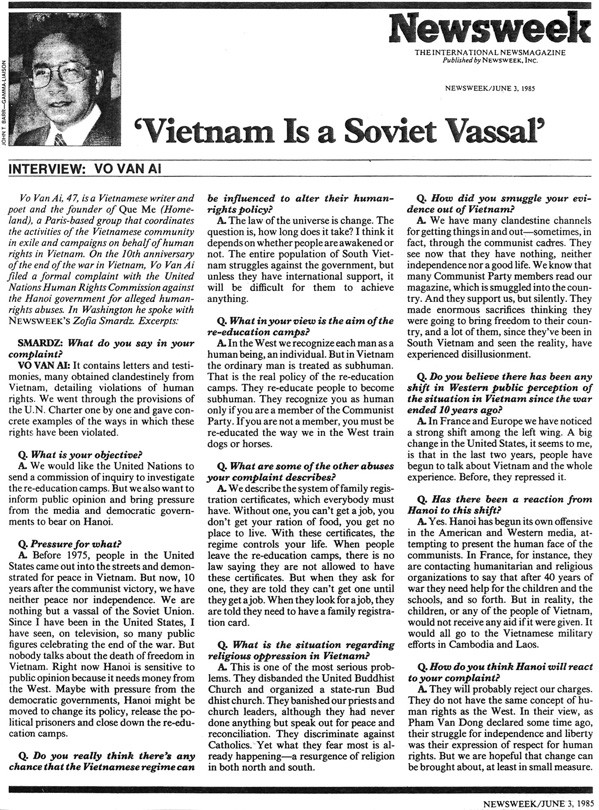
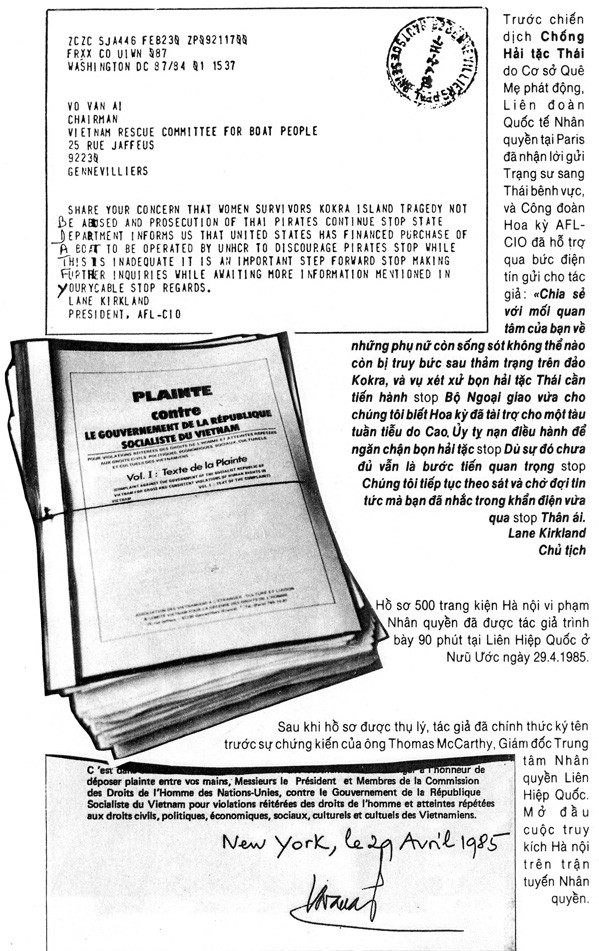
"There was quite an important campaign in 1985, which was the 10 years celebration of Hanoi liberating the South, they celebrated a lot. At that time, Que Me and the Vietnam Committee for Human Rights decided to talk about the very serious human rights violations, especially with the United Nations. There is a United Nations procedure through lawsuits. Civil society can file a petition to prove the violations of freedom of speech, religion, etc. We made a 500-page report full of religious matters, arrests of artists and writers, lists of those arrested, and drew maps of re-education camps in Vietnam where 800,000 people were imprisoned. At that time, we filed a lawsuit with the United Nations human rights office in New York. At that time, Que Me went to New York to sue Hanoi. The Wall Street Journal, the press, and the US Congress paid attention to the lawsuit. Vo Van Ai had a front page. At that time, Hanoi was very angry because they were celebrating. We held a press conference at Freedom House, also famous in New York, we had a witness from the North talking about the prison regime in North Vietnam, a South Vietnamese doctor talking about life in the South. The lawsuit against Hanoi in New York also shocked the world. At that time, I felt that the language of human rights and the use of human rights institutions were important. At that time, Vietnamese people in the US wanted to resist, restore the country one day, overthrow communism by force, but I thought that the country was already suffering, the world did not support it, so in fact, I felt that human rights were more important. They said that suing them with the United Nations was like "an ant suing a potato". Well, that was okay, suing a potato was better than killing people in the second war. That was the human rights awareness of that time."
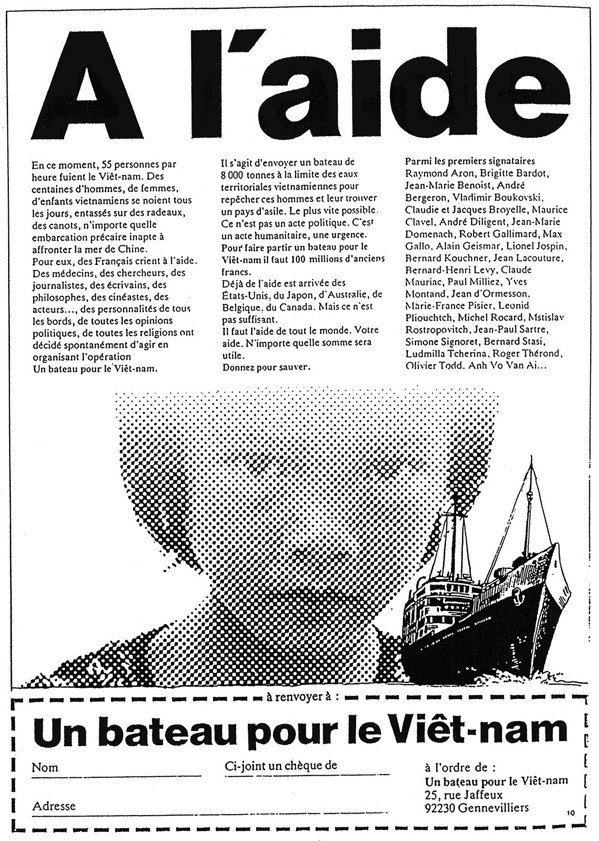
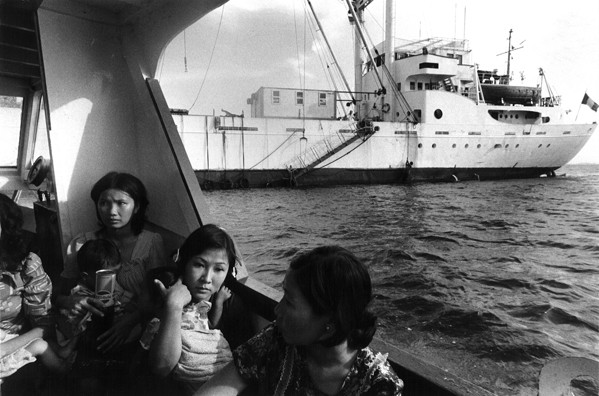
"One day, in 1978, I remember sitting with some French people, most of them were left-wing. They supported peace for Vietnam, they also supported communism, but they began to see. So I explained to them. Why? Because they asked, Vietnam was at peace, why did people leave the country like that and die at the sea? There was a ship named Hai Hung, a very large ship that people paid to board, to escape, but the ship sank, many people died. I was talking with French friends, French intellectuals, and there was a man named André Glucksmann. He asked: What should we do for Vietnam? What should we do now? While talking, some people wanted to protest, put a flag on the roof of the Vietnamese ambassador's house in Paris. That would not help the Vietnamese people in the country at all. So we discussed it, thought about it, and decided to pool money to build a ship to pick up those who left the country. We built a big ship to rescue them, to bring them to a good land and slowly help them go to this country or that country to orient themselves. That was the decision in November 1978. There were some French people, including the very famous philosopher Jean-Paul Sartre, who was a big supporter of Hanoi before, he came to the ship committee. He said that now we have to save people, now people are dying at sea, the issue of saving people is the duty. Mr. Jean-Paul Sartre is a very big name. The committee was named Île de Lumière, that is... It was born from an initiative of a few small people like that and became something very big. The headquarters of Que Me in Gennevilliers became the center, the central address of the ship is there. At that time, it was very interesting because all the French friends, they were intellectuals, writers, famous, they knew the press in Paris, so they persuaded all the major newspapers in Paris to publish an advertisement asking for money to build the ship. They printed it in the newspaper without taking any money. So thanks to that, a lot of money came in, the French gave a lot of money to save the Vietnamese people."
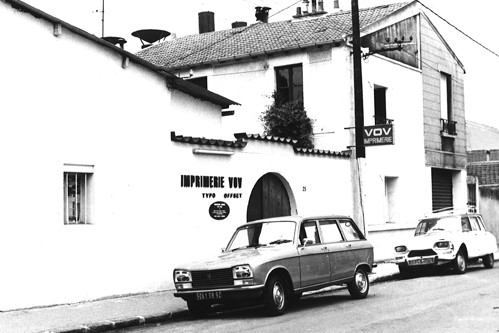
"It was very difficult because all the countries after 1975 did not want to mention the two words “Viet Nam”. The US abandoned the South Vietnam in such a situation, so the peace treaty could not protect anyone. Many Europeans sympathized with North Vietnam, the Communist side. It was very difficult to get information from the inside, such as reeducation camps, repression, and many other things. Fortunately, at that time in Paris (1975-1977), Paris was the center of the separatist movements (Soviet Union, Poland, Czechoslovakia, etc.). There were many very famous people, Vladimir Bukovski, Natalya Gorbanevskaya, those countries understood about Vietnamese Communism so they became our friends. The printing house became the printing house of all the separatist movements of Eastern European countries in Paris because we only charged low fees, paying for paper and printing, not making money. When Gorbachev came to Paris, we printed for all countries such as Czechoslovakia, Poland. When we printed like that, we helped them print stories about the struggle. When we held a press conference about Vietnam, no one came. But there were many famous people from Poland, the Soviet Union, and others, such as the Ukrainian mathematician Leonid Plyush. They came to the press conference with us. Thanks to their presence, we were able to draw attention to Vietnam. Those activities were in the years after 1975, and thanks to the separatist movement, they helped us a lot."
"Vietnamese people often believe in invisible things, luck, or fate, or destiny or something like that. Actually, later I also had to believe that because there were many reasons why I shouldn't go listen to Mr. Vo Van Ai's presentation that night. Because tomorrow morning I had to take an exam. Mom said I had to go to bed early, I shouldn't wander around the streets listening to the presentation. But I don't know why I was determined to go attend the presentation. And usually, when I go to listen to someone's presentation, I listen and then go home. But after Mr. Ai's presentation, I thought it was so good, so I went up and asked: ""So what can I do if I go to Vietnam?"" and he said: ""If you go to Vietnam, you don't know anything about Vietnam, then actually, even if you go to Vietnam, you won't change the world."" But he said that he had an office in France, and if I wanted to, I could volunteer to work without pay for a year as a secretary. In England, it is common that after high school, before going to university, you work for a year somewhere else. So I made an arrangement with Mr. Ai that I would go to France for a year to work in the office, to be a secretary. And I had to admit that Mr. Vo Van Ai is a very nice person because when I got there, Mr. Ai's first question was ""Do you know how to type?"" I didn't know how to type, I didn't know anything. It's true that I was ""deaf and not afraid of guns"" because I was a secretary but didn't know how to type. But Mr. Ai was very patient, so gradually, I was able to help for a year. But as I said at the beginning, at that time there was no Que Me facility, at that time after a year I decided that I didn't want to go back.
The problem is that for parents, they want their daughter to be a doctor, an engineer or something with a future and a salary. Living in Paris and working for Vietnam, but I didn't know how the future could turn out to be. Luckily, at that time I had a scholarship to study in England. I convinced the city council to transfer the scholarship from England to Paris at Sorbonne University so that I could study for a Master's degree in Vietnamese language and literature. It was a conspiracy for my parents because I wanted to stay in France, I wanted to work for the Vietnamese. That way my parents would be happy, and I could continue doing what I wanted, which was to stay in Paris."
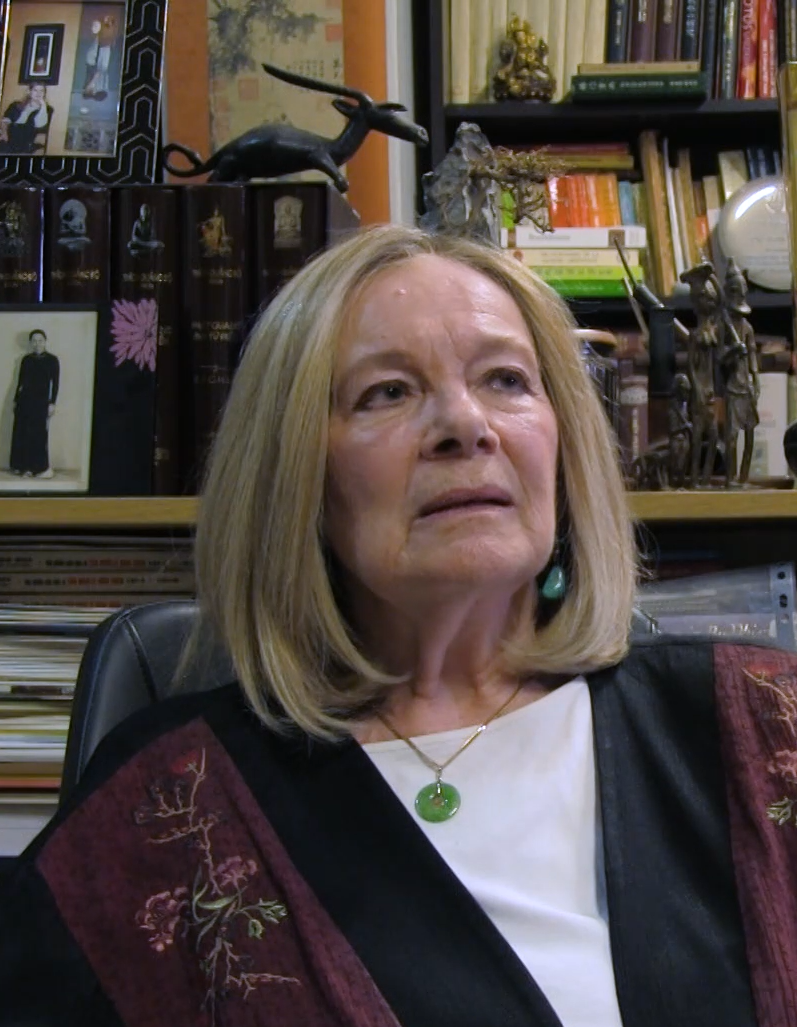
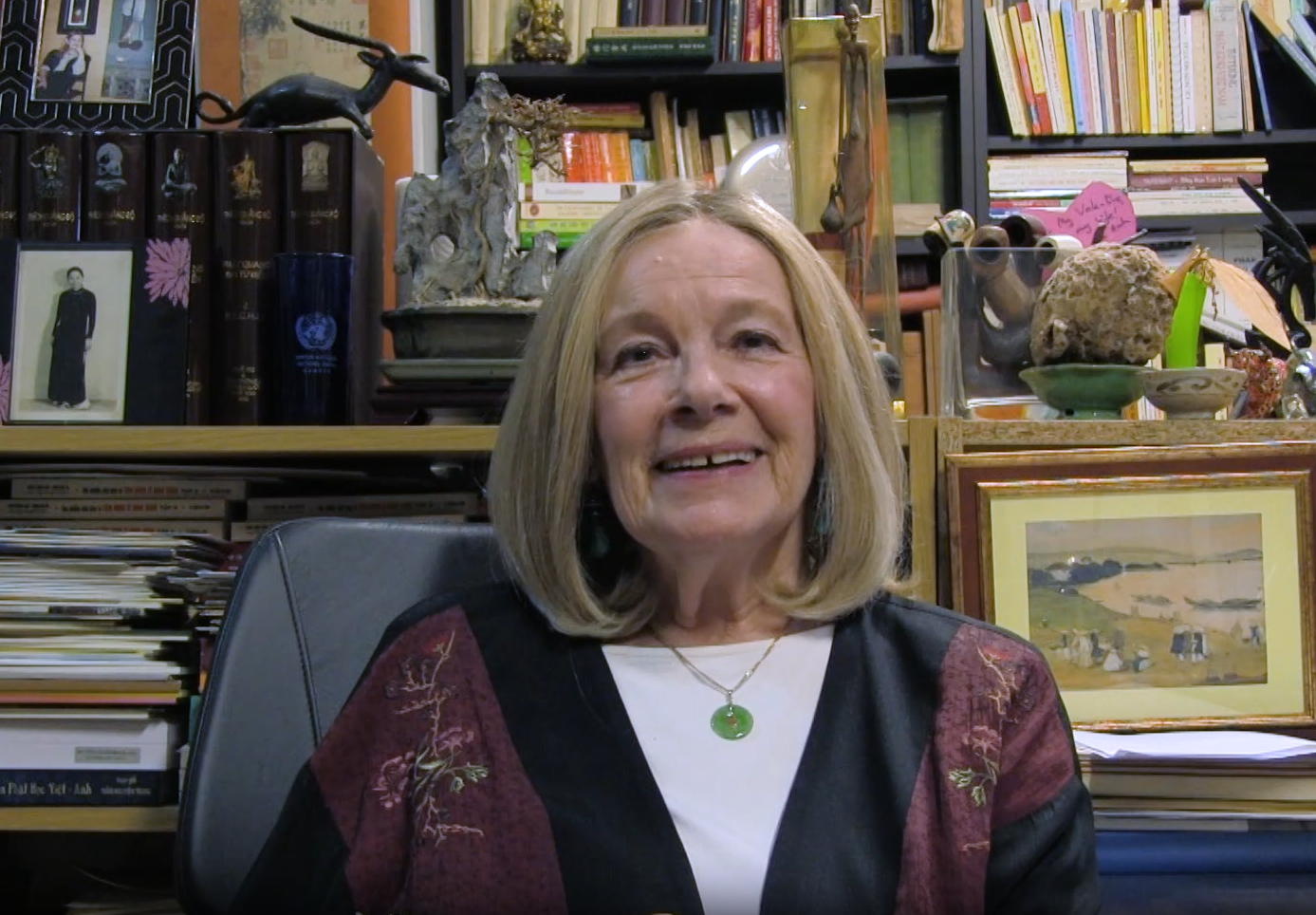
Penelope Faulkner, whose Vietnamese name is Ỷ Lan, is a British human rights activist living in France who has devoted her entire life to the struggle for freedom and democracy in Vietnam. Growing up in the old city of York in England, she was deeply influenced by her parents, who were idealistic and committed to social justice. After meeting the Vietnamese activist Võ Văn Ái in York, she moved to Paris in 1970 to work for his office as well as study Vietnamese language and literature. A year later, she decided to stay and work more with Võ Văn Ái, setting the beginning of her lifelong journey with Vietnam through the Vietnam Committee on Human Rights (1975) and the magazine Quê Mẹ: Action for Democracy in Vietnam (1976). Through her work to protect the human rights and culture of Vietnam, she participated in important initiatives such as the Ile de Lumière (the Island of Light boat) project that rescued Vietnamese boat people from 1978 and submitted extensive human rights reports on Vietnam to the United Nations as a member of the International Federation for Human Rights (FIDH). Throughout her life, Penelope Faulkner has tirelessly spoken out for human rights, democracy, and religious freedom in Vietnam. Though a foreigner, she has always refused to be a Western voice speaking for the Vietnamese people. Instead, she assists Vietnamese voices to be amplified on the international arena.
Hrdinové 20. století odcházejí. Nesmíme zapomenout. Dokumentujeme a vyprávíme jejich příběhy. Záleží vám na odkazu minulých generací, na občanských postojích, demokracii a vzdělávání? Pomozte nám!