Lviv is a complicated city, especially for someone from Zaporizhzhia. There's nothing simple about it, let's be honest. My region was under a different empire. To find myself in a city of the Austro-Hungarian Empire is a source of endless surprise for me. But I'm still among my own people. I still see people around me who inspire me. And I'm happy here, that I'm home. I travel a lot within Ukraine, but still, Kyiv is a place that's dear to my heart, my closest friends who aren't from my professional life are there, those warm, personal connections. I travel a lot to the east, particularly with PEN Ukraine on volunteer trips or just by invitation: Kharkiv, Dnipro. And here in Lviv, I feel like I've also grown a community of warm acquaintances, warm friends, and a professional circle. When I go abroad, when I travel outside the country, I feel like a tourist, and I really like that feeling. I love coming to London as a tourist, having coffee with my friends, maybe even glancing at a museum, and knowing that in three days I'll be going home and everything will be fine. And I won't have to endlessly explain Ukrainian contexts to people who learn about us from the news, and that's in the best-case scenario.
In the fall of [20]22, after all this fixing and living in Ukraine with one suitcase and very hectic travels all over Ukraine, I returned to London for the academic year to teach Ukrainian literature at the University of London. During the time I was teaching — it's a full-time position — I realized I was ending up in Ukraine several times a month. I mean, as soon as I had a window between lectures, I would make this long journey home: by plane, by train, borders, queues… You know the drill. Every time I crossed the border and saw those Ukrainian flags and realized, "Oh God, I'm home, this is so good." You almost start crying when you return, and you feel so calm and so safe compared to London. Well, and that was it. I realized that I needed to come back full-time, with a big suitcase, leave my things here, and stop with these chaotic relocations, because home is Ukraine. Ukraine — not Lviv, not Kyiv, not Zaporizhzhia. You just cross the border, and you're already home. That's how it still feels.
I started my Ph.D. at Birkbeck, University of London, and it was the English Department. There were no Ukrainians there. Finding Ukraine on a map was a major challenge. People had heard that it was restless somewhere over there, next to Russia. I mean, my colleagues, educated people. And that's where their knowledge of our geography ended. Besides, Birkbeck is a very left-leaning college, which, of course, I liked because it resonated with me. But it turned out that in this leftist environment, pacifist ideas prevailed. As I say this now, I realize we've been living with this for a decade, it's not news anymore, but back then, it was shocking. I mean, the idea that a country could have the right to defend its borders, its sovereignty, was controversial for them, because these leftist colleagues and friends of mine lived in a very safe environment where nothing threatened their borders or their sovereignty. I realized I had to start explaining these very basic things with very limited English, with the very limited understanding of the local context that I had at the time. It was a bit difficult. At the first reception at our college, when they were welcoming us as new Ph.D. researchers, I got into an argument with a young man, a Trotskyist, I think, a very passionate young trade unionist, who was completely head-over-heels in love with Russia and the idea of a red revolution, and who started to "westsplain" to me things that were happening to my country. I was shocked that a person could have the audacity to tell me about things they had absolutely no clue about. I came from there a week ago, I can tell you how helicopters fly over the Sea of Azov, how Crimea is being captured, how they shoot at passenger planes, but you're not ready to listen to me, and you think I don't have the expertise you have because I don't have your vocabulary. That was the first clash with this reality, which then just kept happening to me almost weekly, if not daily, for years. But then you develop the vocabulary, and the skills, and certain communication scenarios.
My mom often came to the Maidan, and we… It so happened that the first time we came under fire, I was with my mom, and we did some… we took part in some joint actions together, not just with my friends. So, one of those actions was — God, so silly: a group of women gathered and went to sing at the Berkut riot police, something about little flowers. You know, women, feminism — it matches. So my mom and I went with these women to the Berkut and tried to sing something to them. What struck me was that at some point we get there — look, we hadn't agreed on what we were going to sing, we just went there to do something, I don't know… We were supposed to impress them with the fact that we were women and we were on the Maidan. I barely remember the motivation. So we arrive with this group of women, Maidan participants just like us, we stand in front of the Berkut, and someone has the idea to sing. They start singing some Ukrainian folk songs. Everyone there — however many there were, thirty people — knows the words. My mom and I are hearing them for the first time. We were like, "What is happening? What country do we live in? Why don't we have these songs in our DNA? Why did we somehow miss that?" We were really, really struck by the fact that we don't have this tradition, this culture, but at the same time, we're in the exact same place and obviously have a lot in common with these women, if we're hanging out in the center of Kyiv in minus fifteen-degree weather [Celsius], going to sing at the Berkut, or, you know, glare at them menacingly.
I came to Kyiv in 2009, and until [20]11, I was studying at Kyiv-Mohyla Academy for my master's. During that time, I kept in touch with my friends from Belarus and Russia. This life of touring each other's cities continued, visiting one another for New Year's. Our language of communication was always our cosmopolitan Russian. I had been to Russia before, with my parents. But when I started going there on my own, I think I was… On the one hand, I was fascinated by everything, by that imperial Russian myth — I was completely under its spell. But on the other hand, I constantly felt it was a space of terrifying unfreedom. It was a very strong contrast to how I was used to living in Ukraine. I remember going to Russia for New Year's 2012, and we decided to go to Red Square, to merge with the crowd in ecstasy there. The merging didn't work out because there were so many police officers around. You had to constantly pass through some kind of frame, you constantly feel like you're in a panopticon, you constantly feel like you're being watched. On the one hand, it was strange, on the other, a little repulsive, and on yet another, it sparked an incredible curiosity. How can people survive in such an unfree environment? I remember I was always struck by the level of aggression there. I wasn't used to us… screaming at each other in everyday communication — I can't even translate that word into Ukrainian. Here [in Moscow], literally at every step, from a supermarket to the metro, people you were seeing for the first and last time would raise their voice at you. That was an incredible geographical discovery for me.
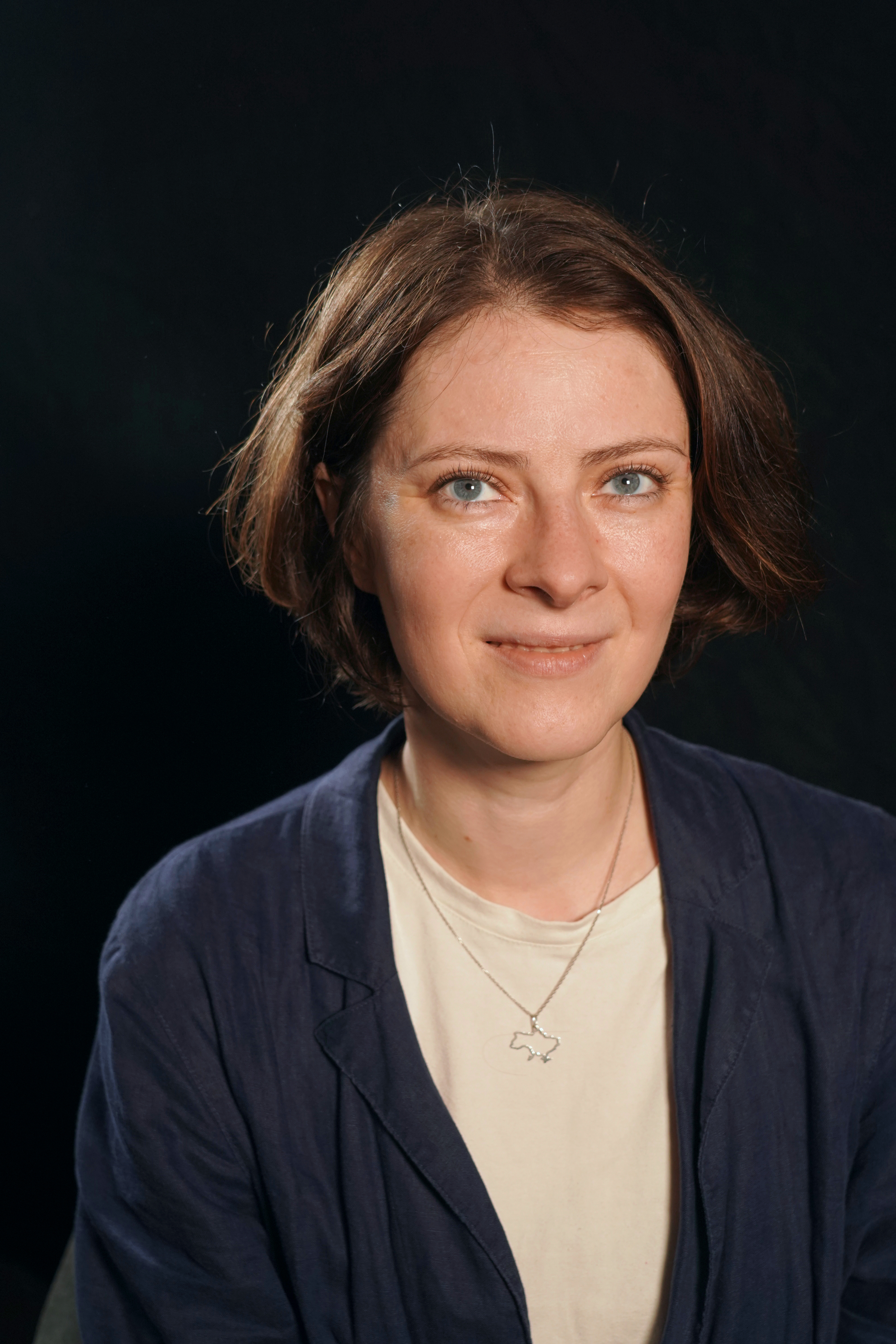
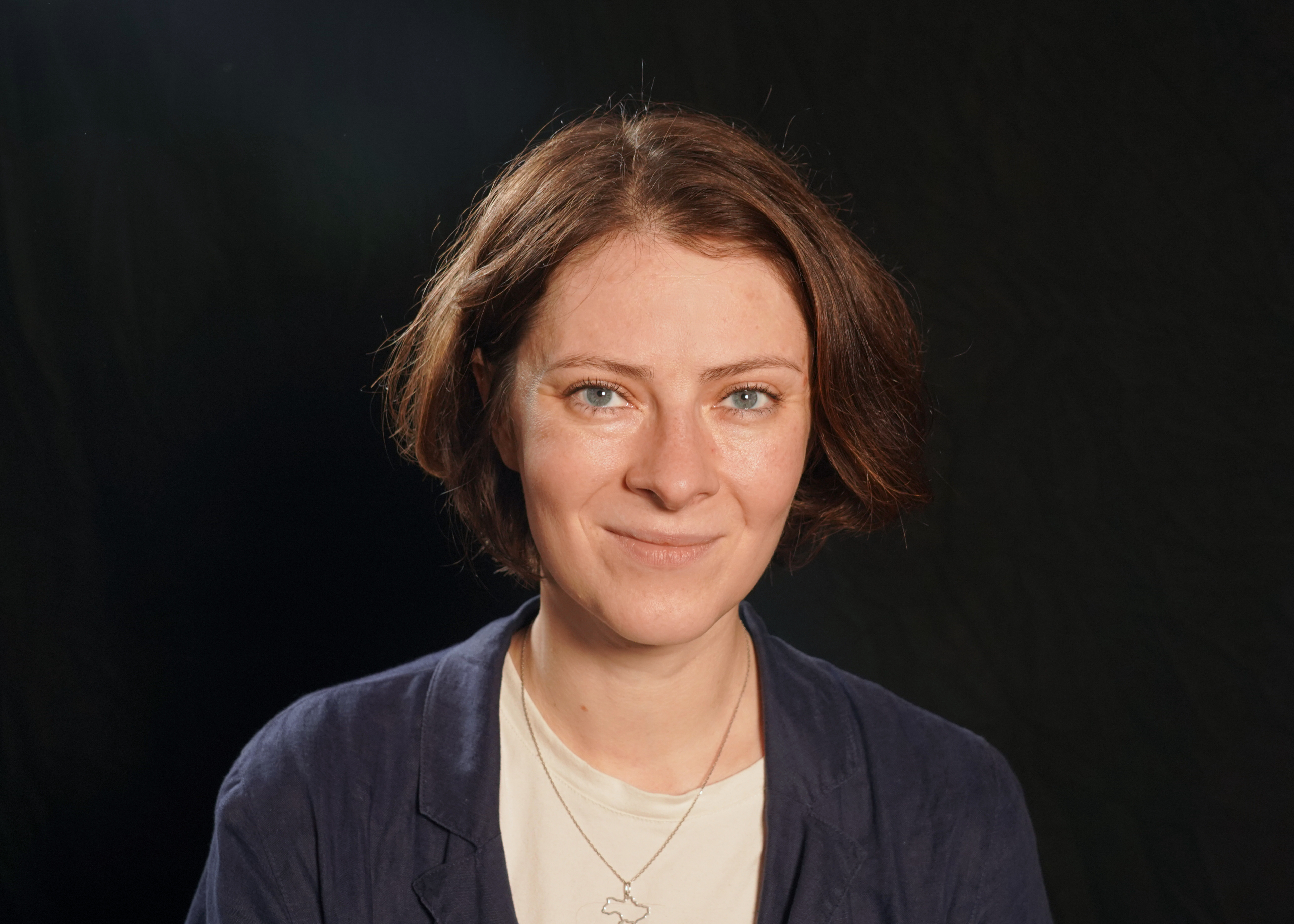
Sasha Dovzhyk is a scholar and social activist. She was born on March 11, 1988, in Zaporizhia. Although she had been fascinated by literature since her school days, she first mastered a more “practical” field of study, international economics. The environment at Zaporizhzhia National Technical University did not share her cultural interests, so during that time, she found a circle of friends in Russian-speaking online communities in the post-Soviet space. In 2009, she enrolled in a master‘s program in cultural studies at Kyiv-Mohyla Academy, and in 2012, she enrolled in Victorian studies at Birkbeck College in London. After completing her studies, she returned to Ukraine and took part in the Revolution of Dignity. In 2014, she continued her academic career as a Ph.D. student at the same college. She participated in events organized by the Ukrainian diaspora , and in 2021, she co-founded the London Ukrainian Review magazine. On the eve of the full-scale invasion, she returned to Ukraine to help foreign media cover the war. She finally returned to her homeland in 2024 to head the cultural and research institution INDEX, which documents Ukrainian experiences during the war and promotes interaction between Ukrainian and foreign cultural figures.
Hrdinové 20. století odcházejí. Nesmíme zapomenout. Dokumentujeme a vyprávíme jejich příběhy. Záleží vám na odkazu minulých generací, na občanských postojích, demokracii a vzdělávání? Pomozte nám!