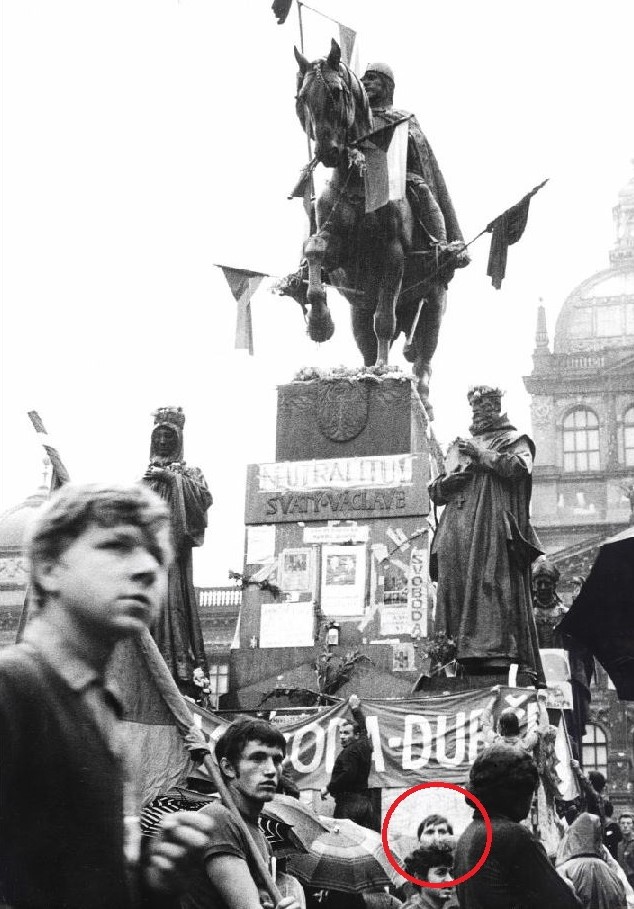
"And then when there were demonstrations at Wenceslas Square in the year sixty-nine, when we were sprinkled, and there were the militiamen there, we were also discussing with the militiamen, and there was this fat guy, this beer-drinking old man, an idiotic lunatic, who was impossible to talk to at all and who became insanely angry. And he turned his back and I kicked his ass, pardon me, and he swung at me, I knew he wasn't going to catch me, and I started to run, but there was a young policeman there and he sent a young policeman after me and he would most certainly have caught me. But in that building, today, in Parliament, before it was demolished, Vlado Milunić was up there in the window, filming it with a camera. And he saw that I was running there, and he ran down to the door, opened the door for me, and I ran in, and he closed it and locked it, and in a moment the policeman ran in, and he couldn't get in. So Vlado Milunić saved me from getting in trouble, maybe from being expelled from the school, which the university bursar would certainly like to do, the Bolshevik one, right..."
"... to the station hall and we waited there for about two hours and we all started singing. We sang all kinds of songs there, it was amazing. And then they invited us to get on the train and we went until they stopped at about nine o'clock in Přelouč, the train was hooting for a quarter of an hour, it was such time then that the traffic stopped and everybody was hooting, the Russians were horrified. And then we arrived in Prague and at that time Standa Holý was still telling me: 'I'm not going to interfere in anything, I'm not going to do any leaflets and so on, I don't want to be shot somewhere.' We arrived in Prague at noon, my parents were surprised, and at four or five o'clock Standa Holý called me to say that he had already printed it and that I should go and distribute it. So I basically ran away from my parents and went to do the distribution."
"Well, I experienced a lot of interesting things there. I organized a student tour. First I wanted to organize a student trip to Switzerland, but I didn't succeed because there was an official, an official at school, he was just a State Security officer, who spoiled it. So first you have to do it with the Soviet Union. So we did an exchange stay with UMPRUM in Leningrad and we went there in August '68. So I experienced August '68 in Leningrad, where we thought well... there was the most lying Pravda newspaper, it was posted everywhere, there were tanks, I said who are they fighting there? Our army? So that first day we were scared out of our minds, we walked the streets, then the boys from the school - we were in one of the basement studios. There we listened to the most powerful radio in the world - it was Radio Hradec Kralové. Then I learned from Mrs. Moučková, she took me in the car one day hitchhiking, and then she told me that it was connected to the whole world, that it was the strongest radio in the world, as a matter of fact. So we calmed down. It was still like that, me and my friends, Standa Holý, the graphic designer who is no longer alive, who invented these hairy dummies (Jů and Hele, Studio Kamarád) and Mr. Pip, so we packed some girls in there and we walked them home. We got to the hostel at about three o'clock at night and the teacher was freaking out - they were occupying us and so on. Well, the next morning we took the train to Moscow, and then we took the train from Moscow to Prague. We were sitting on the train in Moscow for about two hours. It was a Czech train, and an old lady came around offering us lemonade and saying, "Those boys will set you free, don't worry." So somebody poured the lemonade on her head and the old woman disappeared. Otherwise, at school, when we were in Moscow, before we went to that Leningrad, there were these Socialist Youth Union members coming to our dormitories and talking to us..."
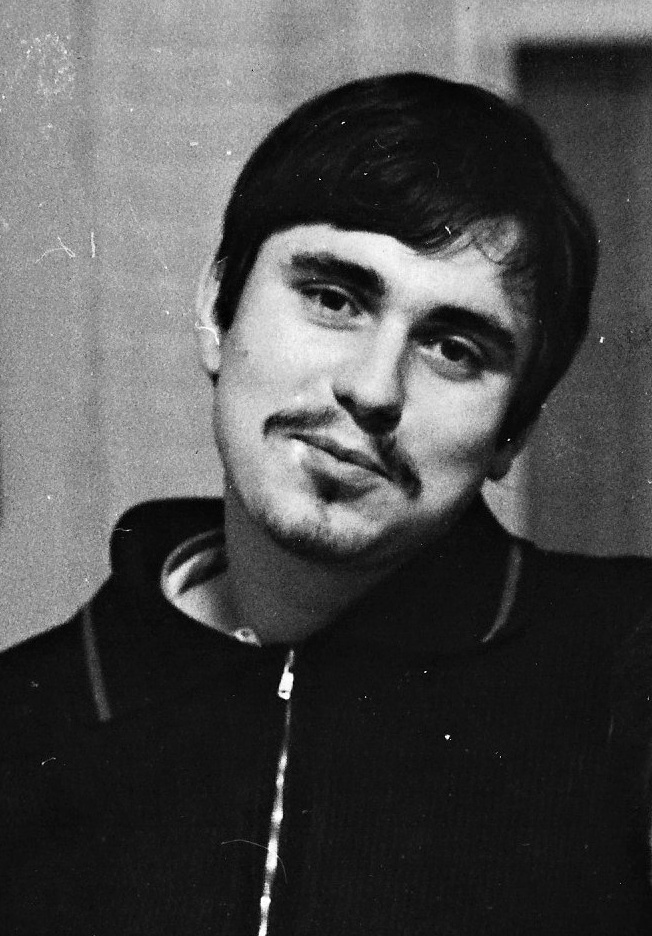
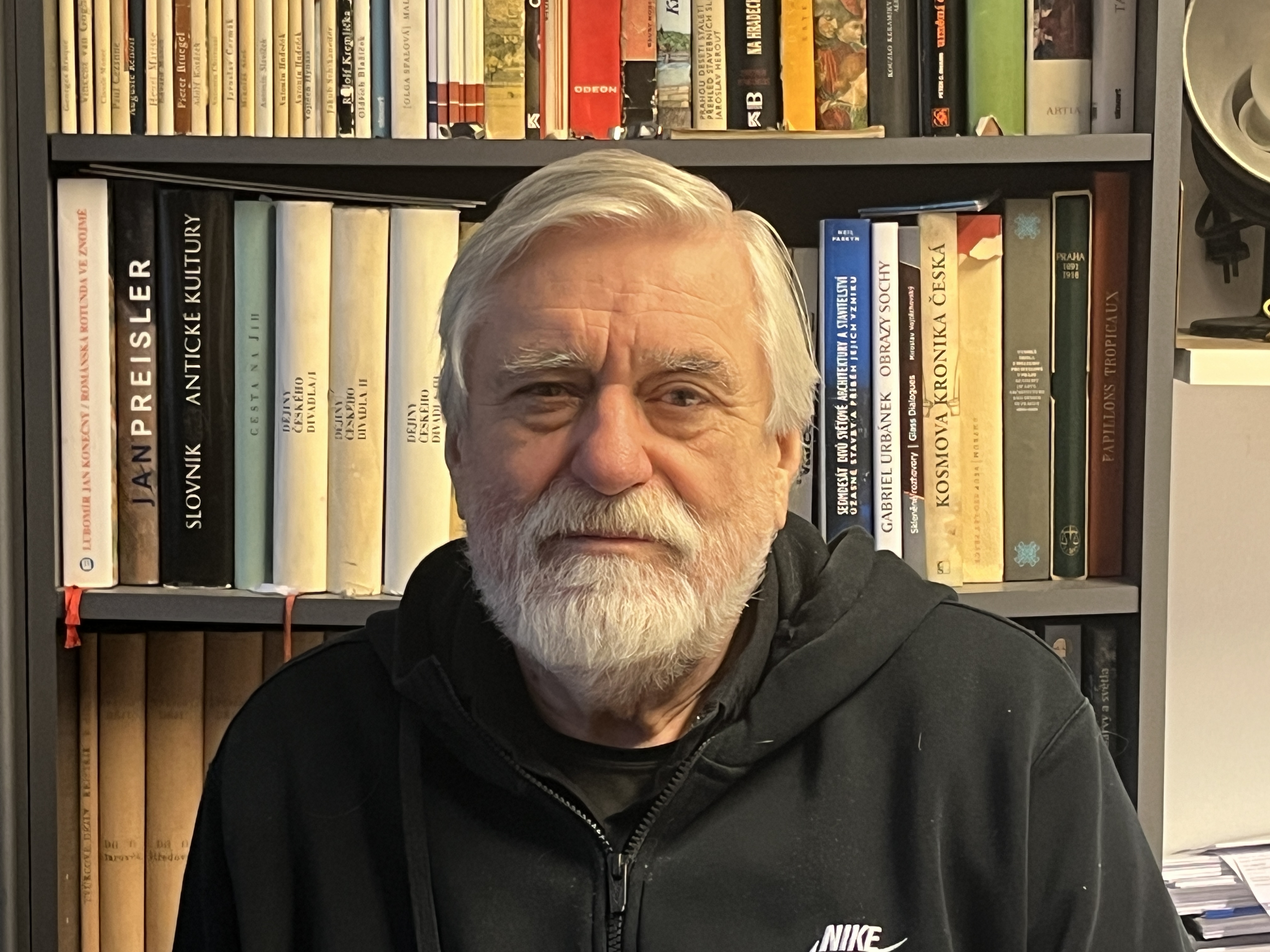
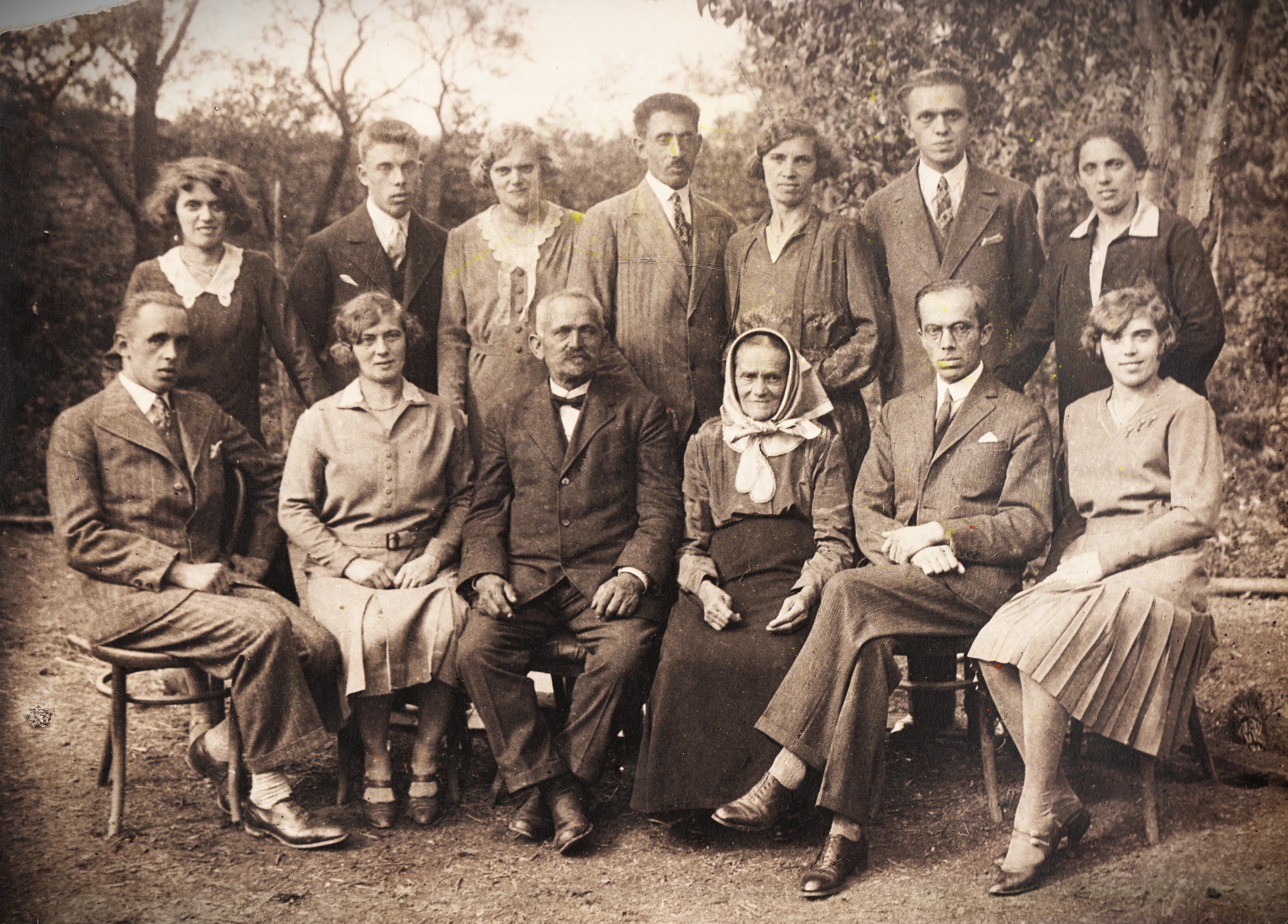
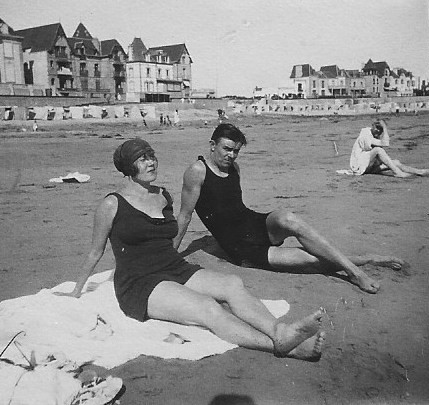
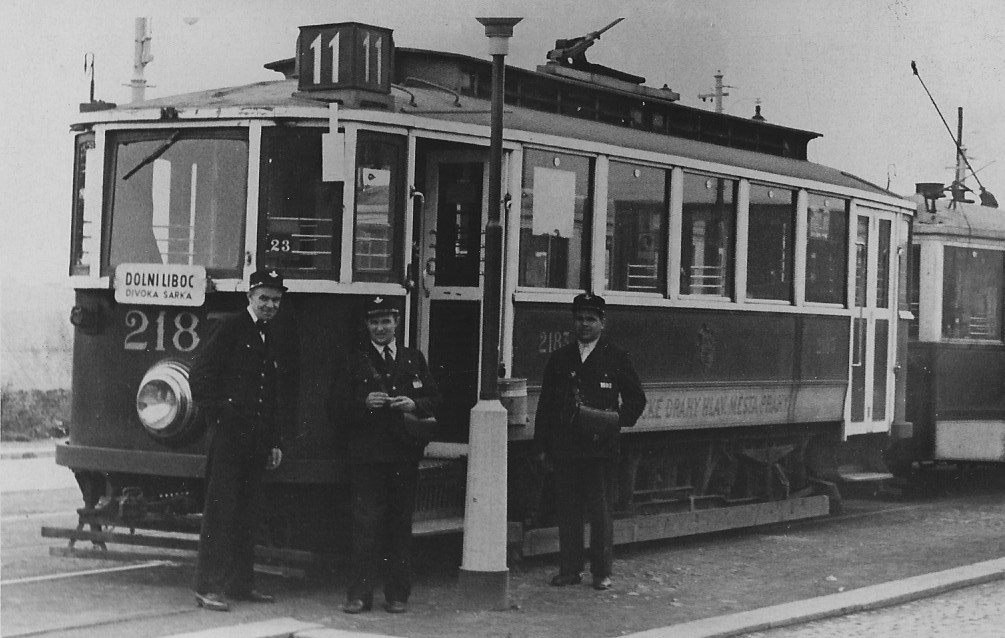
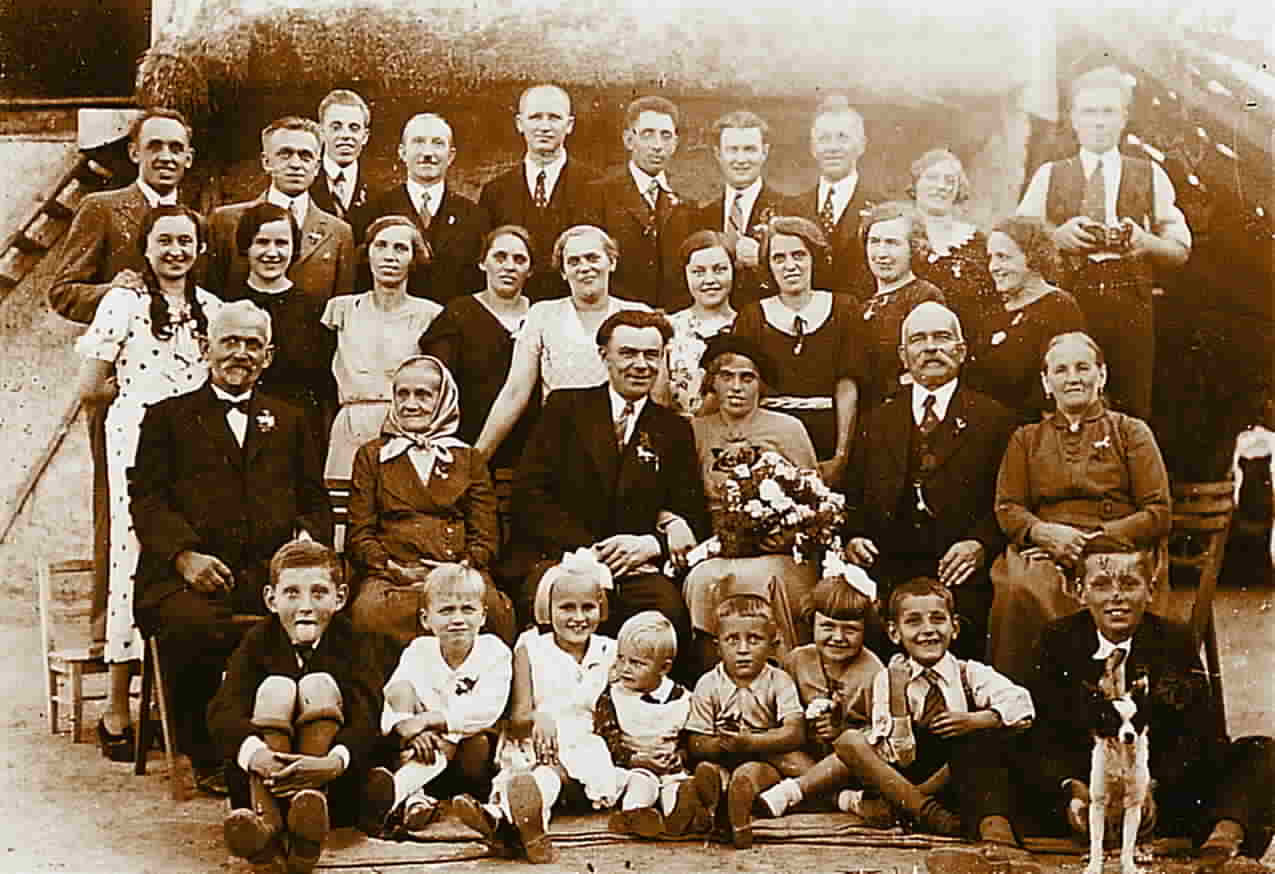
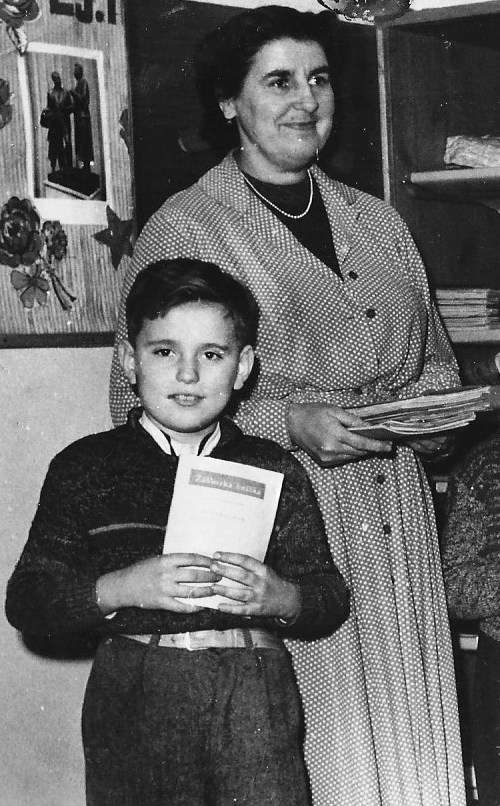
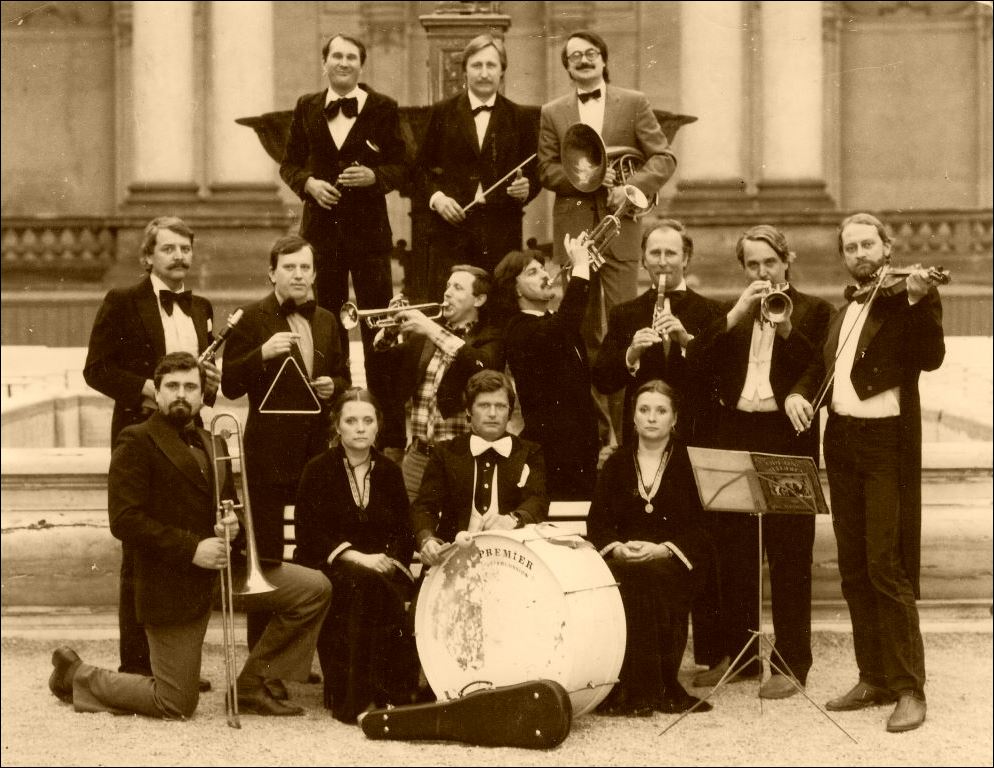
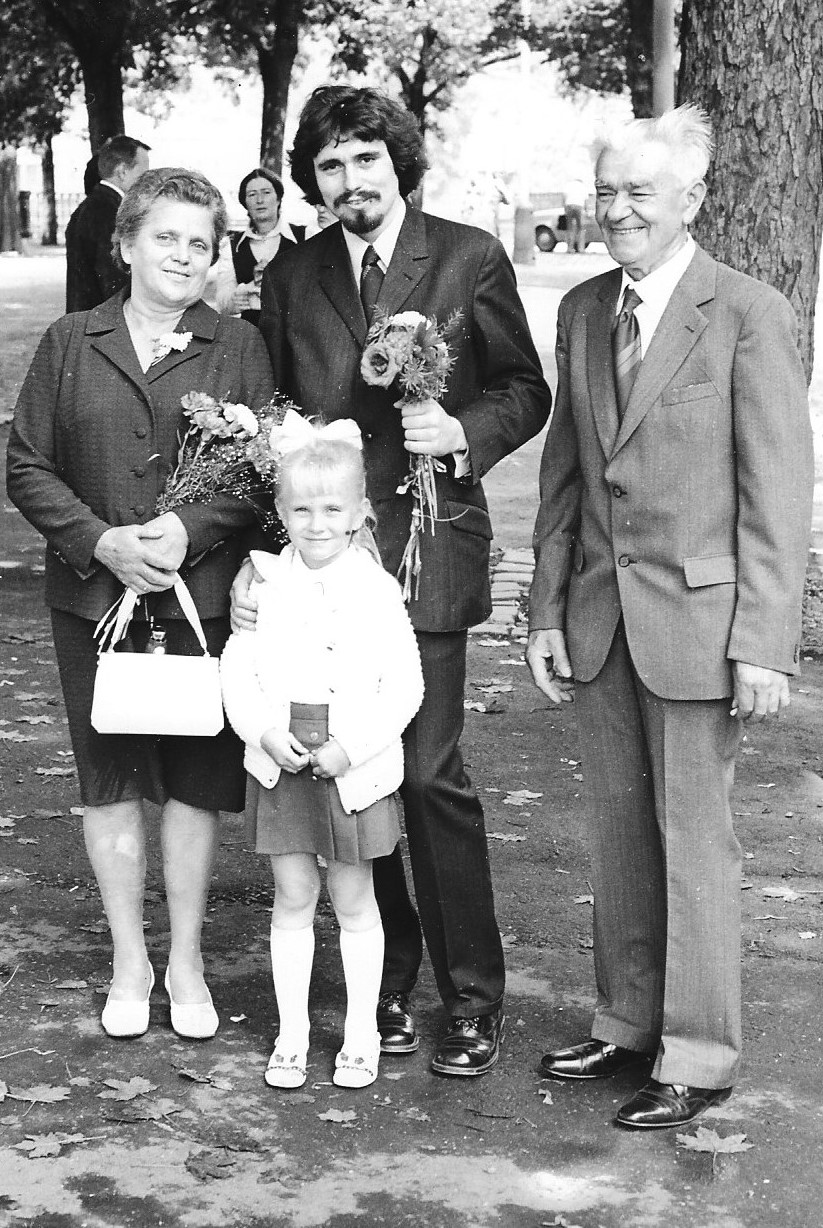
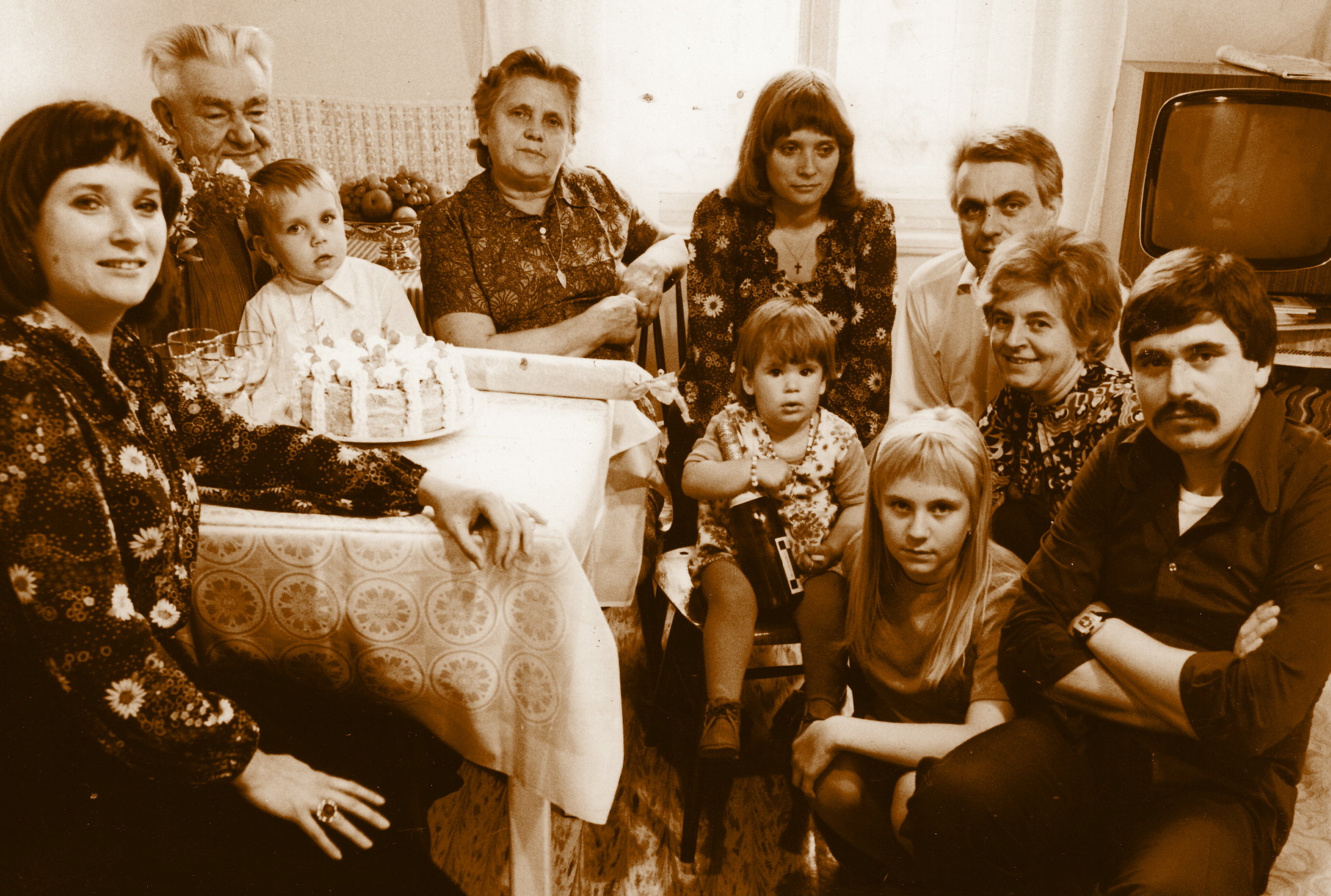
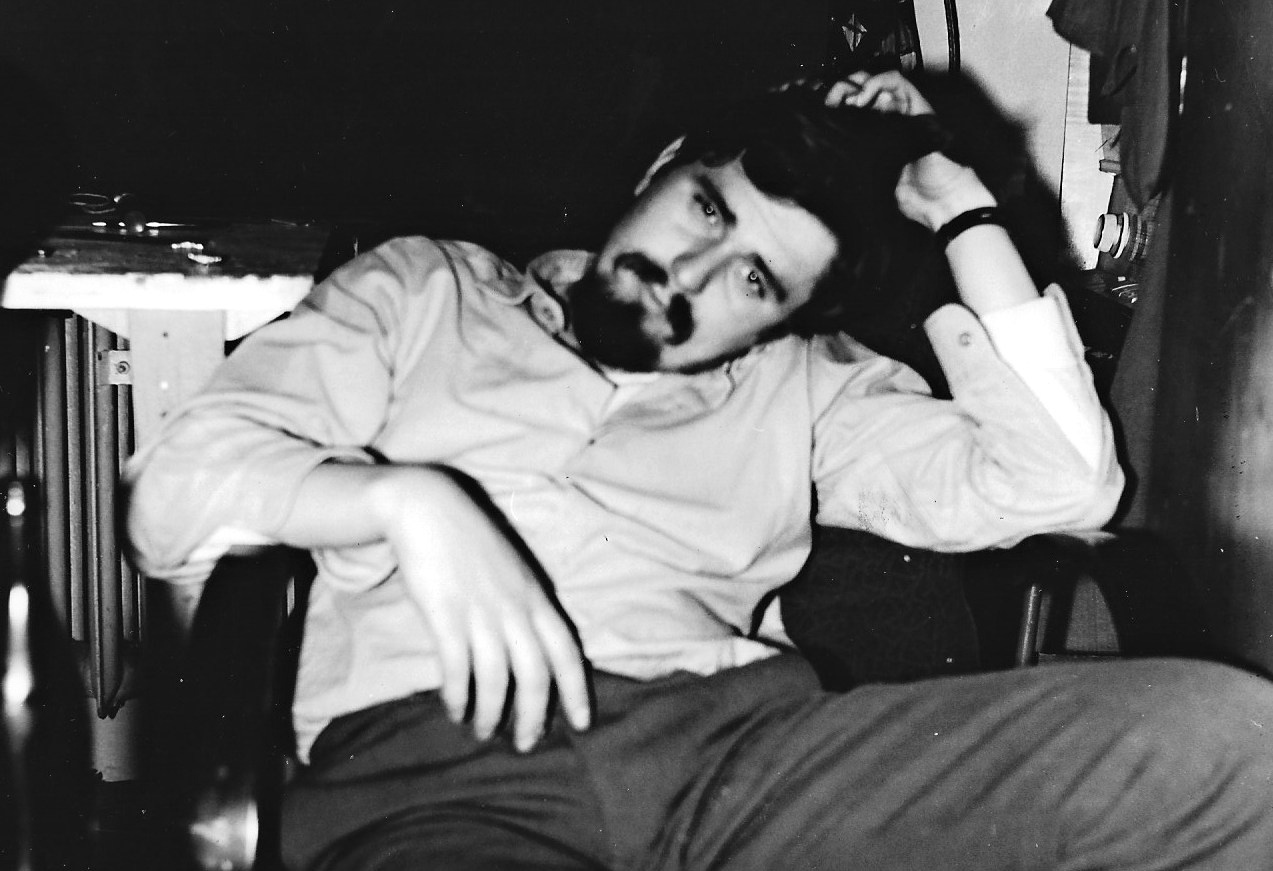
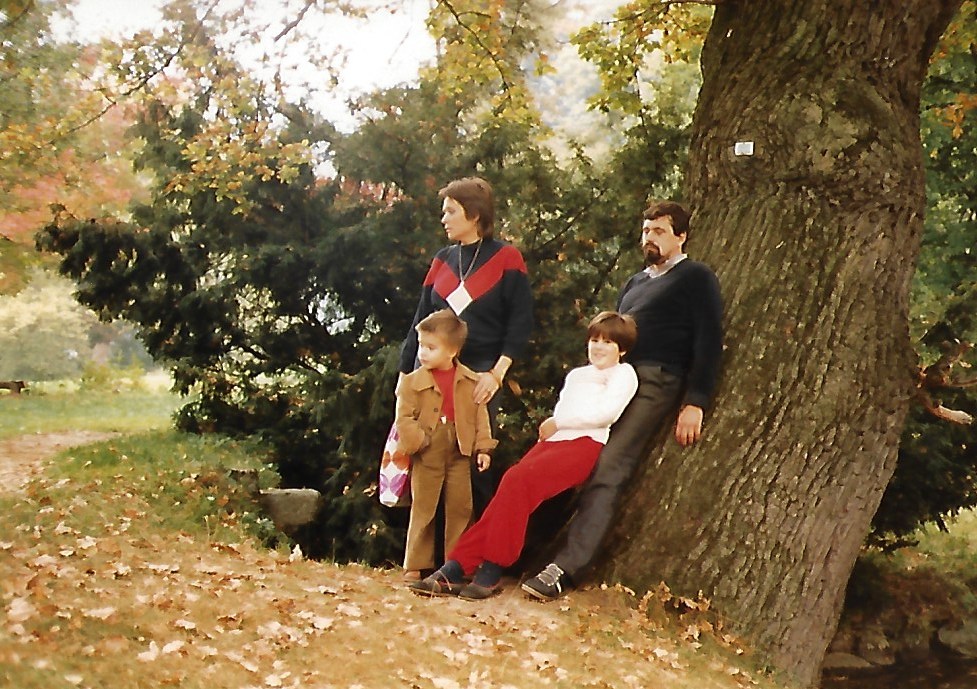
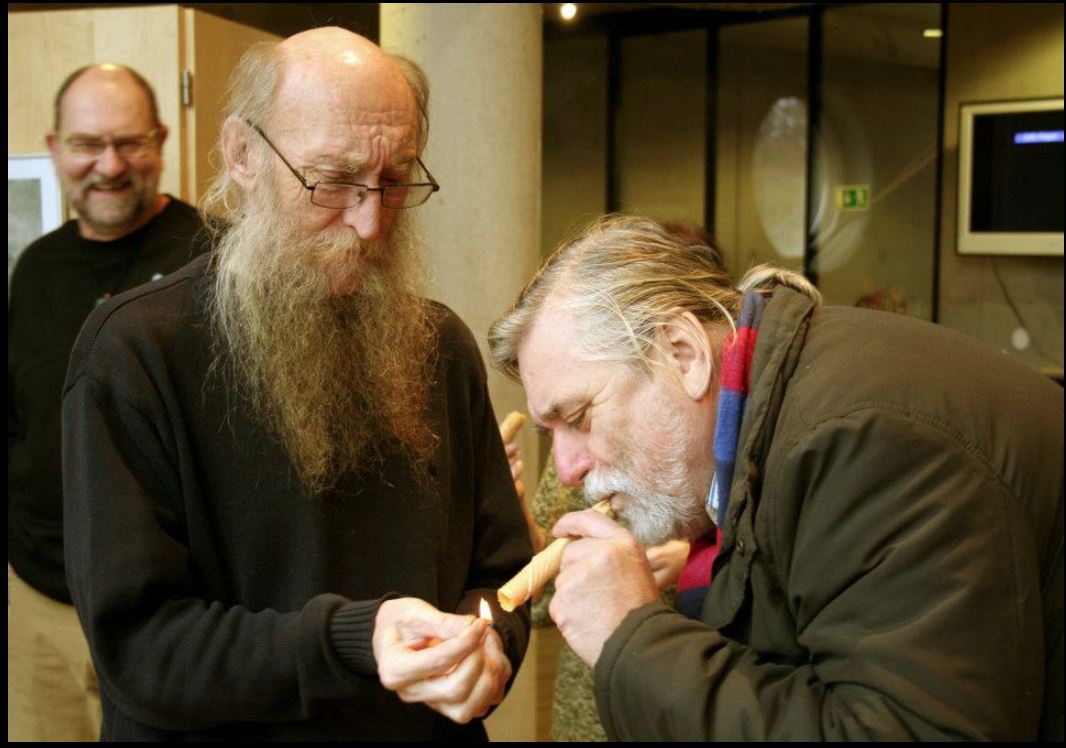
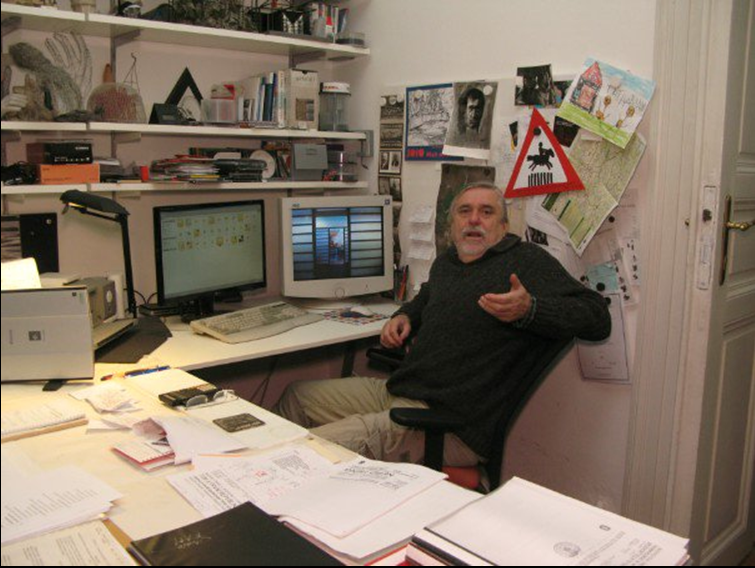
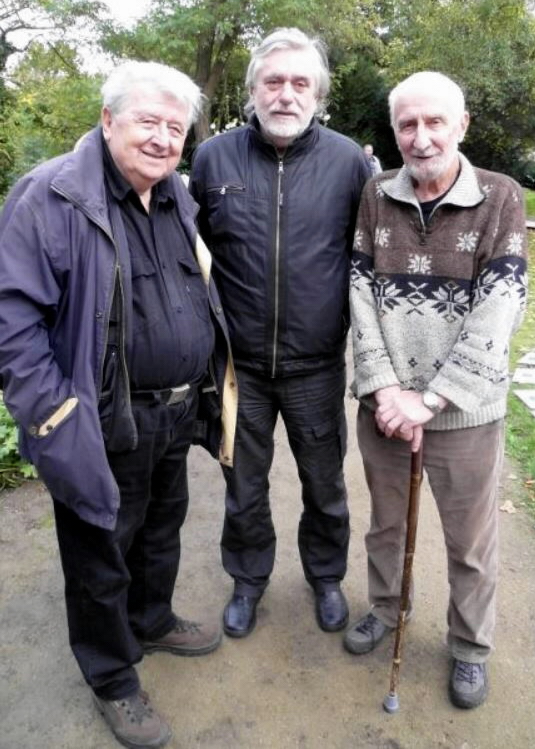
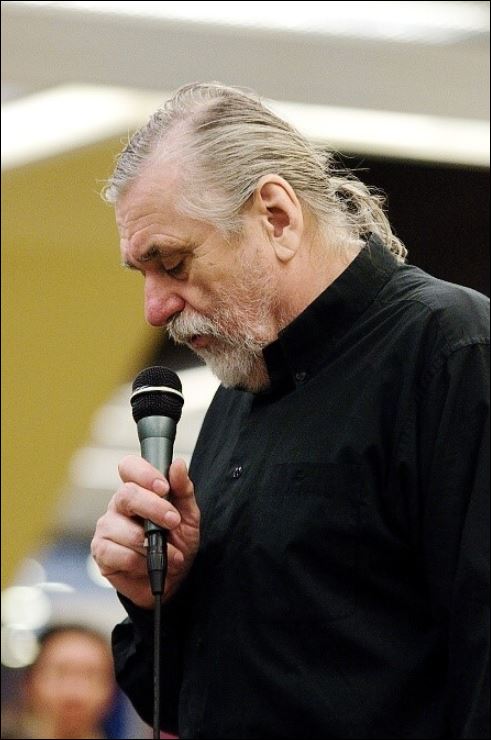
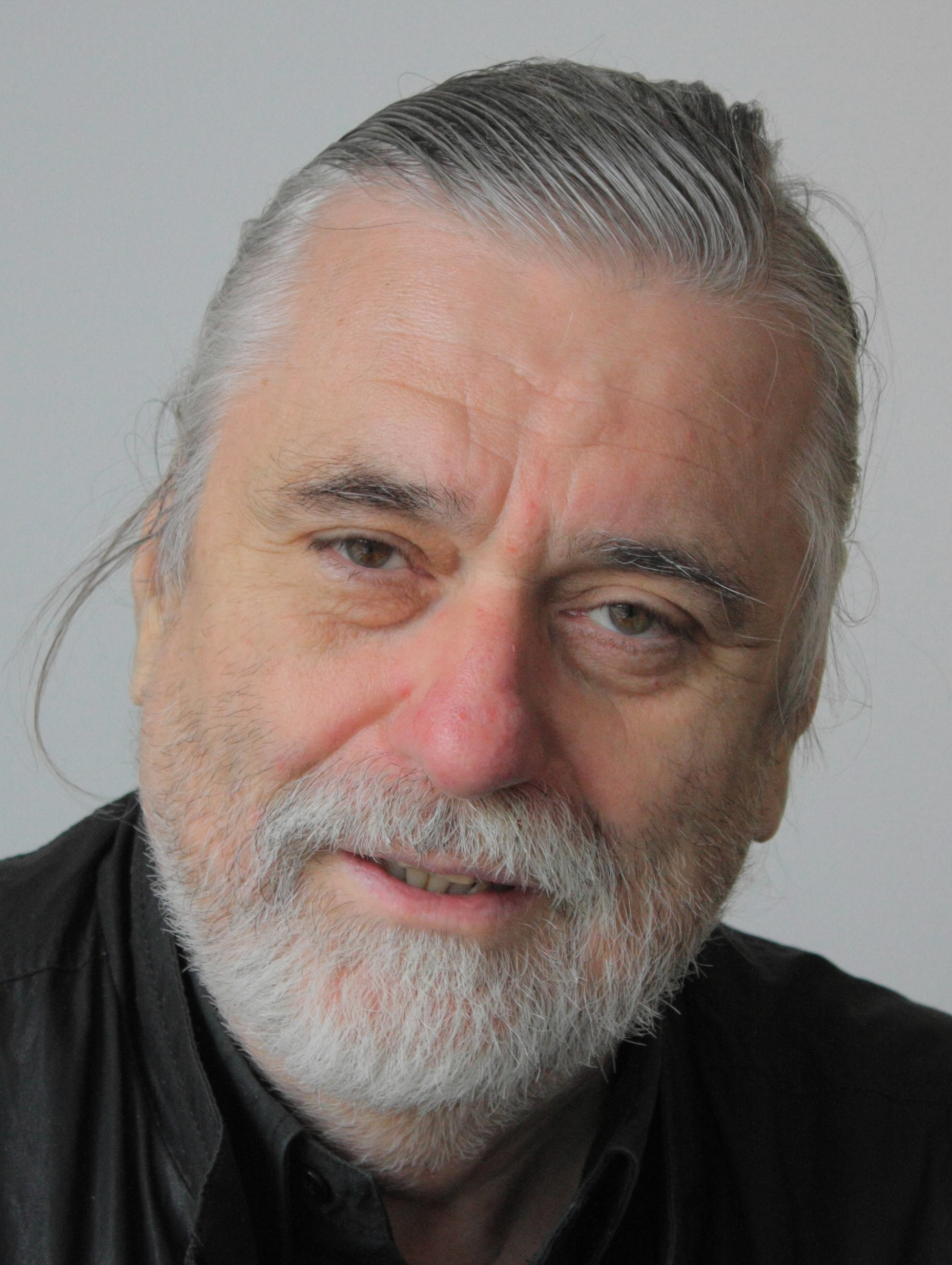
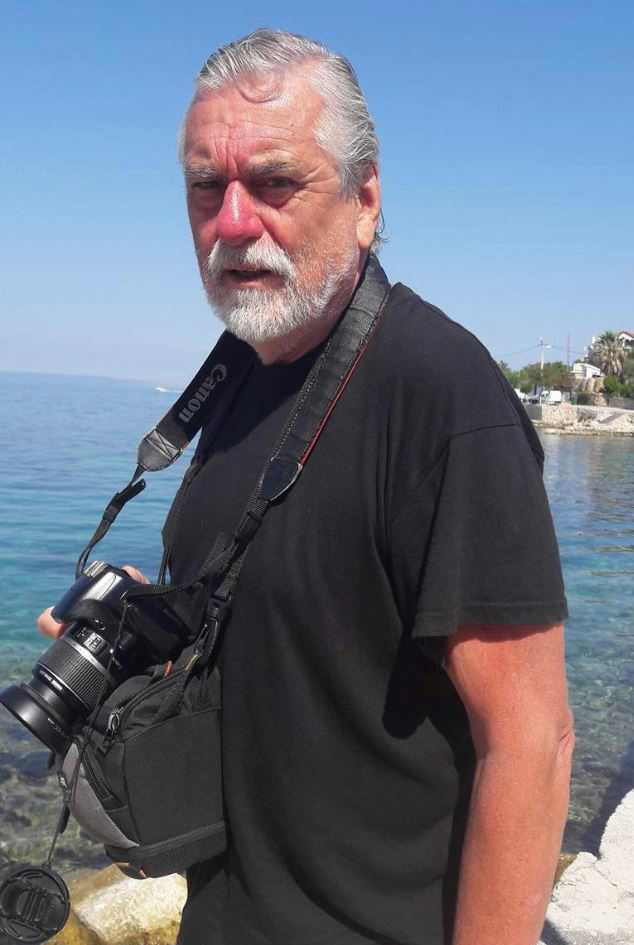
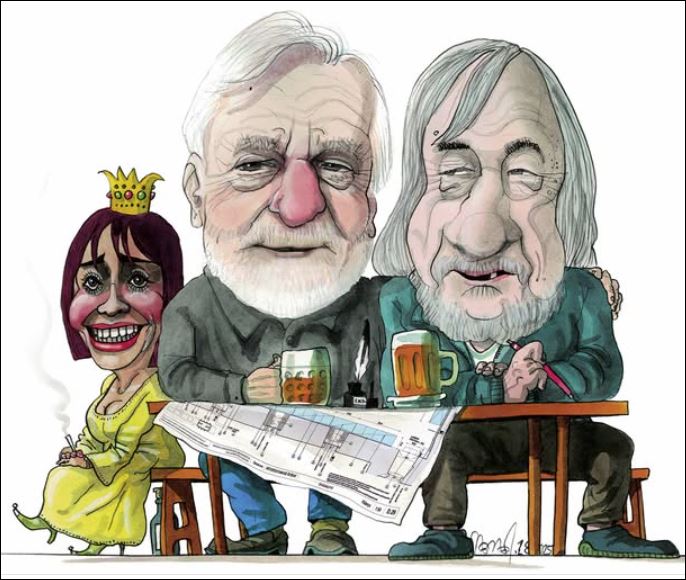
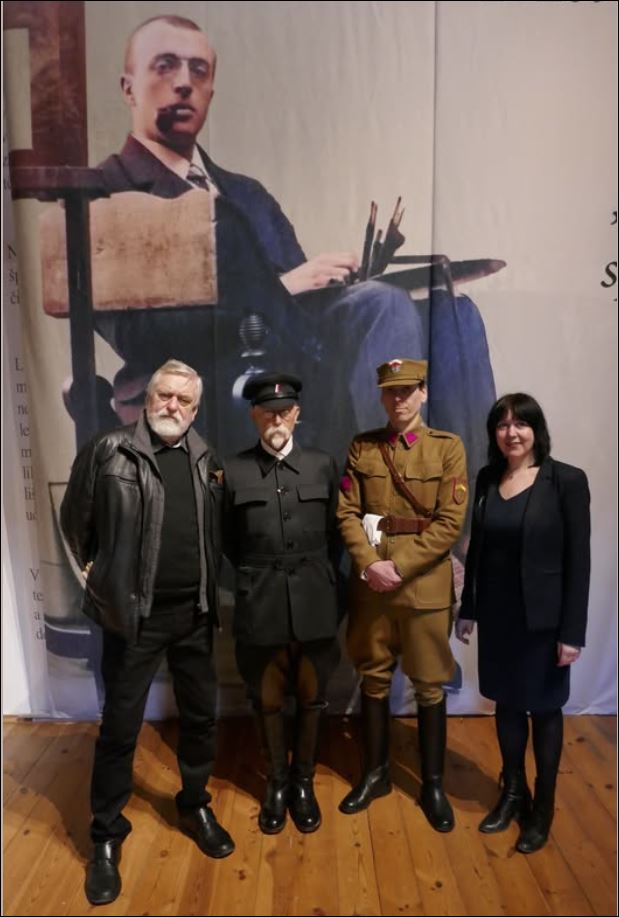
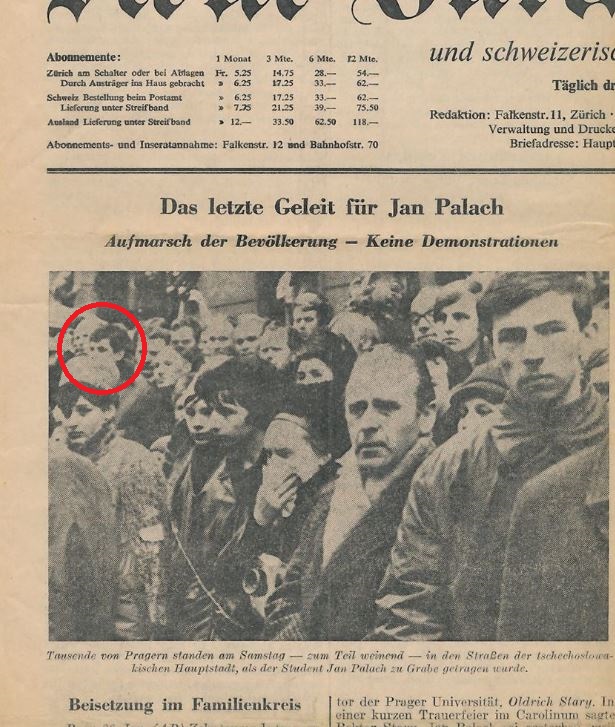
Miloslav Čejka was born on 9 June 1947 in Prague into the family of Milena and Ladislav Čejka. His father was trained as a carver and inlay maker, and later worked his way up to deputy chief dispatcher at the Transport Company. Milena Čejková graduated from the hotel owner Šroubek‘s girls‘ school. He graduated from the Václav Hollar art school and subsequently worked in the renowned Gama studio. In 1967, he was admitted to Academy of Arts, Architecture and Design (UMPRUM), where he studied architecture under Professor Josef Svoboda. He spent August 1968 during an exchange stay in Leningrad, where he witnessed Soviet propaganda and misinterpretation of the occupation of Czechoslovakia. After August 1968, the artist and architect Miloslav Čejka was actively involved in protests against the occupation, distributing posters and participating in demonstrations, including the funeral of Jan Palach. While studying at UMPRUM, he won the Atelier Prize, but instead of receiving a financial reward, he took a trip to Sochi, where he had a minor falling out with his fellow travellers, convinced communists, which later probably led to a ban on travel to the West. While at school and later while working at the Prague Project Institute, he participated in the reconstruction of wooden houses for open-air museums in Slovakia. Later he went freelance, devoting himself to graphic design and exhibition. From 1982 to 1987 he designed and realized exhibitions in the Eastern Bloc for the Foreign Trade Company Pragoexport. In the early 1990s he worked in Linz at the Team M-architekten studio, later assisting Václav Aulický on projects for Czech Television and Tesla Karlín. Since 1993 he has had his own architectural studio Studio FAM. His cooperation with the National Museum, which dates back to the times of totalitarianism, was more closely continued between 2000 and 2018, when he realised a number of exhibitions, including projects such as Mammoth Hunters and Freedom - Bee Free. In 2025, Miloslav Čejka was living in Prague, designing exhibitions for various entities outside of Prague and exhibiting his own paintings.
Hrdinové 20. století odcházejí. Nesmíme zapomenout. Dokumentujeme a vyprávíme jejich příběhy. Záleží vám na odkazu minulých generací, na občanských postojích, demokracii a vzdělávání? Pomozte nám!