"Even a year after I could still smell the charred human flesh. It was terrible."
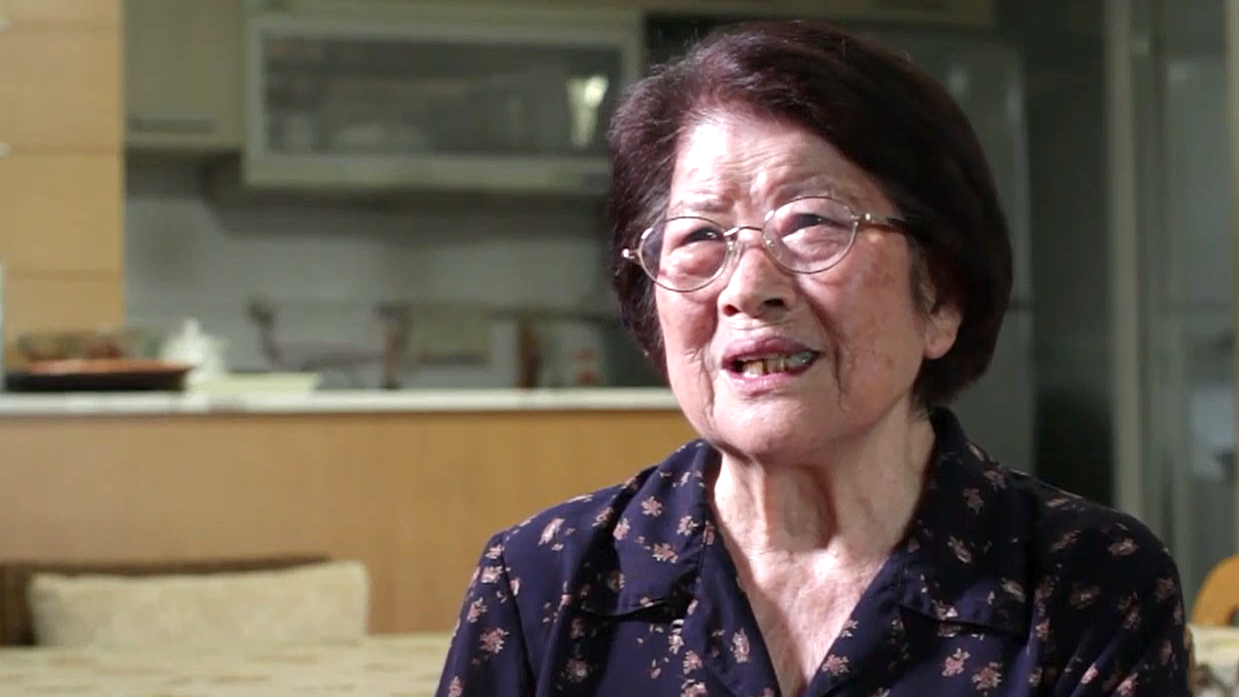
Božena Húšťová, a witness of the Nazi carnage in several pastoral villages in the area of Vizovice at the end of WWII, was born on April 1st 1929 in the hamlet of Ryliska, located near the Ploština settlement. People in these remote settlements were helping the partisans, who were on the move from Slovakia to the mountains on the Moravian-Slovak border in November 1944. In the Vizovice highland and in the Beskydy Mountains, at the turn of 1944 and 1945, the 1st Czechoslovak partisan brigade of Jan Žižka, commanded by major Dajan Bajanovič Murzin, was operating. Inhabitants of these scattered villages were supplying the partisans with food, they were providing them with shelter and many even joined in their anti-Nazi activity. František Raška, Božena Húšťová's father, was one of these selfless supporters of the partisans; their cottage became the unofficial headquarters of the Ploština unit and the partisans themselves assigned him the rank of a major. In spring 1945, in the last months of the war, two Gestapo members infiltrated the partisan group, and they turned in the partisans and the citizens of Ploština and other pastoral hamlets to the Gestapo office in Zlín. On April 19th 1945 Ploština was set on fire by the members of the counter-partisan unit "Josef" and by the SS soldiers. 24 people, coming mainly from the hamlets of Vysoké Pole and Drnovice, have perished in the attack on Ploština. That day, Božena Húšťová lost her brother, who was burnt with others in a barn. Fortunately her father and her elder sister were out of the village at the moment. The Nazis have burnt down other villages as well, and many civilians lost their lives. After the war, a monument was erected in Ploština together with a museum of anti-Nazi resistance, where Božena Húšťová works as a guide. She tells the museum's visitors about the dramatic fate of Ploština during the war, but also in the post-war period, when the settlement was rebuilt and the survivors had to cope with the loss of their loved ones and with the fact that most of the perpetrators of the Ploština tragedy were never found out.